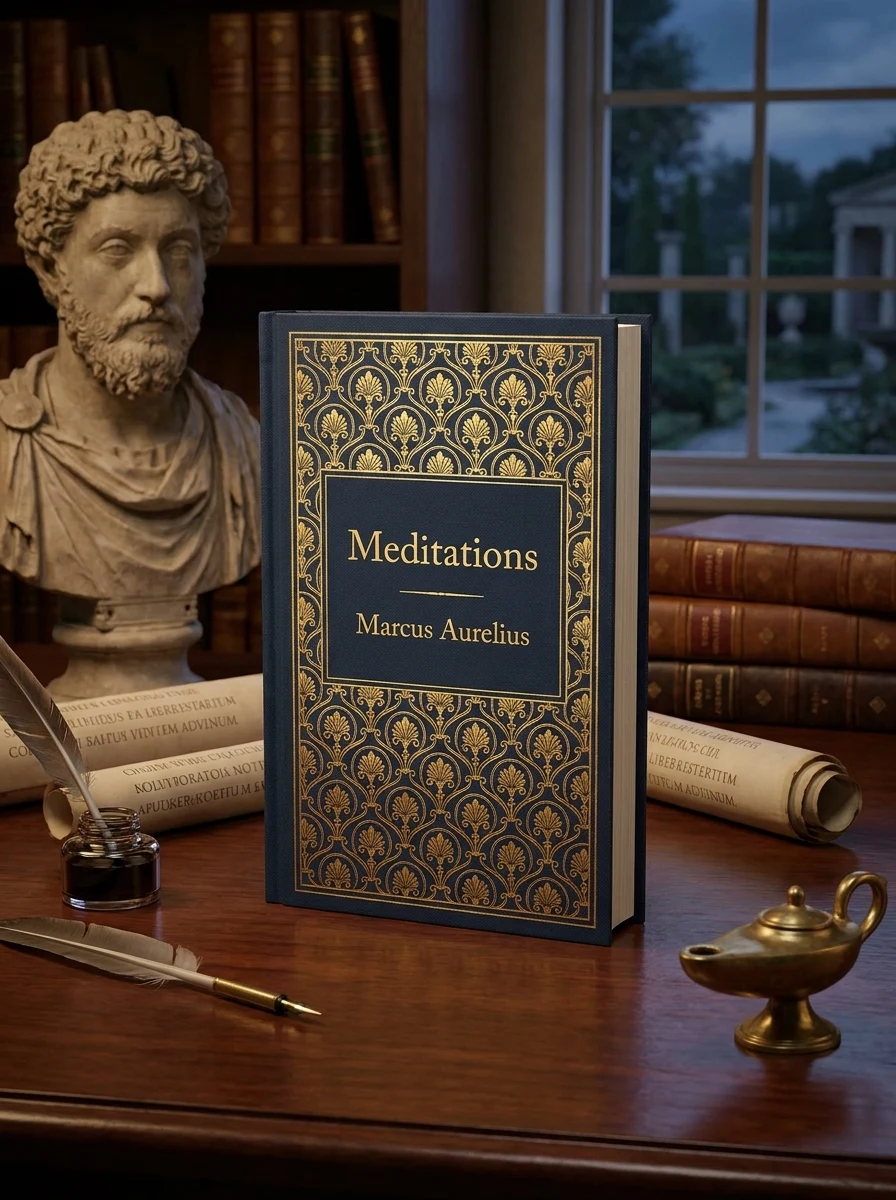

Meditations
Aurelius, MarcusStock reported in the catalog; fulfillment is confirmed with your request.
Unearth ancient wisdom to navigate life's chaos with serene, unshakeable resilience.
Within these pages, the Roman Emperor Marcus Aurelius offers a deeply personal exploration of Stoic philosophy, originally penned for his own guidance. It serves as a powerful manual for cultivating rational thought over emotional impulse, asserting control over one's perceptions, and finding purpose in a fleeting existence. Readers will discover timeless strategies for fostering self-discipline, achieving inner tranquility regardless of external circumstances, and approaching life's challenges—including mortality—with dignity and steadfast resolve. This is a profound invitation to master the self and live virtuously.
This work stands as a cornerstone of Stoic philosophy, originating from the private reflections of a Roman Emperor during the height of the Empire. It embodies the tradition of using rational discourse to navigate personal virtue and public duty simultaneously.


📝 Description: Meditations
💎 Expert review
📖 Why choose it
Why this book is worth reading
Readers seeking an anchor in turbulent times will find profound solace here. This guide is ideal for those overwhelmed by external chaos, offering a blueprint for unshakeable inner peace through disciplined thought. It appeals to anyone desiring to replace emotional reactivity with rational clarity. By mastering one's perceptions and accepting mortality with dignity, the reader gains the tools to live virtuously. It is not merely history; it is a practical manual for resilience, helping individuals cultivate self-control and purpose regardless of their circumstances. For those yearning to transform anxiety into steadfast resolve, these meditations provide the serene wisdom needed to navigate life’s fleeting moments with grace.
⭐ Reader reviews
Reader rating
While this text offers unparalleled insights into Stoic resilience, it may not suit readers seeking narrative plot or emotional warmth. Those expecting a traditional biography or historical drama will find its aphoristic structure dry and repetitive. It demands active engagement with abstract concepts rather than passive entertainment. The lack of modern context can feel distancing to some, requiring effort to bridge ancient Roman values with contemporary life. However, for the dedicated seeker of self-mastery, it remains an essential, albeit demanding, resource. It is best approached as a daily practice manual rather than a one-time read, rewarding patience with deep philosophical clarity.
❓ Frequently asked questions
📖 Who should read this
If you seek clarity in a chaotic world, a path to emotional fortitude, or a guide to living a life of profound purpose, this timeless work offers invaluable counsel. It’s for those ready to cultivate an unshakeable inner calm and embrace rational living.
🎯 Key themes and symbolism
Mastering Inner Citadel
Aurelius repeatedly emphasizes the absolute power one possesses over their own mind and reactions. He guides the reader to fortify their internal world against external turmoil, teaching how to distinguish between what can be controlled (thoughts, actions) and what cannot (events, others' opinions), thereby securing genuine peace.
Purposeful, Virtuous Living
The text serves as a constant reminder to align one's actions with reason and virtue. It challenges the reader to live with intention, contributing positively to the greater good, and to view every moment, even adversity, as an opportunity to practice wisdom, justice, courage, and temperance.
Embracing Mortality & Change
A core theme is the acceptance of impermanence and death not as a fearful end, but as a natural part of the cosmic order. Aurelius encourages contemplation of mortality to inspire a more focused, appreciative, and less anxious approach to the present moment and one's place within the vastness of time.
💬 Quotes from the book
“The happiness of your life depends upon the quality of your thoughts.”
“You have power over your mind – not outside events. Realize this, and you will find strength.”
📜 Historical context
📚 Glossary
- Stoicism
- Logos
- Virtue
📔 Questions to reflect on
- Reflect on a recent challenge. How might a Stoic approach have altered your emotional response or subsequent actions?
- Consider Marcus Aurelius's emphasis on living in accordance with nature. What does this principle mean for your daily choices and interactions?
- Meditate on your own mortality. How does contemplating the finite nature of life change your perspective on your priorities and the present moment?
✍️ More books by this author Aurelius, Marcus
All books by this author →

You might also like
See more →


 90
90