Margins of Reality: The Role of Consciousness in the Physical World
Jahn, Robert G

Stock reported in the catalog; fulfillment is confirmed with your request.
Consciousness doesn't just observe reality; it actively co-creates the physical world we inhabit.
This seminal volume challenges the rigid materialism of modern physics by presenting rigorous data from the Princeton Engineering Anomalies Research program. The authors argue that human intention can subtly influence random physical systems, suggesting that consciousness is not a passive byproduct of matter but a fundamental variable in the universe. By bridging empirical experimentation with theoretical modeling, the text offers a compelling case for a more inclusive science that acknowledges the observer's role in shaping physical outcomes.
This work sits at the intersection of parapsychology and theoretical physics, emerging from the late twentieth-century dialogue between scientific inquiry and esoteric thought. It represents a distinct effort to legitimize consciousness studies within the framework of empirical research rather than pure metaphysics.


📝 Description: Margins of Reality: The Role of Consciousness in the Physical World
💎 Expert review
📖 Why choose it
Why this book is worth reading
Readers fascinated by the boundaries between science and spirituality will find profound value in this text. It offers a rigorous, data-driven exploration of how human intention interacts with physical systems, appealing to those tired of strict materialism. If you are seeking empirical evidence for the power of consciousness, this book provides a structured argument grounded in experimental results from the Princeton Engineering Anomalies Research program. It is ideal for scholars, researchers, and open-minded scientists who wish to understand how the observer might actively shape reality. The text bridges the gap between abstract philosophical concepts and tangible experimental data, making it essential for anyone exploring the frontiers of modern physics and the nature of existence.
⭐ Reader reviews
Reader rating
This has been on my wishlist for months. The material is presented clearly and the structure makes it easy to revisit key passages. Five stars from me.
Not my usual area but wanted to branch out. Every rereading turns up something I missed. Definitely recommend.
This edition finally does the material justice. The material is presented clearly and the structure makes it easy to revisit key passages. Solid, if not essential.
First purchase from this shop. It reads better in small doses — a chapter at a time with notes. Some chapters demand a slow, careful read, and that's exactly the point. Already eyeing my next order.
This volume presents a compelling, albeit dense, argument for consciousness as a fundamental variable in physics. While its reliance on specific experimental data from the Princeton Engineering Anomalies Research program provides a unique empirical anchor, the theoretical leaps required to accept these findings may alienate strictly materialist scientists. It is not suited for readers seeking light, anecdotal spirituality or those unwilling to engage with complex scientific terminology and statistical modeling. The text demands intellectual effort, rewarding patience with a coherent framework that challenges mainstream scientific dogma. Those preferring mystical experiences over analytical rigor will likely find the tone too academic. However, for those interested in the serious study of anomalies, it remains a significant, if controversial, contribution to the discourse on mind-matter interaction.
❓ Frequently asked questions
📖 Who should read this
Readers intrigued by quantum mechanics, parapsychology, and the philosophy of mind will find this essential. It is ideal for those willing to question the boundaries between subjective experience and objective reality.
🎯 Key themes and symbolism
Consciousness-induced anomalies
Mind-matter interaction
Reevaluation of scientific objectivity
💬 Quotes from the book
“Modern science has arbitrarily excluded the role of consciousness in the establishment of physical reality.”
“A fundamental reevaluation of how the world really works.”
📜 Historical context
📚 Glossary
- PEAR
- Materialism
- Observer Effect
📔 Questions to reflect on
- When have you felt your intention directly influence a random outcome?
- How does the concept of the 'observer' change your view of personal responsibility?
- What physical systems in your life might be sensitive to your mental state?
✍️ More books by this author Jahn, Robert G
All books by this author →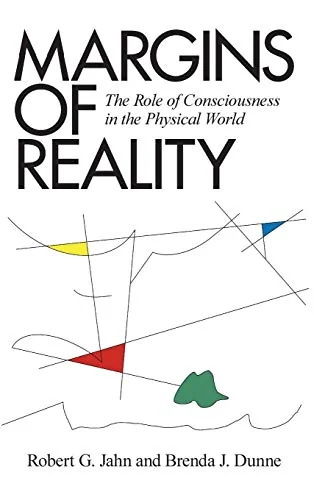
🏛 Books from this publisher Icrl Press
All books from this publisher →
You might also like
See more →