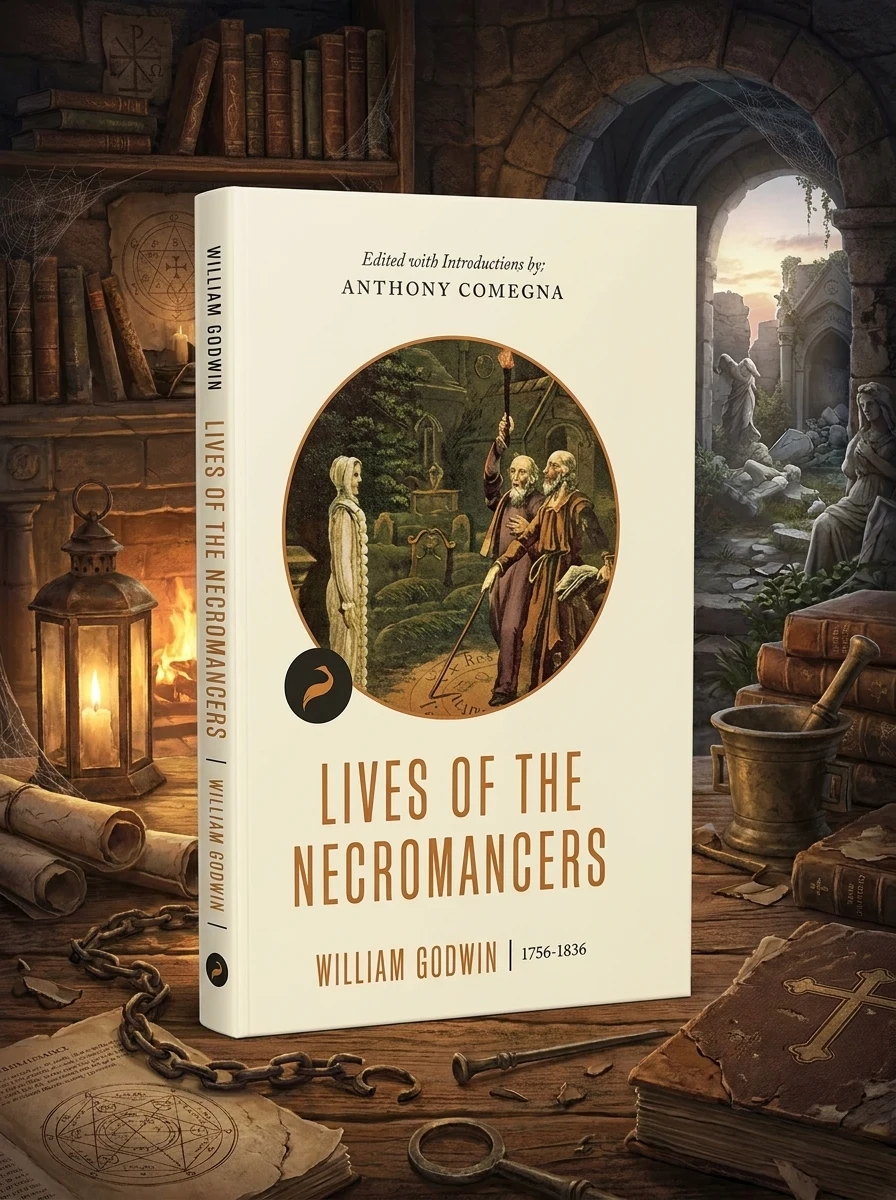
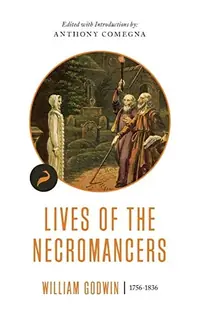
Lives of the Necromancers Goodwin, William
Stock reported in the catalog; fulfillment is confirmed with your request.
Unmasking the hidden history of magic, power, and deception across millennia.
William Godwin, a renowned figure in libertarian thought, delves into the enigmatic world of necromancy and the occult. This compelling work traces the evolution of magical practices and the perception of their practitioners from ancient eras through to the Enlightenment. Godwin meticulously examines how esoteric knowledge was historically controlled by elites to maintain dominance, exploiting popular belief for their own ends. He argues for the eventual triumph of reason over superstition, yet provocatively invites contemporary readers to reconsider who today's "necromancers" might be, and what hidden truths still await discovery.
This work sits at the intersection of libertarian political theory and esoteric history, bridging the gap between Enlightenment rationalism and occult studies. It challenges the traditional narrative of magical decline by examining how elites historically manipulated supernatural beliefs for power.


📝 Description: Lives of the Necromancers Goodwin, William
💎 Expert review
📖 Why choose it
Why this book is worth reading
Readers interested in the hidden mechanics of power will find this text profoundly illuminating. It offers a unique perspective by linking William Godwin’s libertarian philosophy with the history of necromancy, revealing how esoteric knowledge was weaponized by elites to maintain dominance. Those who enjoy uncovering the intersection of superstition and political control will appreciate this meticulous examination. It invites you to reconsider who holds power today and what truths remain concealed, making it essential for anyone seeking to understand the enduring influence of deception across millennia.
⭐ Reader reviews
Reader rating
This book provides a compelling, albeit dense, analysis of how magical practices served elite interests from ancient times through the Enlightenment. While Godwin argues for reason’s triumph over superstition, his exploration of hidden truths remains provocative. However, readers seeking straightforward historical chronicles or practical occult guidance will likely find it dry and overly theoretical. It is not suited for those who prefer narrative-driven fantasy or simple anti-clerical polemics without philosophical depth. The text demands patience from its audience, rewarding only those willing to engage with complex arguments about the manipulation of belief systems.
❓ Frequently asked questions
📖 Who should read this
If you're fascinated by the intersection of history, philosophy, and the occult, and enjoy critical examinations of power dynamics, this book is for you. Engage with a historical perspective on magic and consider its enduring implications for understanding societal control and the pursuit of truth.
🎯 Key themes and symbolism
Knowledge as Power
Godwin meticulously illustrates how esoteric wisdom, often framed as magical, was historically monopolized by a select few. These privileged individuals wielded their understanding, or the perception of it, to control and influence society, exploiting the credulity of the populace. The book explores this dynamic through various historical periods, revealing the consistent pattern of power centralized around secret knowledge.
Decline of Magic
The book chronicles a fascinating historical trajectory: the gradual marginalization of overt magical practitioners. With the advent of the Renaissance and the spread of Christian thought, the once-powerful occultist was increasingly relegated to the fringes of society, becoming a court curiosity, a mystic, or even a charlatan. Godwin posits this as a shift towards a more rational worldview.
Reason's Triumph and Its Limits
Godwin confidently asserts that the advancements of science and reason ultimately dispelled the shadows of witchcraft and superstition from the world. However, the text subtly challenges modern readers to question whether true "necromancy"—the control of hidden knowledge—has truly vanished, or merely assumed new, more insidious forms in contemporary society.
💬 Quotes from the book
“The annals of human credulity are replete with instances where the pretense of extraordinary powers has served as the most potent instrument for the subjugation of the unlettered masses.”
“As the lamp of reason gains ascendancy, the phantoms of ancient superstition recede, yet one must ever question what new shadows are cast by modern forms of concealed influence.”
📜 Historical context
📚 Glossary
- Necromancy
- Occultism
- Credulity
📔 Questions to reflect on
- In what ways might knowledge, even non-magical knowledge, still be monopolized by certain groups today, and how does this affect society?
- Godwin argues reason dispelled witchcraft. Are there any modern beliefs or practices that you believe are akin to historical "superstitions" but are widely accepted?
- Considering Godwin's perspective, who do you identify as the "necromancers" of our current age, holding sway through obscured information or specialized understanding?
You might also like
See more →
 91
91


 91
91