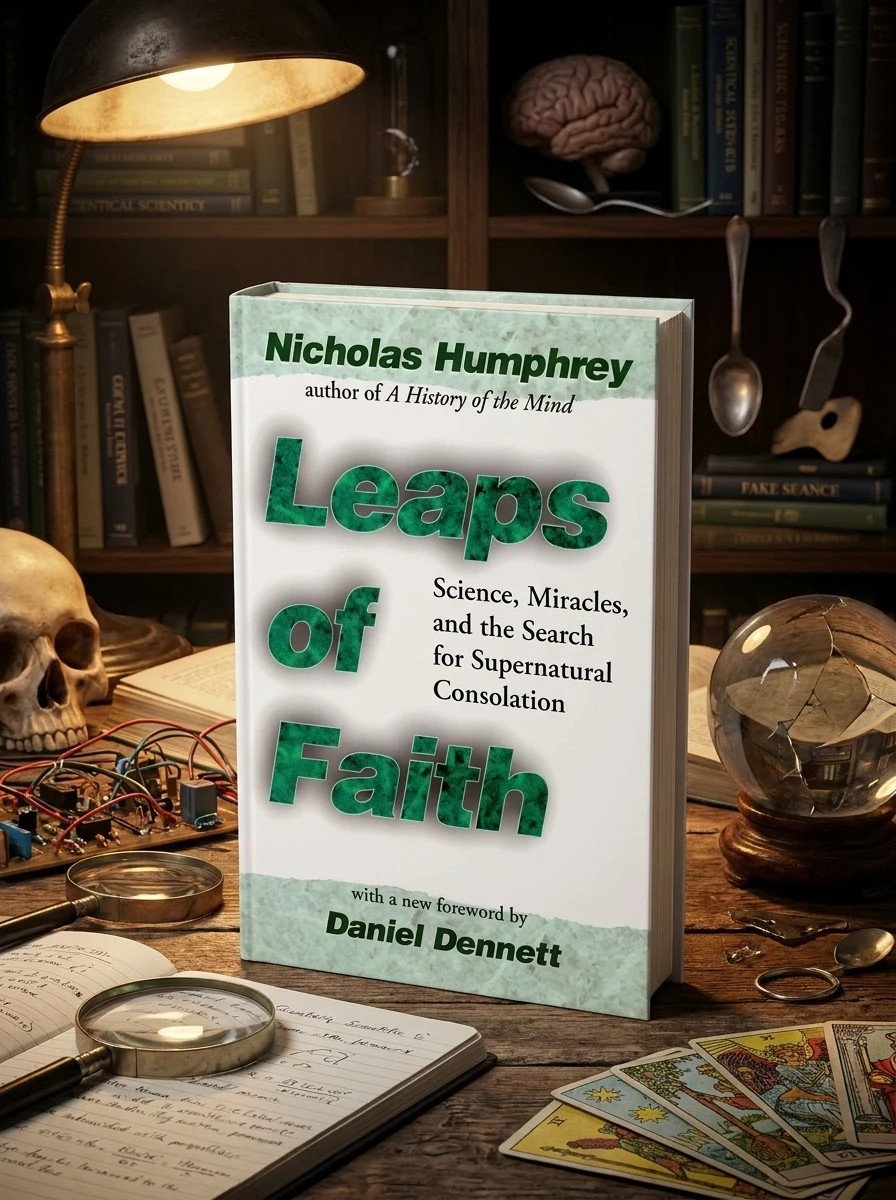

Leaps of Faith: Science, Miracles, and the Search for Supernatural Consolation
Stock reported in the catalog; fulfillment is confirmed with your request.
Unmasking the psychological roots of our deepest spiritual longings and supernatural beliefs.
Nicholas Humphrey's acclaimed work, co-written with Daniel Dennett, offers a penetrating critique of supernatural phenomena, miracles, and paranormal claims. Rather than simply dismissing these beliefs, the book delves into the underlying human psychology, positing that anxieties about an uncertain future often fuel our desire for the miraculous. It explores how an ingrained belief in the separation of mind and body sustains these convictions. This isn't merely a debunking; it's a profound exploration of humanity's pervasive tendency toward wishful thinking, questioning why we seek solace in fantasy when reality itself holds immense potential for fulfillment.
This work emerges from the late twentieth-century intersection of analytic philosophy and cognitive science, challenging dualistic traditions by applying rigorous psychological analysis to esoteric claims. It represents a shift toward naturalistic explanations for phenomena previously categorized under occult or supernatural frameworks.


📝 Description: Leaps of Faith: Science, Miracles, and the Search for Supernatural Consolation
💎 Expert review
📖 Why choose it
Why this book is worth reading
Readers seeking a rigorous, intellectually honest examination of why humans cling to supernatural beliefs will find this book profoundly rewarding. It is ideal for those who appreciate the intersection of philosophy, psychology, and science but desire a compassionate rather than dismissive approach to spiritual longing. If you have ever wondered why rationality often fails to extinguish faith in miracles, or if you are interested in the psychological mechanisms behind wishful thinking, this text offers deep insight. It does not mock the believer but dissects the shared human anxiety that fuels these desires, making it essential for skeptics and spiritual seekers alike who want to understand the mind's quest for consolation without surrendering critical thought.
⭐ Reader reviews
Reader rating
While intellectually stimulating, this book is unsuitable for readers seeking comfort in traditional religious doctrine or those expecting a defense of paranormal phenomena. It will frustrate individuals who view science and spirituality as inherently compatible without critique. The dense philosophical arguments may alienate casual readers preferring accessible pop-spirituality. However, for those willing to engage with its demanding logic, it provides a necessary corrective to uncritical supernaturalism. It is best suited for the philosophically minded skeptic who values psychological depth over emotional reassurance in matters of faith and the unknown.
❓ Frequently asked questions
📖 Who should read this
If you're fascinated by the intersection of psychology, philosophy, and spirituality, and seek to understand the human impulse behind belief in the paranormal, this book is for you. It challenges preconceptions and offers a rigorous, yet accessible, intellectual journey.
🎯 Key themes and symbolism
Psychology of Belief
Humphrey meticulously dissects the human mind's propensity for supernatural beliefs, arguing that our deepest anxieties, particularly regarding the future, often give rise to the very miracles we desperately wish for. This exploration uncovers the emotional and cognitive biases that lead us to embrace extraordinary claims.
Mind-Body Duality Critique
A cornerstone of the book's argument is its examination of mind-body duality. Humphrey suggests that the persistent, often unexamined, belief in a separate, immaterial mind significantly contributes to the enduring appeal of supernatural explanations, anchoring our 'leaps of faith' in this fundamental philosophical assumption.
Wishful Thinking's Power
Beyond mere dismissal, this volume explores the profound human tendency towards wishful thinking. It illuminates why we are so drawn to narratives of magic and the miraculous, even when, as the author contends, the tangible world offers its own compelling path to meaning and profound satisfaction.
💬 Quotes from the book
“Our deepest anxieties often sculpt the very miracles we desperately wish to believe in, revealing more about our psychology than any divine intervention.”
“The persistent illusion of a separate, immaterial mind fuels our enchantment with the inexplicable, anchoring our 'leaps of faith' in flawed dualistic thinking.”
📜 Historical context
📚 Glossary
- Supernaturalism
- Mind-Body Duality
- Wishful Thinking
📔 Questions to reflect on
- Reflect on a time you or someone you know held a strong belief in something supernatural. How might anxiety or wishful thinking have played a role in its formation or persistence?
- Consider the concept of mind-body duality. In what ways might this philosophical idea influence how people perceive their own consciousness or the possibility of an afterlife?
- Humphrey suggests fulfillment can be found in the real world. What aspects of reality do you find most fulfilling, and how do they compare to the allure of supernatural comfort?
You might also like
See more →




 91
91