
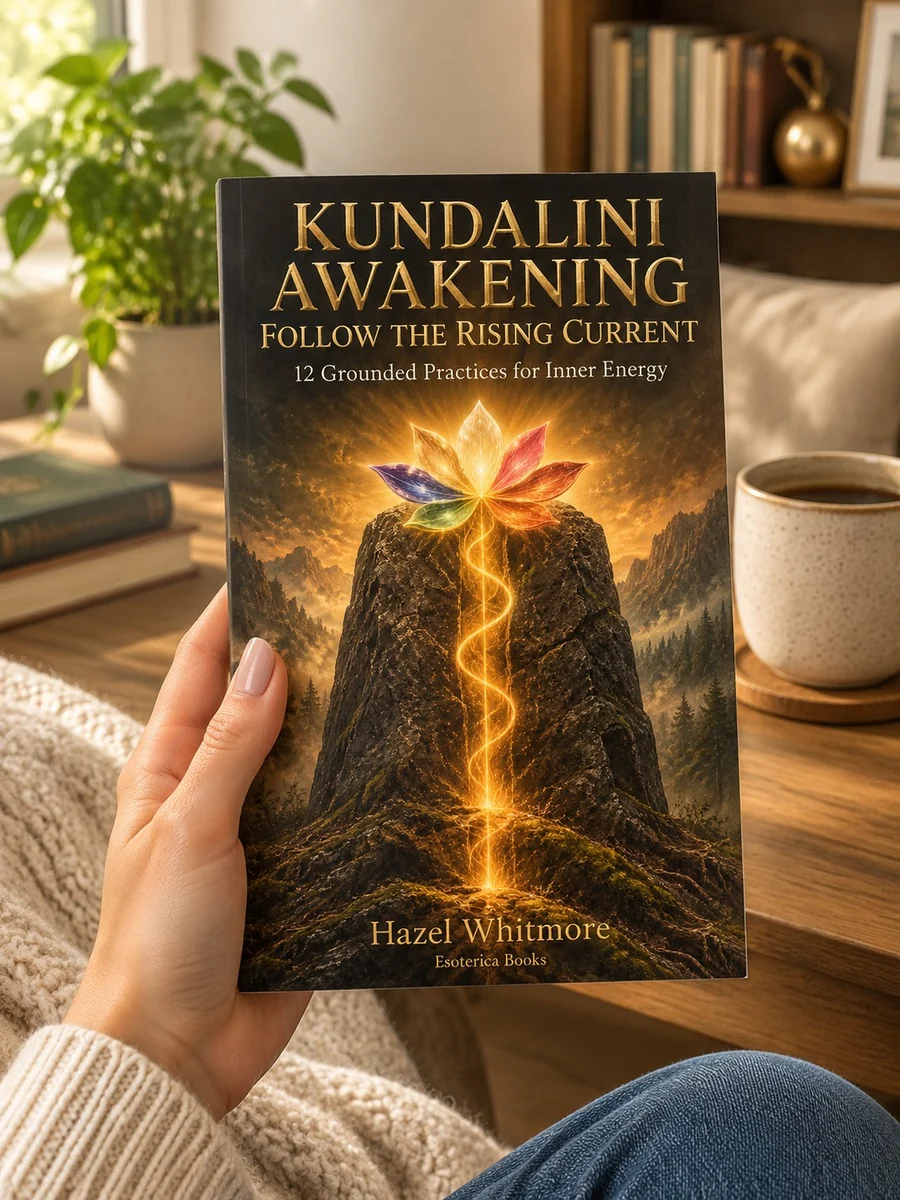
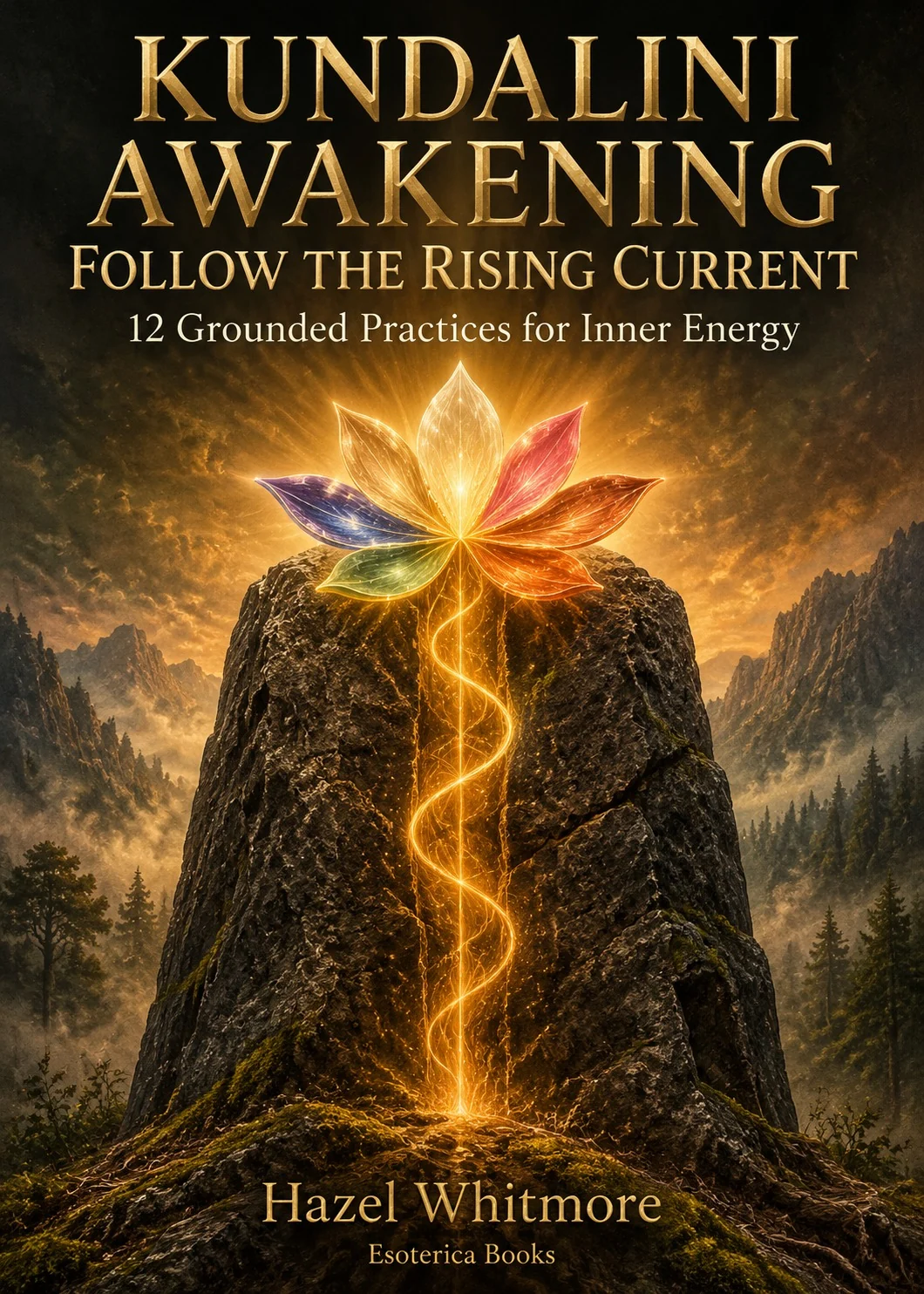
Kundalini Awakening: Follow the Rising Current
Explore kundalini awakening through 12 grounded practices, traditional chakra wisdom, and everyday reflection.
Kundalini awakening is traditionally described as the unfolding of a dormant spiritual energy, offering a rich framework for exploring inner awareness and personal transformation. In this welcoming beginner's guide, Hazel Whitmore introduces the Root-to-Radiance Path: Settle, Notice, Discern, and Integrate. Discover commonly described awakening signs, explore all seven chakras, learn about traditional stages, and develop a personal awakening journal. With 12 approachable practices, gentle movement, reflective exercises, and everyday rituals, this book offers a thoughtful starting point for understanding kundalini and exploring its symbolism.
Kundalini belongs to spiritual traditions rooted in Indian yogic and philosophical thought. Its traditional symbolism includes a coiled serpent, the central channel known as sushumna nadi, and the seven-chakra framework, which this book introduces as a language for spiritual reflection.


📝 Description: Kundalini Awakening: Follow the Rising Current
📖 Why choose it
Why this book is worth reading
Kundalini awakening can be difficult for newcomers to understand, especially when different descriptions of spiritual experiences seem contradictory. This book gives you a clear vocabulary, a structured four-step method, and practical ways to explore the subject without treating every unusual sensation as a spiritual milestone. The awakening journal, seven-chakra reflections, and gentle grounding exercises make the teachings approachable. Its strongest appeal is the connection between traditional symbolism and ordinary choices, relationships, and daily routines.
⭐ Reader reviews
Reader rating
Hazel Whitmore's strongest editorial choice is the Root-to-Radiance Path, which gives a potentially overwhelming subject an accessible structure. The distinction between noticing a sensation and interpreting it is especially useful for beginners. The preview provides concrete starting exercises, including a three-minute seated practice, five shoulder rolls, and an awakening journal. The seven-chakra overview also supplies a helpful introduction to traditional terminology. The contents extend the approach into dreams, lunar symbolism, relationships, and everyday integration. One limitation is that readers seeking detailed historical scholarship, advanced yogic instruction, or an in-depth comparison of kundalini lineages will find this introductory guide too basic. Overall, it is a practical entry point rather than a comprehensive study.
❓ Frequently asked questions
📖 Who should read this
This book is for beginners curious about kundalini awakening, its commonly described signs, traditional chakra teachings, and the symbolism of spiritual transformation. It's particularly suitable for readers who prefer gentle exercises, practical journaling, and a grounded approach to personal spiritual exploration.
🎯 Key themes and symbolism
Kundalini Awakening
Seven Chakras
Spiritual Self-Reflection
Everyday Integration
📜 Historical context
📚 Glossary
- Kundalini
- Chakras
- Sushumna Nadi
- Ida and Pingala Nadis
- Muladhara
- Sahasrara
📔 Questions to reflect on
- What first drew your attention to kundalini awakening, and which aspects of the tradition would you most like to understand?
- When you notice an unfamiliar sensation, vivid dream, or shift in attention, how can you separate your direct observations from the meanings you assign to them?
- Which of the seven chakras' traditional themes—stability, creativity, personal power, compassion, expression, insight, or spiritual awareness—would you most like to explore in your everyday life?
📖 Read on the blog
✍️ More books by this author Hazel Whitmore








🏛 Books from this publisher Esoterica Books
All books from this publisher →






You might also like
See more →
Have a question about this item?
Ask about the edition, condition, delivery or anything else — we reply by email or phone, usually within a day.
