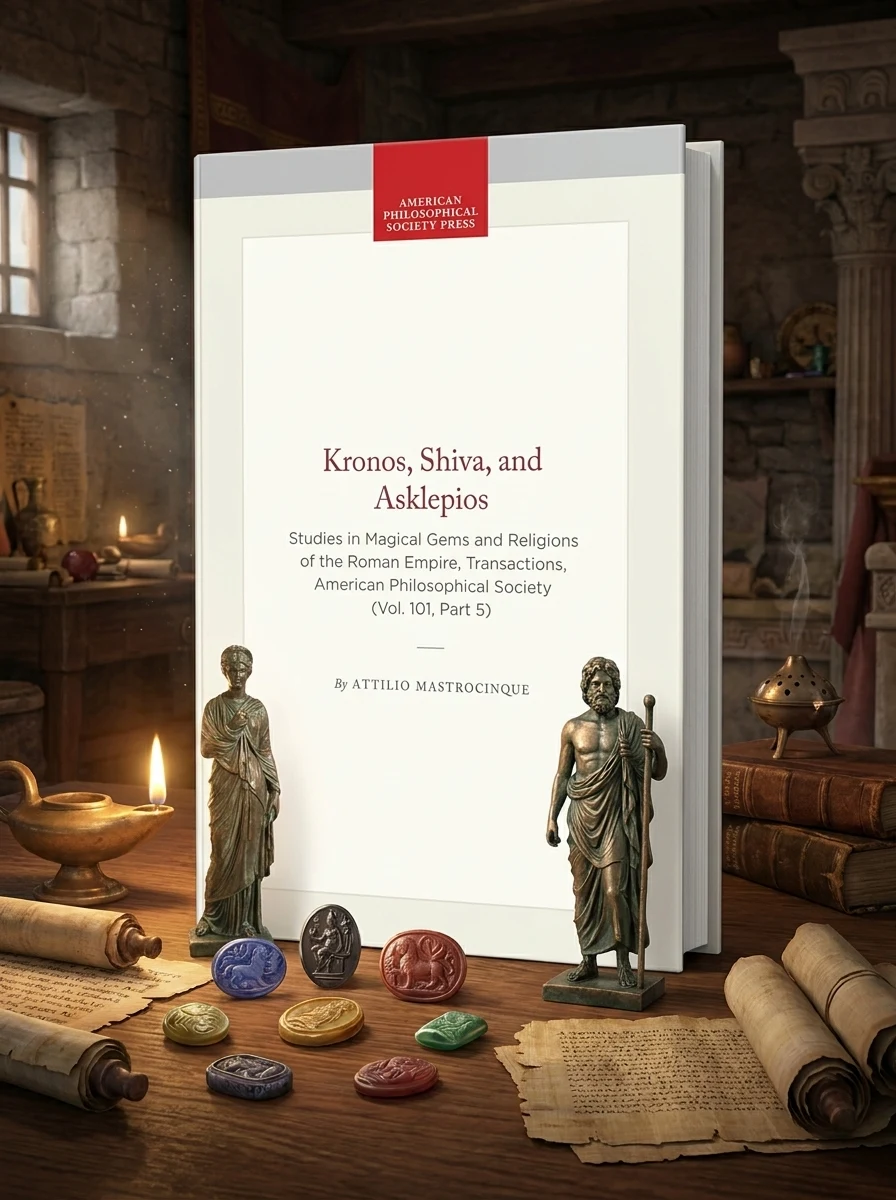
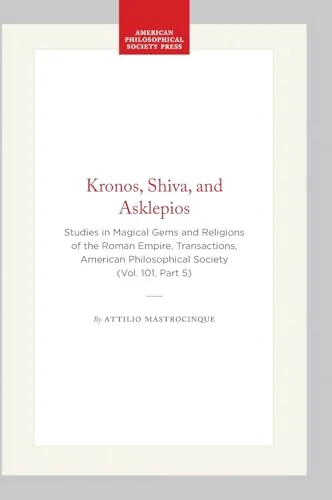
Kronos, Shiva, and Asklepios: Studies in Magical Gems and Religions of the Roman Empire, Transactions, American Philosophical Society (Vol. 101, Part - Ingram Academic Mastrocinque
An academic study of ancient Roman magical gems, examining their engraved texts, religious iconographies, and hidden ritual features.
This volume examines magical gems to uncover previously hidden aspects of religion throughout the Roman Empire. Attilio Mastrocinque analyzes the physical iconographies and specific texts engraved onto these ancient artifacts. By evaluating series of these small carved stones, the text demonstrates how figures such as Kronos, Shiva, and Asklepios functioned within classical magical traditions. Scholar Ubaldo Lugli highlighted the work for its original approach and subtle interpretations. Published by the American Philosophical Society Press, this specialized 130-page study provides primary visual and textual evidence for ancient mystical practices across antiquity.
This study sits within the historical setting of the Roman Empire. It focuses on the religious beliefs, occultism, and magical traditions of antiquity, examining how carved gems served as physical artifacts of ancient mystical practices.


Praise for this book
“Original and stimulating...with an uncommon subtlety of interpretation.”
📝 Description: Kronos, Shiva, and Asklepios: Studies in Magical Gems and Religions of the Roman Empire, Transactions, American Philosophical Society (Vol. 101, Part - Ingram Academic Mastrocinque
💎 Expert review
📖 Why choose it
Why this book is worth reading
This book is a vital resource for serious scholars and dedicated practitioners of esoteric history who seek to understand the material culture of ancient spirituality. Readers interested in the intricate relationship between art, religion, and magic in the Roman Empire will find immense value in Mastrocinque’s meticulous analysis. It offers a fresh perspective on how overlooked artifacts reveal hidden spiritual tapestries and cross-cultural exchanges. Those fascinated by the intersection of archaeology and occult practice will appreciate the detailed examination of iconographies and cryptic inscriptions that define these potent objects.
⭐ Reader reviews
Reader rating
Mastrocinque provides a profound, albeit dense, exploration of magical gems that demands patience and academic focus. While it successfully illuminates the religious landscape of the Roman Empire through untapped spiritual insights, it is not suited for casual readers or those seeking accessible narrative histories. The work is strictly for those willing to engage with complex iconographic analysis and scholarly discourse. It lacks the breezy tone of popular occultism, instead offering rigorous academic inquiry into ancient worship. Readers expecting a straightforward guide to modern magic will find this too specialized, but it is essential for understanding the historical depth of esoteric artifacts.
❓ Frequently asked questions
📖 Who should read this
For the discerning scholar, the curious antiquarian, or anyone drawn to the arcane undercurrents of history, this book offers an essential journey. If you seek to understand the practical magic and spiritual complexities of the Roman world through tangible, mystical artifacts, this is your guide.
🎯 Key themes and symbolism
Unveiling Magical Gems
This volume meticulously deciphers the visual language and written spells embedded within ancient magical gems. It highlights their significance as primary sources for understanding Roman religious practices, moving beyond traditional texts to reveal the practical application of magic and devotion in daily life, demonstrating their overlooked power.
Roman Religious Evolution
The book offers an unparalleled exploration into the diverse spiritual currents flowing through the Roman Empire. By analyzing previously underexamined artifacts, it illuminates how various deities and cults, including those from Eastern traditions, intertwined and transformed, shaping a complex and dynamic religious tapestry across the ancient world.
Syncretic Spiritual Paths
Mastrocinque's research demonstrates the fascinating fusion of divine figures like Kronos, Shiva, and Asklepios on these gems. It underscores the syncretic nature of ancient religious thought, where different pantheons and mystical traditions converged, creating unique and potent magical systems that transcended geographical and cultural boundaries, revealing a vibrant spiritual dialogue.
📜 Historical context
📚 Glossary
- Magical Gems
- Iconography
- Syncretism
📔 Questions to reflect on
- Considering the powerful symbolism of magical gems, what overlooked objects in our modern world might hold similar unacknowledged spiritual or cultural significance for future historians?
- How might the blend of deities like Kronos, Shiva, and Asklepios on a single artifact challenge our contemporary understanding of religious exclusivity or cultural appropriation?
- Reflect on the personal implications of carrying a magical object. How might the belief in its power influence one's daily life or perception of the divine?
📖 Read on the blog
📖 From the series “Transactions of the American Philosophical Society”
All books in the series →


🏛 Books from this publisher American Philosophical Society Press
All books from this publisher →
You might also like
See more →




Have a question about this item?
Ask about the edition, condition, delivery or anything else — we reply by email or phone, usually within a day.
