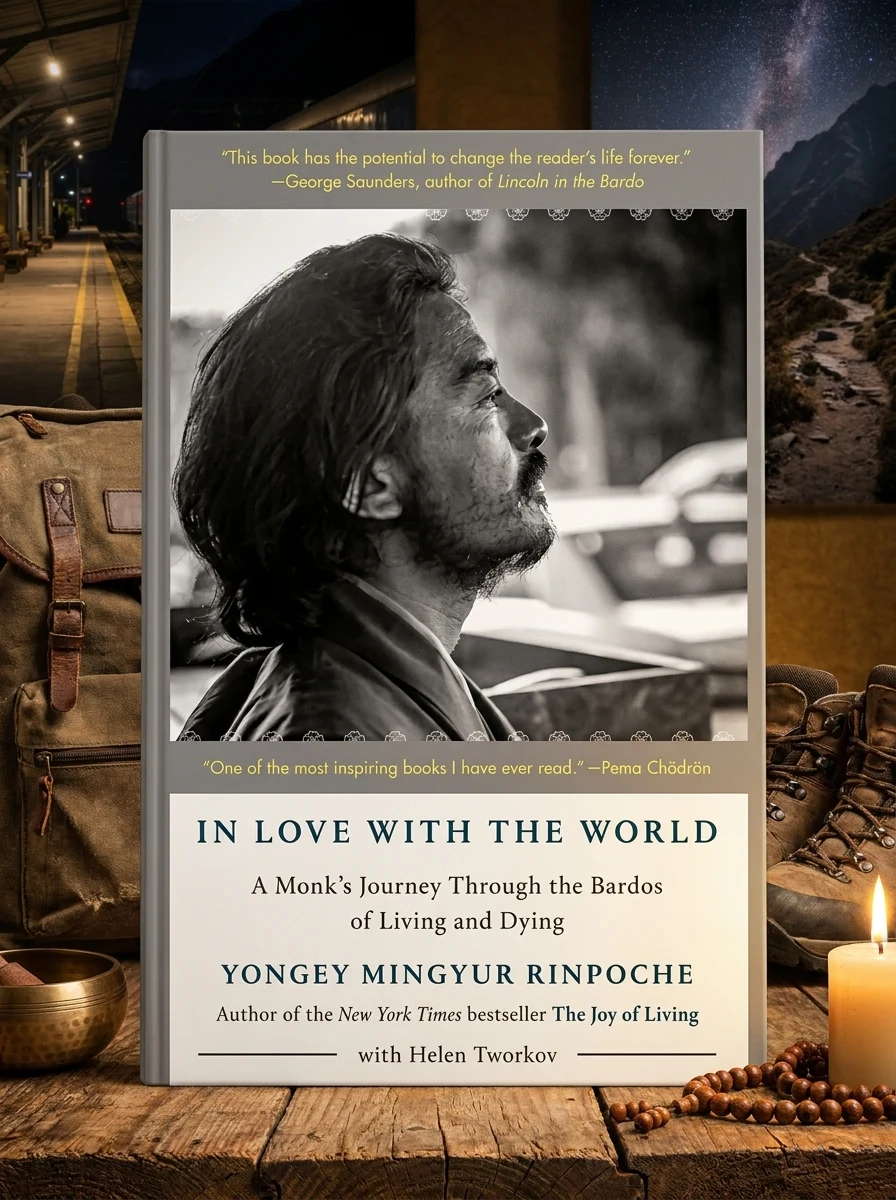
In Love with the World: A Monk's Journey Through the Bardos of Living and Dying


Stock reported in the catalog; fulfillment is confirmed with your request.
Journey with a renowned monk through life's liminal spaces, where death reveals profound truths.
Yongey Mingyur Rinpoche, a celebrated Tibetan Buddhist master, embarked on an extraordinary solitary retreat, shedding his esteemed titles to delve into the raw essence of existence. This memoir chronicles his courageous journey as he embraced the ancient path of wandering mendicants. His spiritual quest intensified when he faced a profound near-death experience, thrusting him into an exploration of the 'bardos'—the transitional states of living and dying. His intimate account offers rare insights into the dissolution of self and the transformative wisdom discovered at life's precipice, challenging conventional spiritual practice.
This work sits firmly within the Tibetan Buddhist tradition, specifically drawing on the Vajrayana teachings regarding the bardos, or transitional states between life and death. It bridges ancient monastic wisdom with contemporary memoir, reflecting a modern engagement with traditional esoteric practices.


📝 Description: In Love with the World: A Monk's Journey Through the Bardos of Living and Dying
💎 Expert review
📖 Why choose it
Why this book is worth reading
Readers seeking a raw, unfiltered look at spiritual authenticity will find immense value in this memoir. Yongey Mingyur Rinpoche invites you to step away from the comfort of established titles and into the terrifying yet liberating unknown of solitary wandering. It is perfect for those who feel disconnected from rigid religious structures and crave a path that embraces the chaos of existence. By facing his near-death experience head-on, the author demonstrates how confronting mortality can dissolve the ego and reveal profound truths about living. This book offers a rare glimpse into the transformative power of surrender, making it essential for anyone navigating their own existential uncertainties or seeking to understand the depth of Tibetan Buddhist practice beyond intellectual theory.
⭐ Reader reviews
Reader rating
While Mingyur Rinpoche’s narrative is undeniably powerful, it demands patience from readers expecting quick fixes or dogmatic religious instruction. This book does not suit those who prefer structured, doctrinal theology over personal, experiential exploration. The focus on solitary wandering and the dissolution of self may feel alienating to individuals rooted in community-based faith traditions or those seeking clear, step-by-step spiritual guidance. However, for seekers willing to embrace ambiguity and the raw essence of existence without immediate resolution, this account provides a compelling, if challenging, perspective on the intersection of life, death, and spiritual awakening.
❓ Frequently asked questions
📖 Who should read this
For those seeking profound spiritual insights, this memoir offers an intimate look into a master's radical self-exploration. If you're drawn to narratives of transformation, the nature of consciousness, and confronting ultimate questions through personal experience, prepare for a deeply moving journey.
🎯 Key themes and symbolism
The Mendicant's Transformation
Rinpoche deliberately relinquishes his monastic comforts and esteemed position to undertake a challenging wandering retreat. This radical act of self-stripping forces him to confront his ingrained attachments and preconceived notions of spirituality, revealing the unexpected difficulties and profound insights gained from abandoning conventional security for an authentic, unvarnished path.
Navigating the Bardos
The book vividly recounts Mingyur Rinpoche's near-death experience, which he frames through the lens of the Tibetan Buddhist 'bardos' or transitional states. It offers a rare, first-person perspective on the dissolution of the ego, the confrontation with ultimate reality, and the profound, life-altering wisdom gleaned from teetering on the edge of mortality and returning.
Shedding Spiritual Identity
Despite his extensive Buddhist training and esteemed status, Rinpoche discovers his deep attachment to his identity as a revered master. His journey becomes an exercise in dismantling these self-imposed labels and roles, highlighting how even advanced practitioners must confront the ego's subtle manifestations to achieve genuine spiritual liberation and understand the true nature of self.
💬 Quotes from the book
“My years of meditation had prepared me for inner peace, but not for the raw stench of the train station or the piercing gaze of a stranger. The true practice began where my comfort ended.”
“The dissolution was not an ending, but an unveiling. Stripped of all form and memory, I encountered a vast, luminous emptiness that was both terrifying and utterly liberating.”
📜 Historical context
📚 Glossary
- Bardo
- Mendicant
- Rinpoche
📔 Questions to reflect on
- What identities or roles do you currently cling to, and what might happen if you released them?
- Consider a time when your expectations for a spiritual or personal journey were challenged by unexpected adversity. What did you learn?
- How might viewing moments of profound transition or loss as 'bardos' (transitional states) alter your perspective and potential for growth?
You might also like
See more →