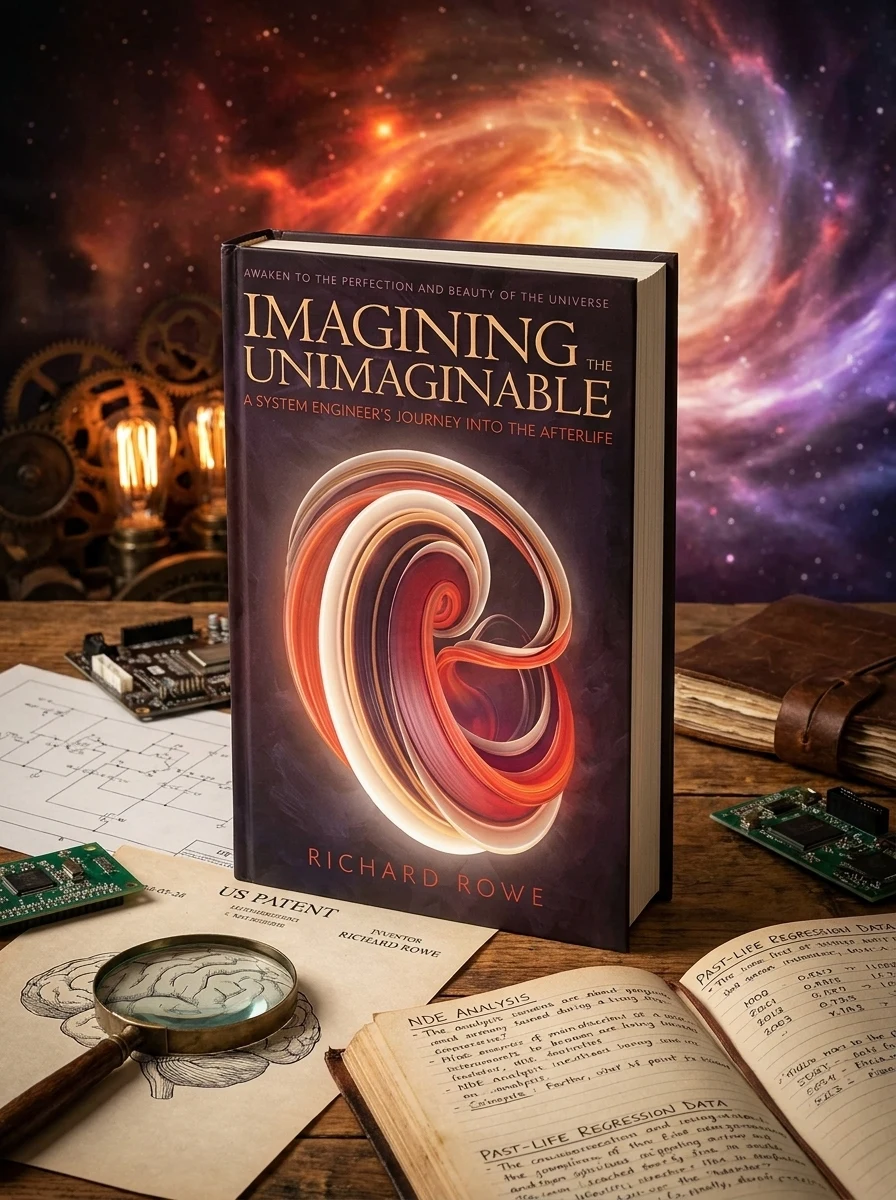
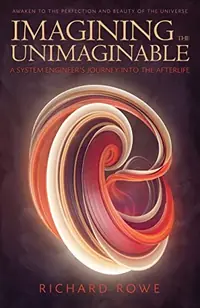
Imagining the Unimaginable: A System Engineer's Journey Into the Afterlife
This edition can be ordered. No arrival date is confirmed.
An engineer applies rigorous analysis to near-death experiences, revealing a divine system beyond our comprehension.
Richard Rowe, an accomplished system engineer and inventor, embarks on a profound personal quest following a near-fatal incident. Driven by existential questions about life after death and suffering, he meticulously examines thousands of first-hand accounts of Near-Death Experiences (NDEs) and past-life regression sessions. Applying his engineering expertise, Rowe constructs a model of the afterlife, presenting a cohesive framework that suggests an intricate, divinely ordered system, all grounded in empirical human testimony rather than religious dogma.
This work sits at the intersection of modern consciousness studies and New Age spirituality, bridging the gap between scientific rationalism and metaphysical inquiry. It reflects a contemporary trend where technical professionals apply analytical frameworks to explore mystical and esoteric phenomena.


📝 Description: Imagining the Unimaginable: A System Engineer's Journey Into the Afterlife
💎 Expert review
📖 Why choose it
Why this book is worth reading
Readers who find traditional religious explanations for the afterlife insufficient or dogmatic will appreciate this fresh, analytical perspective. It is ideal for engineers, scientists, and skeptics who value empirical evidence yet remain open to spiritual possibilities. By grounding near-death experiences in rigorous system engineering logic, Rowe offers a coherent model that satisfies the intellectual need for structure while addressing deep existential questions about life, death, and suffering. This book serves as a comforting bridge for those seeking rational validation of mystical experiences, providing a sense of order and divine intentionality derived from human testimony rather than faith alone. It is particularly valuable for individuals navigating grief or existential crisis who crave a logical framework for the unknown.
⭐ Reader reviews
Reader rating
Rowe’s approach offers a refreshing departure from purely anecdotal NDE literature by introducing systematic analysis to chaotic personal accounts. While the methodology of constructing a divine system from empirical testimony is intriguing, it may alienate readers seeking traditional spiritual guidance or those uncomfortable with reducing the sacred to engineering principles. The book relies heavily on the author's professional lens, which might feel reductive to pure mystics but reassuring to rationalists. It does not suit those looking for religious doctrine or unstructured meditative practices. However, for the analytically minded curious about consciousness, it provides a unique, cohesive framework that challenges conventional boundaries between science and spirituality without dismissing either.
❓ Frequently asked questions
📖 Who should read this
If you’re a curious skeptic, an engineer of the mind, or anyone seeking a rational, evidence-based exploration of the afterlife, this book is for you. It offers a unique perspective that bridges scientific inquiry with spiritual curiosity, challenging conventional beliefs about the unseen.
🎯 Key themes and symbolism
Engineering the Afterlife
Rowe leverages his system engineering background to analyze disparate first-hand accounts of NDEs and past-life regressions, piecing together patterns and structures. He approaches the spiritual realm with the same analytical rigor he applies to complex technological systems, seeking to understand its operational principles rather than relying on faith-based assumptions.
Empirical Spiritualism
Eschewing traditional faith-based explanations, the author grounds his exploration solely in documented human experiences. By systematically collecting and categorizing thousands of testimonies, he attempts to build a model of the afterlife that is evidence-based, allowing for a fresh, objective perspective on ancient mysteries of consciousness and existence beyond the physical.
Beyond the Veil
The book delves into both Near-Death Experiences and past-life regression hypnosis, treating them as complementary sources of data. Rowe's personal experimentation with regression further deepens his understanding, providing unique insights into the continuity of consciousness and the intricate workings of existence beyond physical death, all through a structured investigative lens.
💬 Quotes from the book
“Just as any complex system can be reverse-engineered from its outputs, the consistent patterns across thousands of NDE accounts reveal an underlying architecture of consciousness.”
“The data, when rigorously compiled and cross-referenced, points not to chaos, but to an elegantly structured, purposeful existence beyond our immediate perception.”
📜 Historical context
📚 Glossary
- Near-Death Experience (NDE)
- Past-Life Regression
- System Engineering
📔 Questions to reflect on
- How might applying a 'system engineering' approach to a personal spiritual belief challenge or strengthen your understanding of its underlying principles?
- If NDEs and past-life regressions offer empirical 'data' on the afterlife, what specific questions would you prioritize asking these sources to deepen your understanding?
- Consider a personal experience that defied conventional explanation. How might Rowe's methodology of data collection and pattern recognition help you analyze it anew?
🏛 Books from this publisher Ozark Mountain Publishing
All books from this publisher →

You might also like
See more →
 90
90