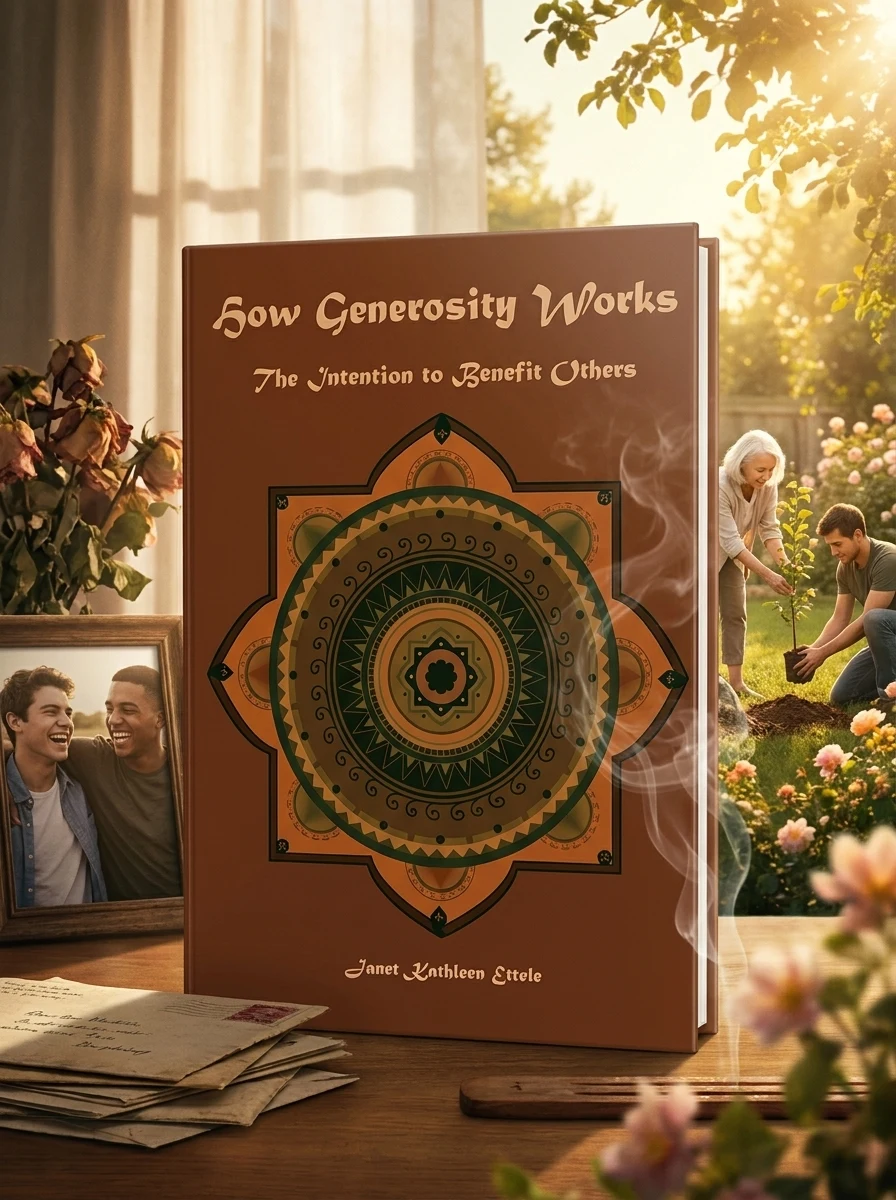
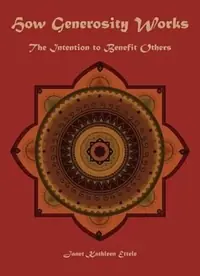
How Generosity Works: The Intention to Benefit Others
This edition can be ordered. No arrival date is confirmed.
A luminous fable weaving ancient Buddhist wisdom into a modern journey from grief to generous love.
In this inaugural volume of the How Life Works series, we meet Troy, a young man adrift after academic failure and family strife, and Grace, a serene practitioner. Their bond, forged through music, becomes the vessel for exploring the teachings of the eighth-century master Shantideva. This narrative demonstrates how the radical practice of generosity can transmute personal anguish into profound compassion. It is not a dry philosophical treatise, but a living story showing how intention can heal the fractured self and reconnect us to the world with open hands and a softened heart.
This work sits at the intersection of contemporary spiritual fiction and Mahayana Buddhist philosophy, specifically drawing upon the teachings of the eighth-century master Shantideva regarding the practice of generosity. It adapts ancient wisdom traditions to address modern psychological struggles such as grief and alienation.


📝 Description: How Generosity Works: The Intention to Benefit Others
💎 Expert review
📖 Why choose it
Why this book is worth reading
Readers navigating personal loss, academic disappointment, or feelings of isolation will find profound solace in this narrative. It offers a gentle, accessible entry point into the radical Buddhist practice of generosity, demonstrating how intention can heal emotional fractures. Those seeking to transform anguish into compassion through the lens of a luminous fable will appreciate its warmth. The story of Troy and Grace provides a relatable vessel for exploring deep philosophical concepts without dry academic rigor. It is ideal for individuals ready to reconnect with the world through open hands and softened hearts, offering practical hope through the power of beneficial intention.
⭐ Reader reviews
Reader rating
I've read excerpts online before, but having the full text is different. Plenty of passages worth underlining; my copy is already full of margin notes. It rewards patience more than any book I've bought this year. Five stars from me.
As someone who reads a lot in this field, I can be picky. It connects ideas I'd only seen treated separately elsewhere. It's become a regular reference in my practice. The font runs small in the appendices. Recommended with reservations.
Needed this for my research. The typesetting is comfortable for study, with good margins for notes. Great value for what you get.
Bought this as a gift for my sister and ended up ordering a second copy for myself. I found myself reading passages aloud just to sit with them. Recommended if you're ready to do the work.
I keep coming back to this one. The text itself is dense but rewarding — you get out what you put in. Some sections stopped me cold in the best way. Deserves a place on any esoteric bookshelf.
Added this to my reference shelf. Solid binding, decent paper — holds up to heavy use. Already eyeing my next order.
This inaugural volume succeeds as a living story rather than a treatise, weaving Shantideva’s teachings into a modern journey from grief to love. However, readers seeking dense academic analysis or rigid doctrinal instruction will find it too narrative-driven and light on technical detail. It is not suited for those who prefer detached philosophical discourse over character-led spiritual exploration. The emotional core may feel overly sentimental to skeptics of fable-based wisdom. Yet, for those open to metaphorical learning, it offers a refreshing, humane approach to esoteric concepts.
❓ Frequently asked questions
📖 Who should read this
Readers seeking gentle spiritual guidance without dogma will find comfort here. Ideal for those navigating loss or seeking to deepen their practice of compassion through narrative rather than instruction.
🎯 Key themes and symbolism
Transmuting Grief
The text explores how personal loss and societal rejection need not define us. By examining Troy's journey, we see how sorrow can be the raw material for empathy, allowing us to convert isolation into a bridge for connecting with others who suffer.
Musical Resonance
Music serves as the non-verbal language between the protagonists. It acts as a catalyst for spiritual exchange, bypassing intellectual barriers to establish a deep, intuitive understanding of Shantideva’s verses, proving that art can be a direct conduit for ancient wisdom.
Radical Generosity
Generosity here is defined not as charity, but as an internal shift in perception. The book argues that giving of oneself, even in pain, dissolves the ego’s defenses, creating a sustainable source of joy and peace that is independent of external circumstances.
💬 Quotes from the book
“Pain is not the enemy; it is the doorway to understanding the suffering of others.”
“Music does not ask you to explain your grief; it simply holds space for it.”
📜 Historical context
📚 Glossary
- Bodhisattva
- Shantideva
- Generosity
📔 Questions to reflect on
- When have you felt most isolated, and how might that experience deepen your connection to others?
- What simple act of generosity can you perform today that requires no expectation of return?
- How does your current pain reveal areas where you are still holding onto rigid expectations?
You might also like
See more →




 91
91
 91
91