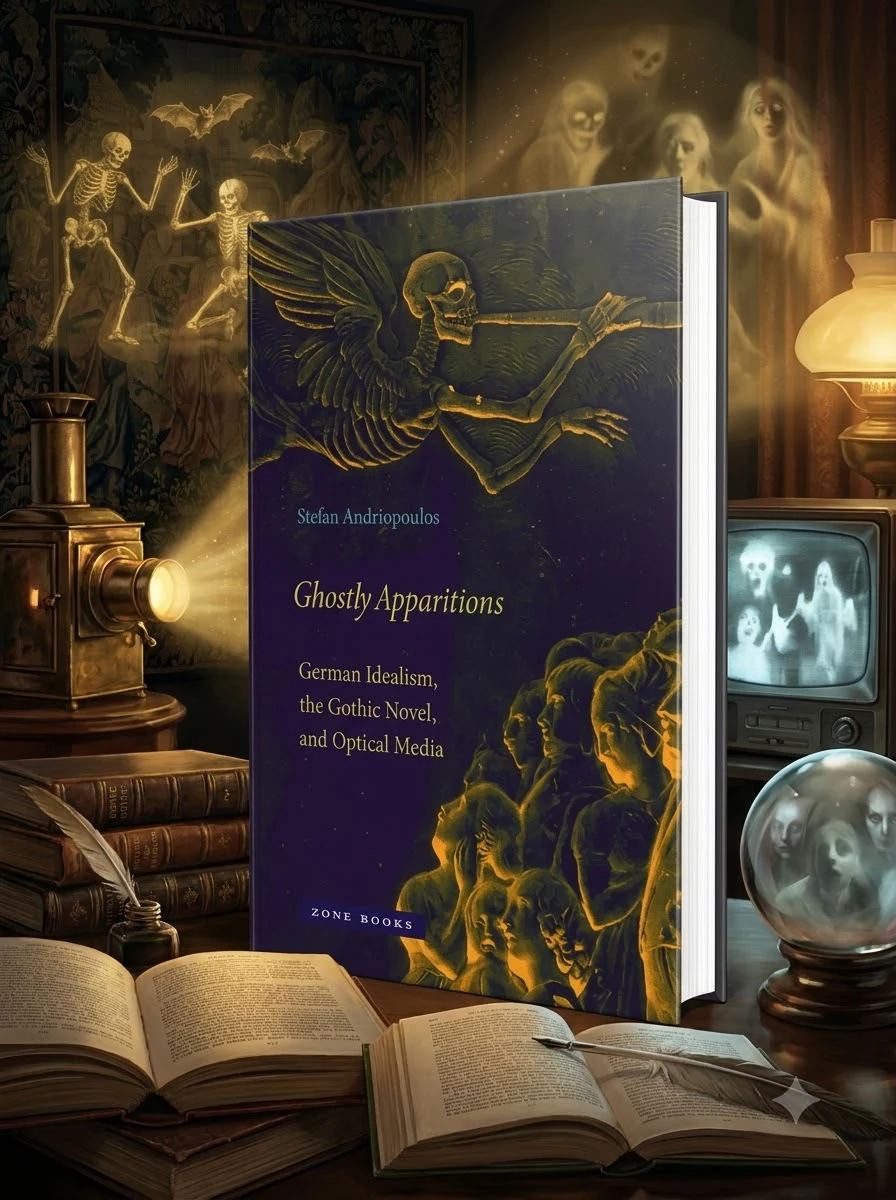
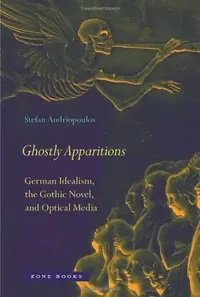
Ghostly Apparitions: German Idealism, the Gothic Novel, and Optical Media
This edition can be ordered. No arrival date is confirmed.
Philosophy and phantoms collide in this dazzling archaeology of German Idealism's optical ghosts.
Andriopoulos brilliantly maps the hidden circuitry between Kant’s metaphysics and the era’s spectral entertainments. He reveals how magic lanterns and Gothic tales did not merely illustrate philosophy but actively shaped its concepts of reality and perception. By tracing the lineage from phantasmagoria to spiritualism, the text exposes how early media technologies conditioned the mind to accept the supernatural as intellectual fact, rewriting the history of thought through the lens of visual trickery.
This work situates itself within the intersection of German Idealist philosophy and early modern optical media history, exploring how technological spectacles influenced metaphysical thought during the rise of spiritualism. It bridges the gap between academic philosophical discourse and the popular Gothic literary tradition of the era.


📝 Description: Ghostly Apparitions: German Idealism, the Gothic Novel, and Optical Media
💎 Expert review
📖 Why choose it
Why this book is worth reading
You will find profound satisfaction in this text if you are fascinated by the invisible threads connecting high philosophy with low entertainment. Stefan Andriopoulos offers a dazzling archaeology that reveals how magic lanterns and Gothic tales did not just illustrate ideas but actively shaped our understanding of reality. If you enjoy uncovering how visual trickery rewrote intellectual history, this book provides a brilliant map of the hidden circuitry between Kant’s metaphysics and spectral entertainments. It is essential reading for those who wish to see how early media technologies conditioned the mind to accept the supernatural as fact, transforming the very concepts of perception and existence in ways that still resonate today.
⭐ Reader reviews
Reader rating
Finally got around to ordering this. The symbolism is layered and generous to patient readers. It rewards patience more than any book I've bought this year. My only quibble is the cover feels thinner than expected. Good, with the caveats above.
Exactly what I was looking for. Solid binding, decent paper — holds up to heavy use. Some archaic spellings slow things down.
Perfect companion for my morning study sessions. There's real depth here that reveals itself on a second reading. The material is presented clearly and the structure makes it easy to revisit key passages. Happy enough with the purchase.
Arrived faster than expected and well packaged. There's real depth here that reveals itself on a second reading. It pairs well with more modern commentaries on the same tradition. Already eyeing my next order.
Came across this title in a footnote and had to track it down. It reads better in small doses — a chapter at a time with notes. The print is clean and easy on the eyes for long sessions. Shipping was quick too.
A friend in my study group recommended this one. Solid binding, decent paper — holds up to heavy use. Plenty of passages worth underlining; my copy is already full of margin notes. A few pages arrived with light corner wear, though nothing serious. Still worth having on the shelf.
Exactly what I was looking for. The print is clean and easy on the eyes for long sessions. You can tell why this work has endured. Shipping was quick too.
Andriopoulos delivers a rigorous, intellectually dense exploration of how optical media influenced German Idealism. While the analysis is brilliant for scholars of philosophy and media studies, it may not suit readers seeking a straightforward historical narrative or those uncomfortable with abstract metaphysical discourse. The text demands patience as it traces complex lineages from phantasmagoria to spiritualism. However, for those willing to engage with its sophisticated arguments about perception and reality, the reward is a transformative perspective on how visual culture constructs intellectual truth. It is a demanding but rewarding excavation of the past.
❓ Frequently asked questions
📖 Who should read this
Scholars of media history, philosophy students, and readers fascinated by the intersection of Enlightenment rationalism and supernatural spectacle will find this work essential.
🎯 Key themes and symbolism
Media Archaeology
German Idealism
Spectral Aesthetics
💬 Quotes from the book
“The phantasmagoria did not just display ghosts; it engineered the very conditions of belief in the supernatural for the modern mind.”
“Reading the Gothic novel was not merely entertainment; it was a physiological and psychological descent into a mediated reality.”
📜 Historical context
📚 Glossary
- Phantasmagoria
- German Idealism
- Media Archaeology
📔 Questions to reflect on
- How do the visual effects of modern screens condition our belief in digital realities, similar to how lanterns shaped 18th-century spirituality?
- In what ways does your own perception of 'truth' depend on the medium through which you receive information?
- Where do you draw the line between a philosophical concept and a technological illusion? Can they ever be separated?
You might also like
See more →



 91
91
 91
91