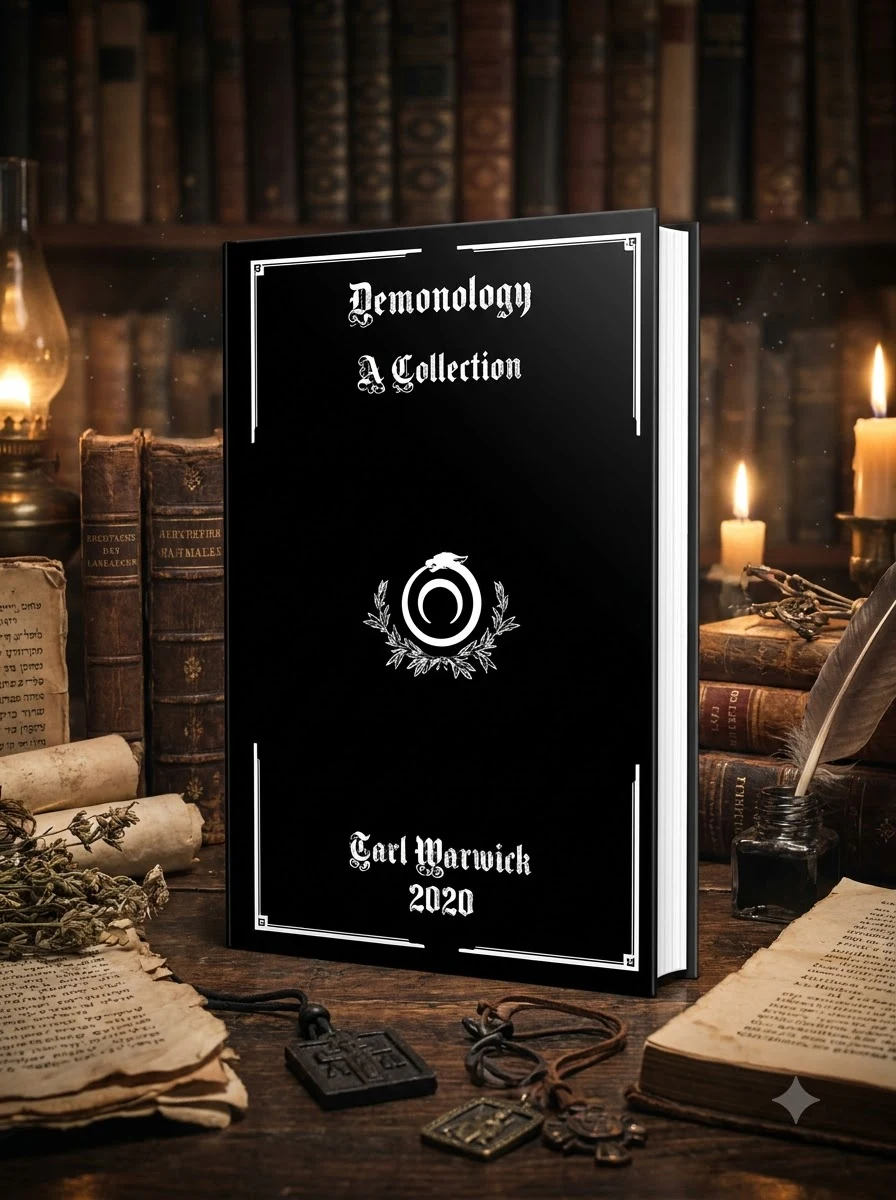
Demonology: A Collection
Stock reported in the catalog; fulfillment is confirmed with your request.
Unearth the multifaceted lore of demonic entities across centuries and diverse cultures.
Tarl Warwick's "Demonology: A Collection" offers an expansive journey through the historical and theological interpretations of demonic figures. This compendium gathers diverse texts, spanning various religious traditions and epochs, providing a foundational understanding of how these entities have been perceived and documented. Enhanced by a comprehensive bibliography and supplementary materials, it serves as an excellent starting point for those seeking to delve into the complex tapestry of demonological thought and its historical evolution within human belief systems.
This work situates itself within the broad tradition of Western occultism and comparative religion, exploring how demonic entities have been conceptualized across diverse cultures and historical epochs. It acts as a bridge between theological history and esoteric study, documenting the evolution of belief systems regarding these entities.


📝 Description: Demonology: A Collection
💎 Expert review
📖 Why choose it
Why this book is worth reading
This collection is an ideal resource for the curious scholar or the serious practitioner who seeks a foundational understanding of demonological thought without getting lost in fragmented primary sources. Tarl Warwick has curated a comprehensive journey that spans centuries, offering clarity on how different religious traditions have perceived and documented these complex figures. By gathering diverse texts into one accessible volume, it provides essential context for anyone wishing to understand the historical evolution of demonic lore. The inclusion of supplementary materials ensures that readers are not just consuming information but are equipped with the tools to explore further. It is particularly valuable for those who appreciate a structured approach to esoteric history, allowing them to grasp the multifaceted nature of these entities through a lens of academic rigor and broad cultural perspective.
⭐ Reader reviews
Reader rating
While this compendium serves as an excellent starting point for novices, it may disappoint experts seeking deep, original analysis or rare textual discoveries. The work is descriptive rather than interpretive, focusing on the tapestry of belief systems rather than offering novel theological arguments. Readers looking for practical magical workings or sensationalist horror narratives will find little here, as the tone remains scholarly and observational. It is best suited for those interested in the sociological and historical aspects of demonology. However, for anyone wanting a clear, well-organized overview of how demonic figures have been viewed across time, it delivers a solid, informative foundation without unnecessary fluff or obscurity.
❓ Frequently asked questions
📖 Who should read this
If you are drawn to the historical and theological underpinnings of spiritual evil, or seek a broad, academic introduction to demonology from various traditions, this collection is for you. It's perfect for students, researchers, or curious individuals wanting a well-rounded overview.
🎯 Key themes and symbolism
Cross-Cultural Demonic Perceptions
This volume extensively explores how different societies and faiths, from ancient times to later periods, have conceptualized and documented malevolent spiritual beings. It reveals both the unique cultural expressions of these beliefs and the surprising commonalities in their understanding of evil entities across various traditions, offering a comparative perspective on the infernal.
Theological Evolution of Evil
The collection traces the development of demonological doctrines within major religious frameworks, particularly Christian theology. It examines how beliefs about fallen angels, devils, and other nefarious spirits have transformed over time, reflecting various theological interpretations and philosophical shifts that sought to integrate the concept of evil into a coherent worldview.
Historical Contextualization of Demons
The work places the study of demonology within its proper historical settings, illustrating how societal changes, philosophical movements, and religious schisms influenced the descriptions, classifications, and perceived roles attributed to demonic entities. It offers insight into the cultural forces that shaped our understanding of the diabolical throughout history.
💬 Quotes from the book
“And it was in the seventh hour, when the stars aligned thusly, that the entity known as Malphas did manifest, bearing the form of a raven, yet speaking with the voice of a man, commanding legions of lesser spirits to vex the righteous.”
“Theological discourse posits the demonic as a necessary counterpoint to divine benevolence, a shadow cast by the very light of creation, whose purpose, however malevolent, ultimately serves a higher, inscrutable design.”
📜 Historical context
📚 Glossary
- Demonology
- Angelology
- Grimoire
📔 Questions to reflect on
- How do the varying cultural depictions of demonic entities reflect the fears and anxieties of those societies?
- Consider the evolution of demonological thought: what major historical or theological shifts do you identify as most impactful?
- If demons represent the 'shadow' aspect of creation, what does this imply about the nature of divine power or human free will?
🏛 Books from this publisher Independently Published
All books from this publisher →
 84
84
 90
90

You might also like
See more →