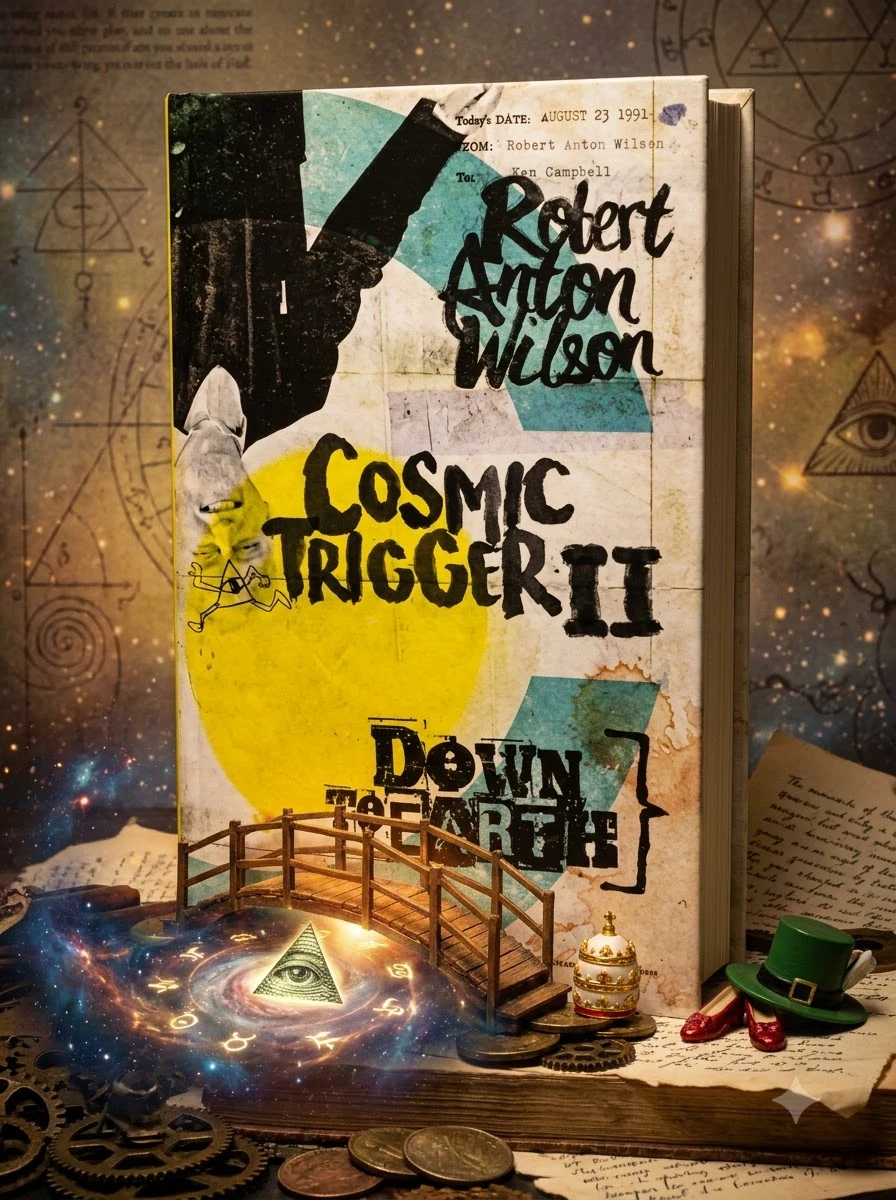

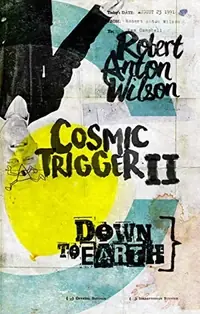
Cosmic Trigger II: Down to Earth Wilson, Robert Anton
Wilson, Robert AntonStock reported in the catalog; fulfillment is confirmed with your request.
Wilson guides seekers through the Bridge of Chapel Perilous, mapping the wild terrain of consciousness and reality.
This volume shifts focus from the Illuminati's secrets to the internal architecture of belief. Wilson utilizes the metaphor of a Bridge to navigate the transition from early conditioning to model agnosticism. He deconstructs rigid dogma by comparing ecclesiastical authority to fantastical figures, urging readers to question their own perceptual filters. The narrative weaves personal history with metaphysical inquiry, demonstrating how we construct our worlds through language and expectation. It is a manual for intellectual freedom, challenging the reader to hold multiple truths simultaneously without collapsing into certainty or nihilism.
This work sits firmly within the postmodern occult and New Thought traditions of the late 20th century, continuing the author's exploration of reality tunnels and model agnosticism. It bridges esoteric philosophy with psychological inquiry, reflecting a period where skepticism met spiritual seeking.


📝 Description: Cosmic Trigger II: Down to Earth Wilson, Robert Anton
💎 Expert review
📖 Why choose it
Why this book is worth reading
Readers who crave intellectual liberation and are weary of rigid dogma will find profound value in this manual for freedom. It is ideal for those willing to deconstruct their own perceptual filters and hold multiple truths without collapsing into certainty. The book offers a unique map through the Bridge of Chapel Perilous, transforming abstract metaphysical inquiry into a tangible journey of self-discovery. Those interested in how language constructs reality will appreciate the detailed examination of belief systems. It empowers seekers to navigate the wild terrain of consciousness with agnosticism rather than fear. By weaving personal history with philosophical depth, it provides tools for escaping early conditioning. It is essential for anyone seeking to understand the internal architecture of their own beliefs and desires.
⭐ Reader reviews
Reader rating
Exactly what I was looking for. You can tell why this work has endured. A text you study rather than simply read. Great value for what you get.
Took a chance on this and glad I did. I found myself reading passages aloud just to sit with them. Recommended with reservations.
This edition finally does the material justice. The ideas are old but land with surprising force today. Five stars from me.
This edition finally does the material justice. The typesetting is comfortable for study, with good margins for notes. One of my better finds this year.
As someone who reads a lot in this field, I can be picky. It connects ideas I'd only seen treated separately elsewhere. It pairs well with more modern commentaries on the same tradition. Glad I finally picked this up.
Ordered this after seeing it referenced in another book I was studying. I appreciated how the argument builds steadily from first principles. It reads better in small doses — a chapter at a time with notes. Glad I finally picked this up.
Was skeptical at first. You can tell why this work has endured. One of my better finds this year.
This text is a dense, intricate exploration of belief systems that demands patience and an open mind. While it excels in mapping the transition to model agnosticism, it may frustrate readers seeking clear answers or linear narratives. Those who prefer concrete facts over metaphysical speculation might find the deconstruction of ecclesiastical authority and reality tunnels tedious. It is not for those who desire definitive truths or rigid structures. However, for the philosophical adventurer, it is a rewarding challenge that dismantles perceptual filters. The blend of personal history and abstract inquiry creates a unique reading experience. It suits those comfortable with ambiguity and eager to question their own worldview. Ultimately, it is a powerful tool for intellectual freedom, provided one accepts its non-dogmatic approach.
❓ Frequently asked questions
📖 Who should read this
Seekers tired of dogmatic answers, fans of chaotic philosophy, and anyone questioning the nature of their own beliefs. It suits those willing to abandon comfort for intellectual liberation and explore the mechanics of consciousness beyond traditional spiritual frameworks.
🎯 Key themes and symbolism
Model Agnosticism
Wilson argues that no single map of reality is absolute. We must treat all models as provisional tools rather than ultimate truths, allowing flexibility in perception and reducing the suffering caused by rigid ideological attachment to any one worldview.
The Bridge Metaphor
Representing the precarious journey of enlightenment, the Bridge symbolizes the risk of falling into chaos if one loses balance. It requires stepping forward without guarantees, trusting the structure only as long as it supports weight, mirroring the trust we place in societal norms.
Reality Tunnels
Every individual lives within a subjective reality tunnel shaped by conditioning. Wilson explores how these tunnels filter experience, making it difficult to see alternative perspectives. He encourages readers to tunnel-hop, expanding their perceptual range to encompass contradictory truths.
💬 Quotes from the book
“The map is not the territory.”
“You are what you believe you are.”
📜 Historical context
📚 Glossary
- Model Agnosticism
- Chapel Perilous
- Reality Tunnel
📔 Questions to reflect on
- Identify a belief you hold as absolute truth. How might viewing it as merely one model among many change your daily interactions?
- Where in your life do you feel you are crossing a 'Bridge' without a railing? What fears arise when you let go of the bank you stand on?
- List three 'reality tunnels' you inhabit simultaneously. How do they conflict, and what happens when you try to inhabit them all at once?
✍️ More books by this author Wilson, Robert Anton
All books by this author →

🏛 Books from this publisher Hilaritas Press, LLC.
All books from this publisher →
 75
75
You might also like
See more →
 91
91


 91
91