
US shipping Secure card payment Occult and esoteric books

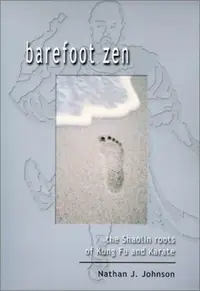
Barefoot Zen: The Shaolin Roots of Kung Fu and Karate

Johnson, Nathan J
Reader rating
4.4
(3 reviews) 53 sold
Availability to be confirmed

This edition can be ordered. No arrival date is confirmed.

📚 ABOUT THE BOOK

Uncover the spiritual soul of Kung Fu and Karate, rooted in Shaolin Zen rather than combat.

Nathan Johnson challenges the conventional narrative of martial arts by tracing their origins to the spiritual disciplines of the Shaolin monastery. Rather than viewing these practices merely as combat systems, this work posits that Kung Fu and Karate evolved from nonviolent Chan Buddhist meditations designed for enlightenment. By analyzing specific kata and historical links, the author reveals how solo forms serve as moving meditation. This text bridges the gap between Chinese and Japanese traditions, offering a profound look at the shared esoteric heritage that prioritizes inner peace and wisdom over physical aggression or self-defense utility.

Key themes
Shaolin Buddhist Origins Kata as Meditation Nonviolent Self-Cultivation
Historical context

This work sits at the intersection of esoteric history and martial arts philosophy, challenging secular combat narratives by rooting practices in Chan Buddhist meditation. It explores the shared spiritual heritage between Chinese and Japanese traditions, emphasizing inner peace over physical utility.


Difficulty
●● Moderate
Fans will love it
Alan Watts · D.T. Suzuki · Osho · The Tao Te Ching
🕯️ Occult Philosophy
🏛 Weiser Books 📖 352 pages 📔 Paperback 📐 Paperback ISBN: 9781578631421
Fun fact
Johnson succeeds in liberating martial arts from their combat-centric identity, offering a refreshing spiritual perspective that many long for. It excels in connecting disparate traditions through shared Buddhist roots. However, readers seeking practical fighting advice or rigorous historical citations will find it lacking. It sits uniquely as a philosophical bridge, ideal for those ready to view their art as a path to enlightenment rather than a tool for war.

📝 Description: Barefoot Zen: The Shaolin Roots of Kung Fu and Karate

Most books about Kung Fu or Karate deal with techniques or history. Few examine the underlying purpose of these arts, or approach them as a tool for spiritual, rather than physical, development. Barefoot Zen is a brave new approach to the martial arts, which clearly demonstrates that the traditional movements of both Kung Fu and Karate, contained in the solo choreographed sequences of movements known as forms (or kata), grew out of the spiritual practices of the Shaolin order of Buddhist monks and nuns. Nathan Johnson explains that this mystical and nonviolent teaching is a profound and beautiful expression of Chan (Zen) Buddhism and its pursuit of wisdom, peace, and enlightenment. Contrary to popular assumption, he contends that it was never intended to be an actual means of selfdefense. Barefoot Zen bridges the gap between Kung Fu and Karate, and reveals their common origin through the disclosure of vital research material on three of the world's most important Karate kata. Part I explains the spiritual disciplines that contributed to what we know as the martial arts. Part II explains the creation of the art along with practical instruction for performing kata. Part III explains the formation of many of the world's Kung Fu styles. We learn that the original "empty hand art" was used as a method of kinetic meditation between pairs and was designed as a practical tool to assist practitioners in transcending the fear and insecurity of everyday living. Barefoot Zen makes the legacy of the Shaolin way accessible to all, releasing the art from the clutches of popular images and painful concerns about selfdefense. The legendary courage of the Shaolin (Chan/Zen) order was not developed by fighting with enemies, but by not fighting! The Shaolin teaching was designed to free us from fear, the only true enemy.

💎 Expert review

💎
Esoterica Books editorial team
Occult literature desk
Johnson presents a compelling, albeit niche, argument that recontextualizes martial arts as spiritual disciplines rather than combat systems. The analysis of kata as moving meditation is insightful for practitioners seeking deeper meaning. However, this book does not suit readers looking for technical fighting guides, historical battle accounts, or those who view martial arts strictly through a competitive athletic lens. It is specifically tailored for the philosophically inclined esoteric reader. Those expecting practical self-defense instruction or rigorous academic historiography may find the focus on spiritual abstraction too abstract and lacking in tangible utility.
✓ EDITOR'S REVIEW

📖 Why choose it

📖

Why this book is worth reading

Readers seeking to transcend the physical confines of martial arts will find profound value in this exploration of their spiritual origins. It is ideal for those who view movement as a pathway to enlightenment rather than mere self-defense. By revealing how solo forms function as moving meditation, the book offers a bridge between Chinese and Japanese esoteric traditions. Those interested in nonviolent Chan Buddhist practices and the hidden wisdom within Kung Fu and Karate will appreciate this shift from aggression to inner peace. It serves anyone wishing to understand the soul behind the technique.

⭐ Reader reviews

The starting rating comes from the team Esoterica Books —
⭐ Esoterica editorial review Editorial rating 4.4/5
★★★★
Seekers of martial arts who feel disconnected from the spiritual depth of their practice, and historians interested in the religious underpinnings of Asian physical disciplines.

Reader rating

4.4
Based on 3 reviews
5
1
4
2
3
0
2
0
1
0
F
Felix M. ✓ Verified purchase
November 18, 2025
Almost perfect

Exactly what I was looking for. It pairs well with more modern commentaries on the same tradition.

H
Hazel C. ✓ Verified purchase
March 28, 2025
Deep and rewarding

Finally got around to ordering this. Every rereading turns up something I missed. Shipping was quick too.

E
Esoterica Books editorial team

Johnson presents a compelling, albeit niche, argument that recontextualizes martial arts as spiritual disciplines rather than combat systems. The analysis of kata as moving meditation is insightful for practitioners seeking deeper meaning. However, this book does not suit readers looking for technical fighting guides, historical battle accounts, or those who view martial arts strictly through a competitive athletic lens. It is specifically tailored for the philosophically inclined esoteric reader. Those expecting practical self-defense instruction or rigorous academic historiography may find the focus on spiritual abstraction too abstract and lacking in tangible utility.

❓ Frequently asked questions

No, it focuses exclusively on the spiritual and meditative aspects of movement, arguing that combat utility was a later, secondary adaptation.
It is best for practitioners with some background who wish to understand the philosophical roots of their forms, rather than those seeking immediate technical instruction.

📖 Who should read this

Seekers of martial arts who feel disconnected from the spiritual depth of their practice, and historians interested in the religious underpinnings of Asian physical disciplines.

🎯 Key themes and symbolism

Shaolin Buddhist Origins

Kata as Meditation

Nonviolent Self-Cultivation

💬 Quotes from the book

“The movements are not designed to harm, but to harmonize the spirit with the cosmos.”

“To understand the kata is to understand the silence between the breaths.”

📜 Historical context

This work emerges from the mid-20th century resurgence of interest in Zen Buddhism within Western martial arts communities. It counters the post-WWII secularization of karate and kung fu, which often stripped them of their monastic context. Johnson draws upon obscure monastic records to reconnect modern practitioners with the pre-modern religious frameworks that originally shaped these arts, challenging the dominant sportification of the field.

📚 Glossary

Kata
Chan Buddhism
Shaolin

📔 Questions to reflect on

  1. How does your current understanding of 'defense' limit your practice?
  2. What spiritual intentions can you infuse into your daily kata?
  3. In what ways do your physical movements reflect your internal state?

🏛 Books from this publisher Weiser Books

All books from this publisher →


You might also like

See more →