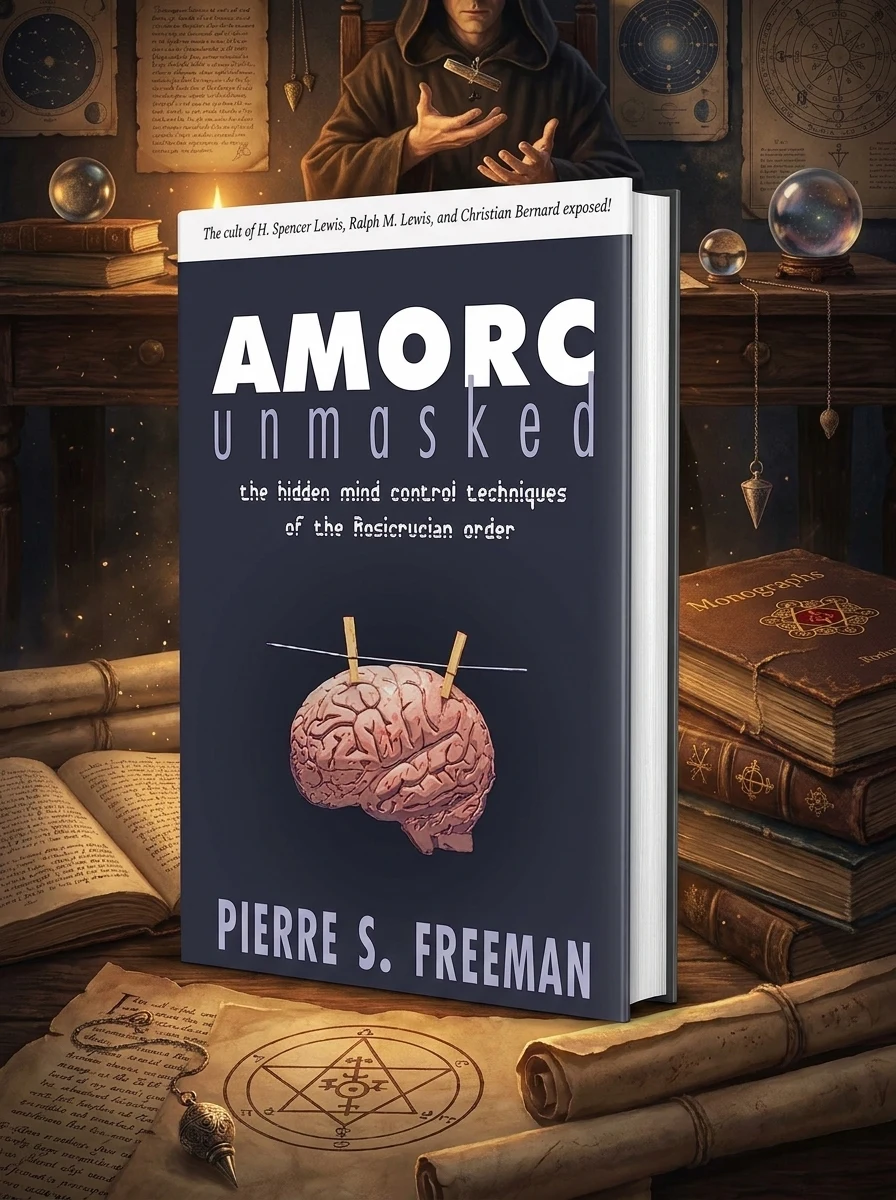
AMORC Unmasked: The hidden mind control techniques of the Rosicrucian order


Stock reported in the catalog; fulfillment is confirmed with your request.
Unmask the hidden influence behind AMORC's mystical facade.
Pierre S. Freeman's "AMORC Unmasked" delves into the inner workings of the Ancient and Mystic Order Rosae Crucis, challenging its public image as a benign, nonsectarian philosophical society. This exposé meticulously dissects how AMORC, through its structured weekly monographs, allegedly employs sophisticated psychological techniques, rather than genuine spiritual development, to cultivate a specific worldview among its members. Freeman argues that the lessons on telepathy, telekinesis, and other esoteric practices are not merely academic studies, but rather tools within a larger, covert system of influence.
This work emerges from the tradition of critical investigations into modern esoteric organizations, reflecting a skeptical stance toward groups that blend spiritual philosophy with psychological conditioning techniques. It sits within the broader genre of exposés that scrutinize the boundary between genuine philosophical inquiry and alleged mind control mechanisms.


📝 Description: AMORC Unmasked: The hidden mind control techniques of the Rosicrucian order
💎 Expert review
📖 Why choose it
Why this book is worth reading
Readers interested in the sociology of religion and the mechanics of organizational influence will find this book particularly valuable. It serves those who wish to understand how structured educational materials can subtly shape belief systems without explicit coercion. Individuals skeptical of mystical claims but curious about their psychological appeal will appreciate the detailed dissection of AMORC's methods. The text offers a clear, analytical perspective on how purported spiritual practices function as tools for worldview cultivation. It is ideal for critical thinkers who want to look beyond the surface-level benevolence presented by such groups and examine the underlying structures of control and influence that may exist within their pedagogical frameworks.
⭐ Reader reviews
Reader rating
This text provides a rigorous, albeit one-sided, critique of AMORC’s educational model, focusing heavily on alleged psychological manipulation rather than theological merit. It is not suitable for believers seeking spiritual guidance or those who prefer uncritical acceptance of esoteric traditions. Readers looking for balanced historical analysis might find the tone overly accusatory and lacking in nuance regarding member agency. However, for skeptics and analysts of group dynamics, it offers a compelling, if polarizing, argument about the nature of modern occult education.
❓ Frequently asked questions
📖 Who should read this
For those curious about the inner workings of secretive esoteric orders, former members seeking clarity, or anyone interested in the dynamics of psychological influence within spiritual groups. If you've ever questioned the true intentions behind mystical teachings, this book offers a critical lens.
🎯 Key themes and symbolism
Esoteric Facade vs. Reality
The book meticulously contrasts AMORC's self-proclaimed status as a harmless educational body with the author's findings, which suggest a more manipulative agenda. It explores how the organization leverages a mystical aura to obscure its operational methods, inviting readers to look beyond the surface claims to understand its true nature and impact on adherents.
Subtle Psychological Influence
Freeman asserts that AMORC's weekly instructional materials are engineered to slowly alter members' perceptions and decision-making processes. Rather than outright coercion, the book details how these lessons, seemingly about psychic abilities and cosmic mysteries, function as a progressive system of subtle psychological conditioning, fostering dependence and conformity over time.
Critique of Mystical Practices
While AMORC presents its teachings on telepathy, telekinesis, and other 'supernatural' phenomena as pathways to expanded consciousness, this work critically examines their practical application within the order. The author argues these practices are not merely intellectual exercises but integral components of the alleged influence structure, designed to reinforce the organization's authority and control.
💬 Quotes from the book
“The true power of any secret society lies not in its outward pronouncements, but in the subtle, repetitive indoctrination delivered behind closed doors.”
“Through a carefully constructed curriculum, the seeker's individual will is gradually subsumed, often under the guise of spiritual progress and elevated awareness.”
📜 Historical context
📚 Glossary
- AMORC
- Rosicrucian
- Monographs
📔 Questions to reflect on
- How might seemingly benign teachings, delivered consistently over time, subtly reshape an individual's perception of reality or personal agency?
- In what ways do organizations, spiritual or otherwise, use claims of 'hidden knowledge' or 'supernatural abilities' to exert influence over their followers?
- Reflect on the line between genuine spiritual guidance and psychological manipulation. What are the warning signs you would look for in any group or teaching?
🏛 Books from this publisher Wheatmark
All books from this publisher →
You might also like
See more →