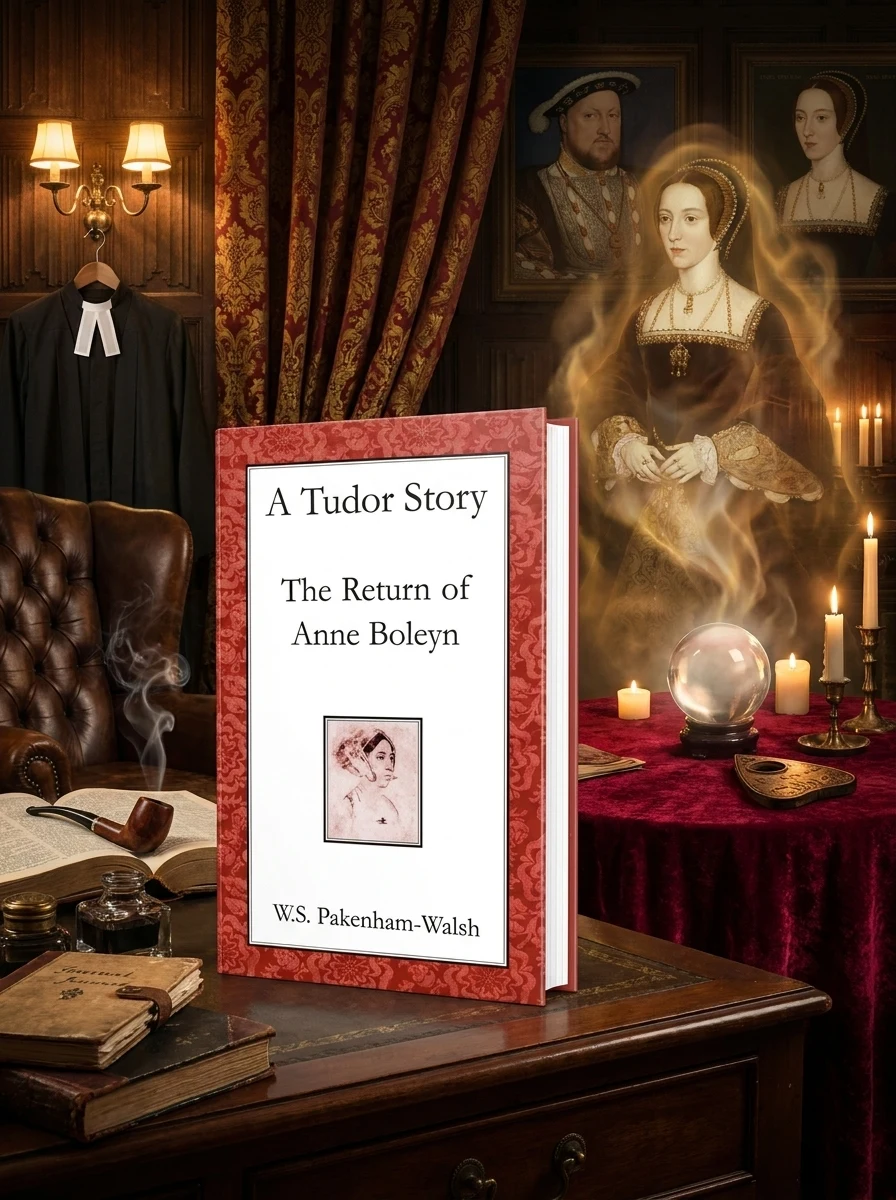


A Tudor Story: The Return of Anne Boleyn
Stock reported in the catalog; fulfillment is confirmed with your request.
Uncover the astonishing channeled messages from Anne Boleyn herself, straight from the Tudor afterlife!
This extraordinary volume chronicles the unbelievable journey of Canon W.S. Pakenham-Walsh, a respected, non-psychic clergyman, who found himself channeling the spirit of Anne Boleyn. Driven by a lifelong fascination that began during his missionary work in China and was later confirmed by uncanny synchronicities after a prayer at her burial site, Pakenham-Walsh embarked on a profound spiritual quest. The book presents detailed accounts and transcripts from his sessions with mediums, offering a unique, firsthand perspective on Anne Boleyn's posthumous communications and exploring the intersection of historical inquiry, psychic phenomena, and deep religious conviction.
This work sits firmly within the early 20th-century spiritualist movement, blending Victorian-era religious conviction with contemporary interests in mediumship and historical reincarnation. It reflects a period where clergy members occasionally explored esoteric phenomena, seeking to reconcile faith with emerging psychic practices.


📝 Description: A Tudor Story: The Return of Anne Boleyn
💎 Expert review
📖 Why choose it
Why this book is worth reading
Readers with a deep fascination for the Tudor era will find this book offers a unique, intimate perspective on Anne Boleyn that transcends traditional historical biography. It is ideal for those interested in the intersection of Christianity and spiritualism, particularly how a respected clergyman navigated his faith while engaging in mediumship. Individuals curious about the mechanics of channeled messages and the personal journey of Canon Pakenham-Walsh will appreciate the detailed accounts of his quest. Those who enjoy narratives where historical inquiry meets psychic phenomena will gain insight into how personal synchronicities can drive profound spiritual exploration, making it a compelling read for open-minded seekers of the afterlife.
⭐ Reader reviews
Reader rating
This volume serves as a fascinating primary source for understanding early 20th-century spiritualist convictions among the clergy. However, it is strictly not suited for skeptical historians or those seeking rigorous academic analysis of Tudor politics. Readers expecting dry, factual biography will be disappointed by the heavy reliance on mediumistic transcripts and personal spiritual narrative. It also may alienate strict orthodox Christians who view such mediumship as incompatible with doctrine. The text requires an acceptance of psychic phenomena to appreciate fully; otherwise, the accounts of Anne Boleyn’s posthumous communications may read as mere eccentricity rather than profound revelation.
❓ Frequently asked questions
📖 Who should read this
If you're drawn to the enigmatic intersection of history, spiritualism, and the unexplained, this book is for you. Seekers of unconventional historical insights, enthusiasts of psychic communication, and those pondering the enduring nature of the human spirit will find this account utterly compelling.
🎯 Key themes and symbolism
Communicating with the Departed
Explore the fascinating mechanics of mediumship as a respected clergyman, initially without psychic gifts, becomes a conduit for historical communication. The book details the process of channeling, presenting direct transcripts that purport to be the very words of Anne Boleyn, offering a rare glimpse into posthumous dialogue and the possibilities of spiritual connection.
Anne Boleyn's Afterlife Perspective
Beyond historical documents, this work offers a highly unconventional reinterpretation of Anne Boleyn's life and legacy, directly from her alleged spirit. It promises a personal, perhaps even vindicating, narrative that challenges traditional understandings, presenting her not just as a queen but as a spiritual entity with a continued purpose and voice.
Spirituality Beyond the Veil
Delve into the complex interplay between a clergyman's profound religious faith and his unexpected foray into the paranormal. The narrative suggests a divine hand guiding these psychic explorations, framing the channeling experience as a spiritual endeavor with a deeper religious significance, rather than mere curiosity or a sensationalist pursuit.
💬 Quotes from the book
“My initial skepticism, nurtured by a lifetime of theological study, dissolved before the undeniable, synchronous confirmations of Anne's enduring presence.”
“Through the veil, her voice emerged, not as a whisper of history, but as a vibrant, purposeful declaration, eager to correct the chronicles of her earthly torment.”
📜 Historical context
📚 Glossary
- Channeling
- Clairvoyance
- Mediumship
📔 Questions to reflect on
- How might historical narratives change if we truly believed communication with past figures was possible?
- What role does personal belief or skepticism play when encountering accounts of psychic phenomena and spiritual communication?
- Consider the motivations—both historical and spiritual—that might drive a departed soul to seek communication with the living.
🏛 Books from this publisher Lutterworth Press
All books from this publisher →
You might also like
See more →
 89
89


 91
91

 91
91
 91
91
 91
91