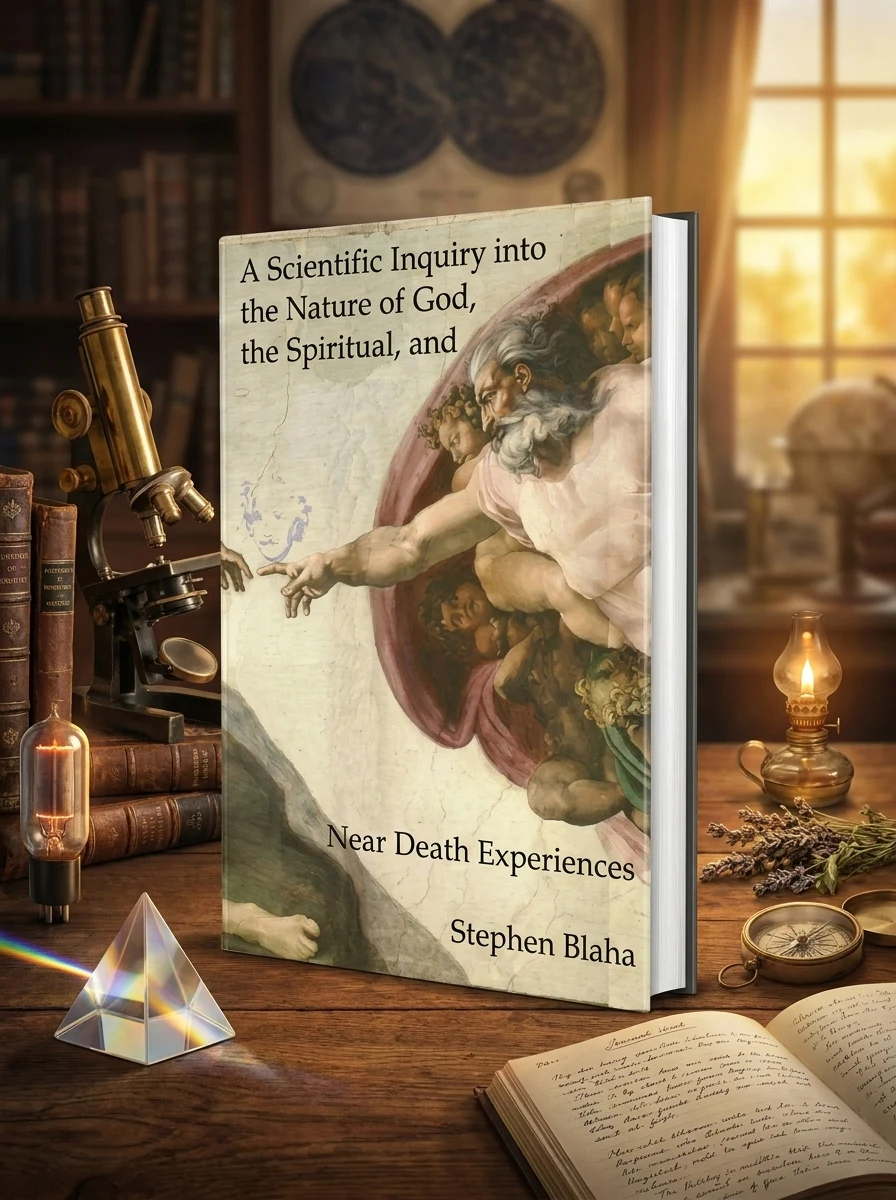
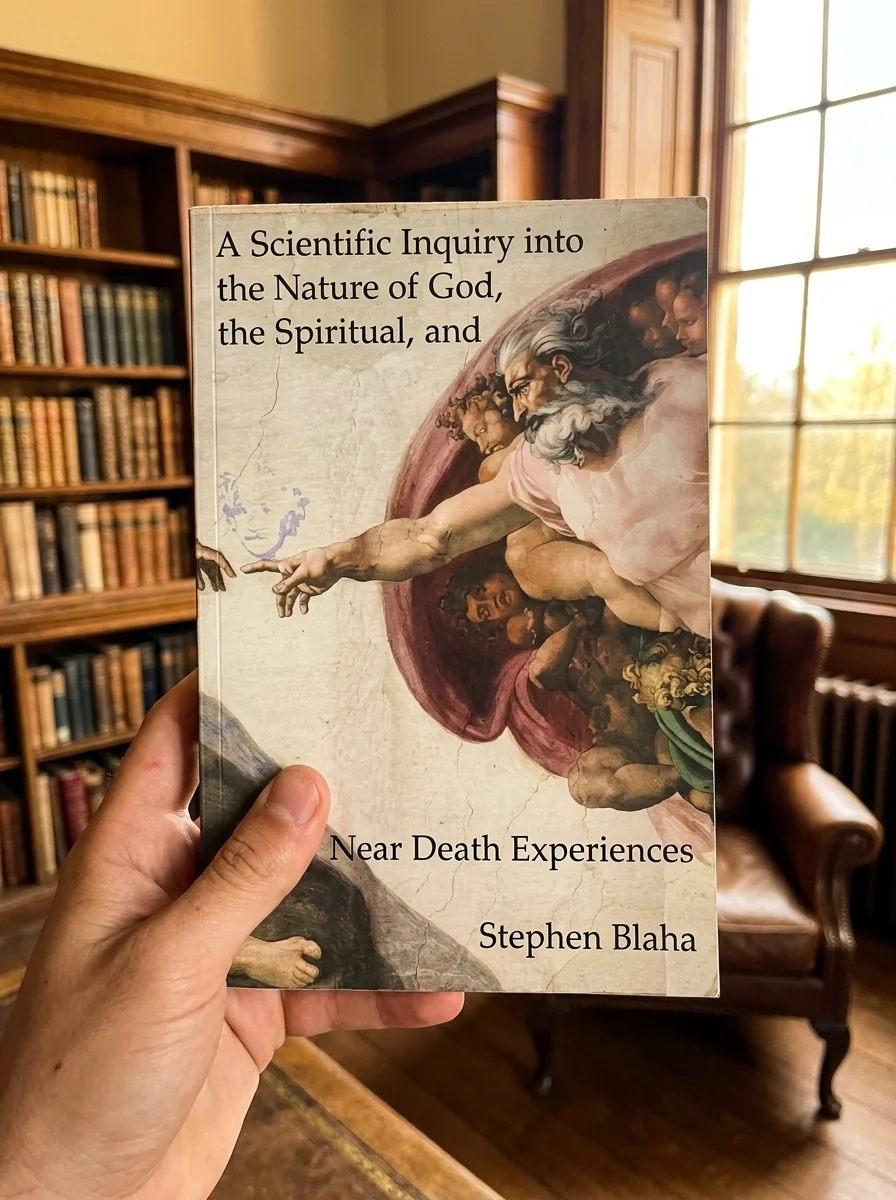
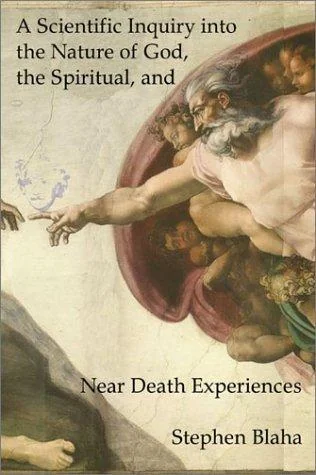
A Scientific Inquiry into the Nature of God, the Spiritual, and Near Death Experiences
A clear, concise scientific inquiry into God, spirituality, and near death experiences.
Stephen Blaha offers a concise, rigorous investigation into the intersection of faith and physical reality, addressing fundamental questions regarding the nature of God, spiritual phenomena, and near death experiences. Published by Janus Associates Inc. as a 128 page paperback, this compact and revised work presents a clear, structured, and straightforward framework for evaluating complex spiritual matters through an empirical scientific lens.
Published by Janus Associates Inc. on June 27, 2002, this revised edition reflects turn of the century American efforts to bridge scientific methodology with spiritual self help, psychic phenomena, and mystical inquiry.


📝 Description: A Scientific Inquiry into the Nature of God, the Spiritual, and Near Death Experiences
💎 Expert review
📖 Why choose it
Why this book is worth reading
Readers who find themselves torn between the rigid structures of empirical science and the profound mysteries of spiritual experience will find this volume particularly rewarding. Stephen Blaha offers a rare bridge for those who demand rigorous analysis but crave divine connection. By utilizing Near-Death Experiences and consciousness studies, he provides a quantifiable path to understanding God without sacrificing intellectual integrity. This book is ideal for skeptics seeking evidence, mystics demanding logic, and anyone willing to reconsider the boundaries between belief and reason through a fresh, analytical lens on ancient mysteries.
⭐ Reader reviews
Reader rating
Blaha’s inquiry presents a bold attempt to quantify the divine, appealing strongly to those who value logical coherence in spiritual matters. However, this approach may alienate readers seeking purely devotional guidance or those who view science and spirituality as entirely separate domains. The text is dense with analytical frameworks that might feel dry to individuals preferring poetic mysticism or traditional religious dogma. It does not suit those looking for easy answers or emotional comfort; instead, it demands active intellectual engagement. While innovative, its strict adherence to a scientific lens limits its accessibility to the general public, making it best suited for dedicated students of consciousness studies and analytical occultism.
❓ Frequently asked questions
📖 Who should read this
For the discerning seeker who demands intellectual integrity in spiritual exploration, this volume offers a compelling synthesis. If you ponder the intersection of consciousness and cosmos, seeking a rational yet expansive view of the divine, this is your next essential read.
🎯 Key themes and symbolism
Empirical Spirituality
This book champions the application of scientific methodology to traditionally spiritual concepts. It explores how logical reasoning and observational data, particularly from human experience, can illuminate the profound questions surrounding existence, consciousness, and the divine, moving beyond faith-based assumptions.
Deconstructing Divinity
Blaha ventures beyond conventional religious definitions to investigate the fundamental attributes of what we perceive as 'God.' The work seeks to identify underlying principles or forces that might manifest as divine, offering a framework for understanding a universal spiritual intelligence that transcends specific theological constructs.
NDEs as Evidence
A core aspect of the inquiry involves a detailed examination of Near-Death Experiences. The book analyzes the consistent patterns and transformative effects reported by NDE experiencers, proposing them not as mere hallucinations but as significant data points in understanding consciousness, the afterlife, and the nature of reality itself.
📜 Historical context
📚 Glossary
- Near-Death Experience (NDE)
- Metaphysics
- Epiphenomenalism
📔 Questions to reflect on
- How might a purely scientific framework enhance or detract from your personal, intuitive understanding of the divine or spiritual?
- Consider a profound, perhaps transcendent, experience you've had. How might Blaha's analytical approach analyze or categorize it?
- What are the ethical or philosophical implications of attempting to 'scientifically prove' or 'disprove' spiritual concepts?
You might also like
See more →










Have a question about this item?
Ask about the edition, condition, delivery or anything else — we reply by email or phone, usually within a day.
