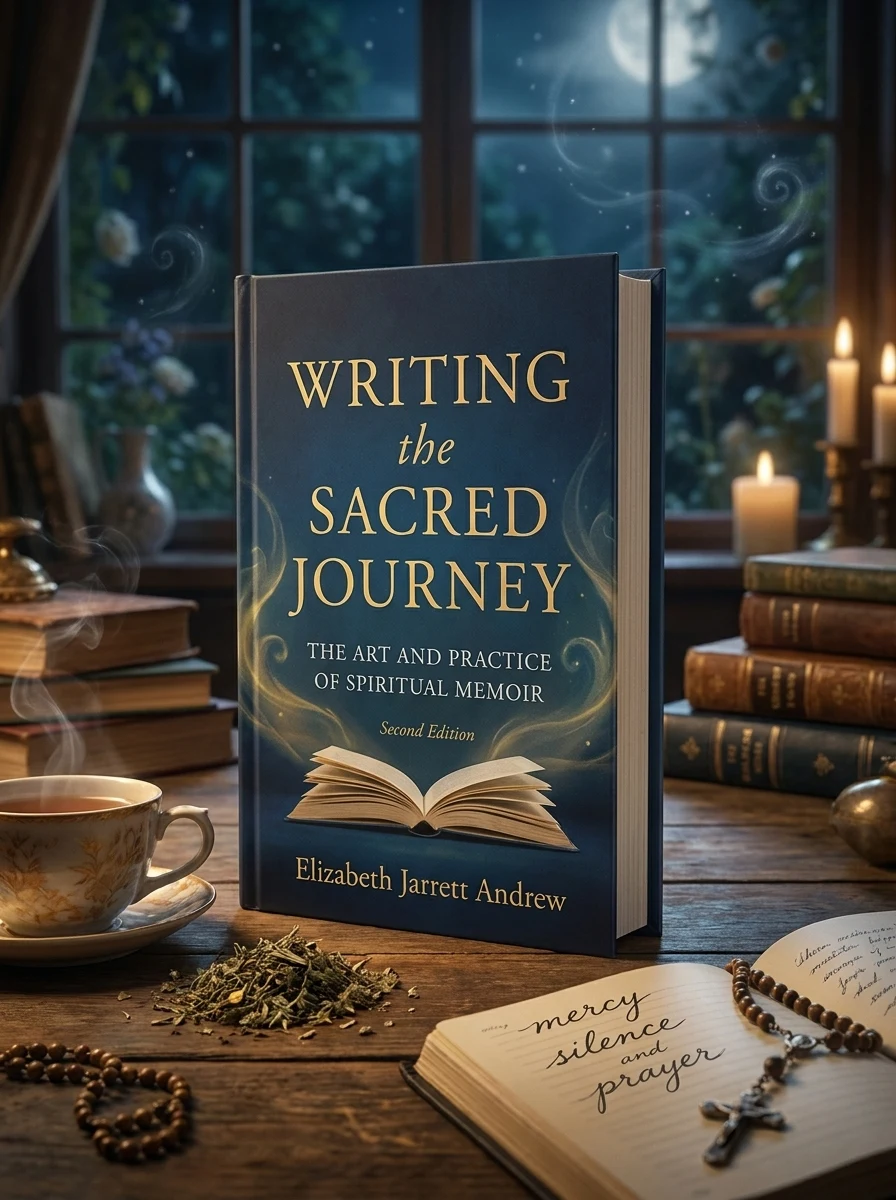

A Map to Mercy
Stock reported in the catalog; fulfillment is confirmed with your request.
Uncover divine silence within the surprising embrace of mercy.
Elizabeth Jarrett Andrew recounts a profound, death-adjacent dream that ushers in a period of intense mystical quietude. When this initial, effortless spiritual connection recedes, she embarks on a challenging exploration of traditional Christian contemplative practices. Grappling with archaic language and theological concepts that feel out of step with her experience, she candidly shares her struggles. Ultimately, her journey reveals a profound reinterpretation: the elusive essence of that original silence is not found in rigid doctrine, but emerges within the boundless compassion of mercy, guiding her to a deeper, more inclusive understanding of the sacred.
This work sits firmly within the contemporary Christian mysticism and contemplative tradition, bridging personal spiritual experience with historical theological inquiry.


📝 Description: A Map to Mercy
💎 Expert review
📖 Why choose it
Why this book is worth reading
Readers seeking a raw, authentic account of spiritual crisis and renewal will find profound comfort in this narrative. It is ideal for those who have felt alienated by rigid religious structures or archaic theological language, offering a refreshing alternative that centers on compassion rather than doctrine. If you value intellectual honesty alongside deep emotional resonance, this book provides a roadmap through the silence of faith. It speaks to anyone who has experienced the gap between initial mystical ecstasy and the long, quiet work of contemplation, validating the struggle while pointing toward a more inclusive, merciful understanding of the sacred that feels both ancient and urgently modern.
⭐ Reader reviews
Reader rating
Andrew offers a compelling, albeit difficult, journey through the landscape of Christian contemplative practice. While her honesty about grappling with archaic theology is admirable, readers expecting an easy, accessible guide to mysticism may find the text dense and frustrating. It is not suitable for those seeking quick spiritual fixes or those uncomfortable with theological ambiguity. However, for the dedicated seeker willing to endure the struggle against out-of-step concepts, the reward is a profound redefinition of silence through mercy. The narrative lacks breezy simplicity but makes up for it in depth, serving best to those already immersed in contemplative traditions.
❓ Frequently asked questions
📖 Who should read this
If you've felt alienated by traditional spiritual language, or yearn for a deeper, more personal connection to the divine beyond rigid doctrine, this book offers a kindred spirit. It's for those brave enough to question and reforge their understanding of faith and silence.
🎯 Key themes and symbolism
Mystical Silence's Nature
The book opens with an almost overwhelming encounter with profound spiritual silence. Andrew explores the elusive quality of this inner stillness, its spontaneous arrival and departure, and the seeker's subsequent struggle to reclaim or understand it outside of its initial, unbidden manifestation. It examines silence not as absence, but as a potent, active spiritual presence.
Reinterpreting Contemplative Practice
Andrew delves into established Christian contemplative prayer forms, revealing her honest frustrations with their often-antiquated language and sometimes rigid theological frameworks. The work thoughtfully unpacks how one might navigate traditional spiritual paths, questioning and reinterpreting them to find authentic personal resonance, moving beyond rote adherence to genuine engagement.
Mercy as Spiritual Core
Central to Andrew's discovery is the profound realization that mercy isn't just an attribute of the divine, but the very essence of spiritual connection and the heart of the mystical silence she initially experienced. This theme redefines mercy as a foundational principle, offering a compassionate and expansive understanding of the sacred that transcends dogma and opens up a 'womb of creation'.
💬 Quotes from the book
“The echo of that profound stillness remained, a haunting whisper, even as the world's clamor returned. It was a silence I knew, yet could not grasp.”
“It was not in the rigid doctrines or the ancient words that I found solace, but in the boundless, forgiving current that flowed beneath all understanding—this ocean of mercy.”
📜 Historical context
📚 Glossary
- Mystical Silence
- Contemplative Prayer
- Womb of Creation
📔 Questions to reflect on
- Reflect on a time you experienced profound inner stillness or a moment of deep spiritual connection. How did it feel, and how did it influence your perception afterward?
- Consider a spiritual or philosophical concept you've struggled with. How might reinterpreting it through the lens of 'mercy' or 'compassion' change your understanding?
- What does 'silence' mean to you in a spiritual context? Is it an absence, or a presence? How do you cultivate it in your daily life?
You might also like
See more →
 91
91


 91
91