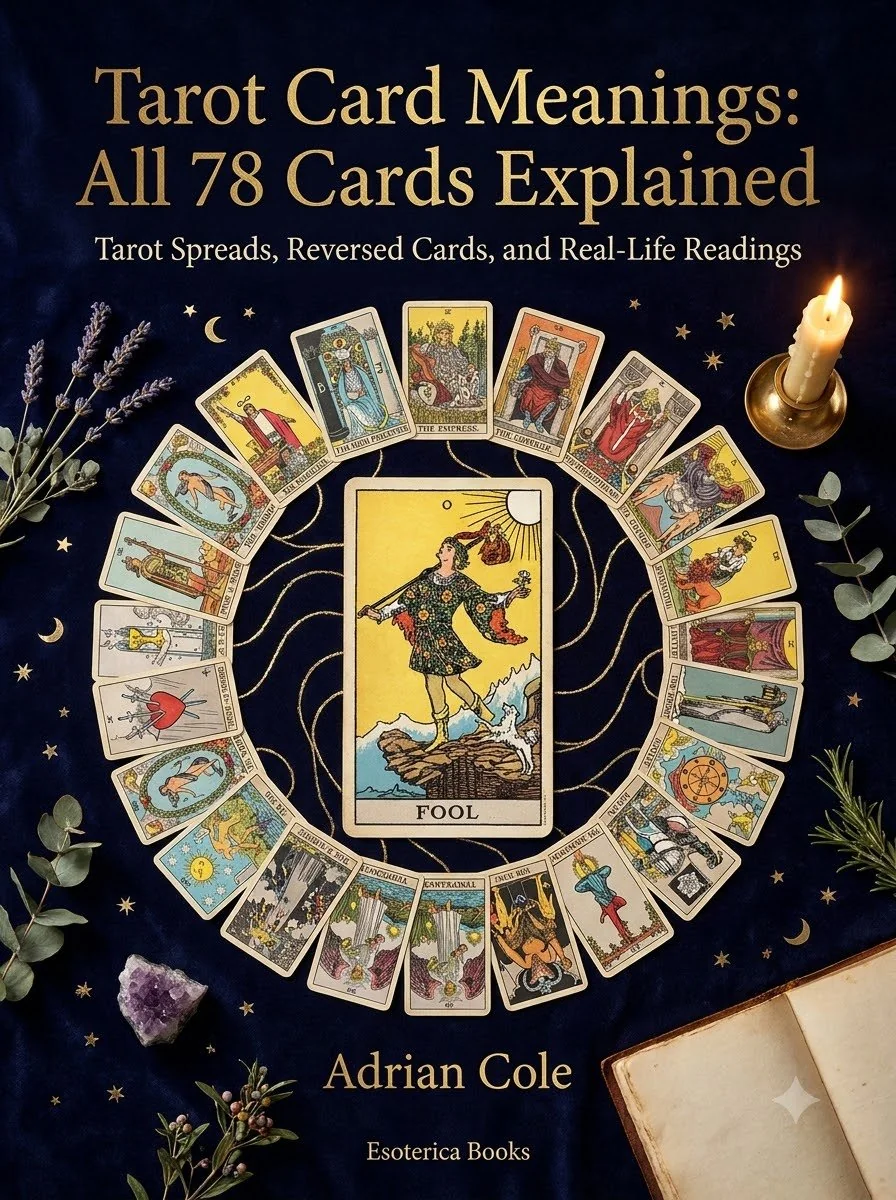
Free preview
Tarot Card Meanings: All 78 Cards Explained
by Adrian Cole
Get the e-book — $4.99Available — EPUB for your phone, tablet or e-reader
Contents
-
Your First Reading Starts Here
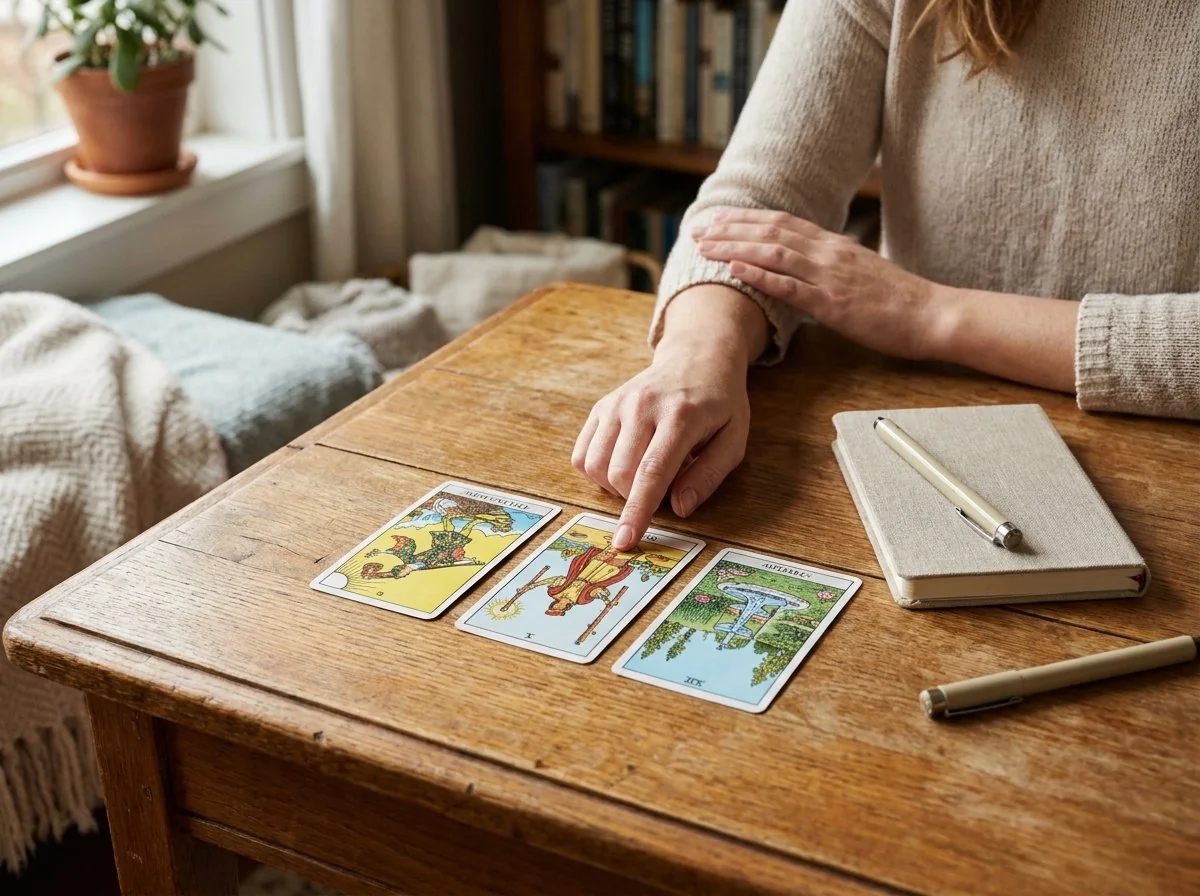
Meet your first three cards and perform a simple reading without needing to memorize the entire deck. Learn the basic structure of a tarot reading, how to ask an open-ended question, and how the C.A.R.D.S. Method turns images into an interpretation.
-
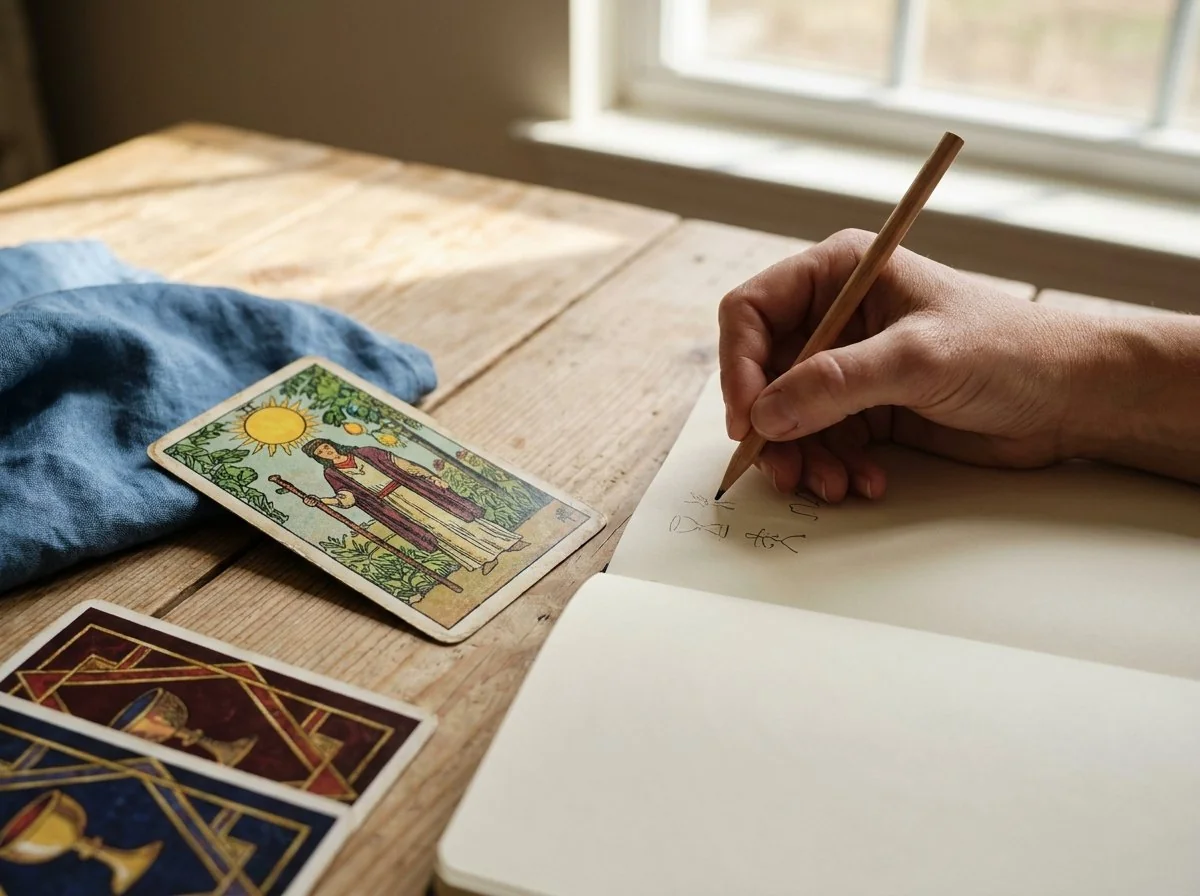
Look Closer: The Secrets Hidden in Every Card
Discover how to recognize symbols, colors, numbers, characters, and visual patterns that make tarot easier to understand and remember. Practice a repeatable approach to learning tarot card meanings instead of treating 78 cards as unrelated facts.
-
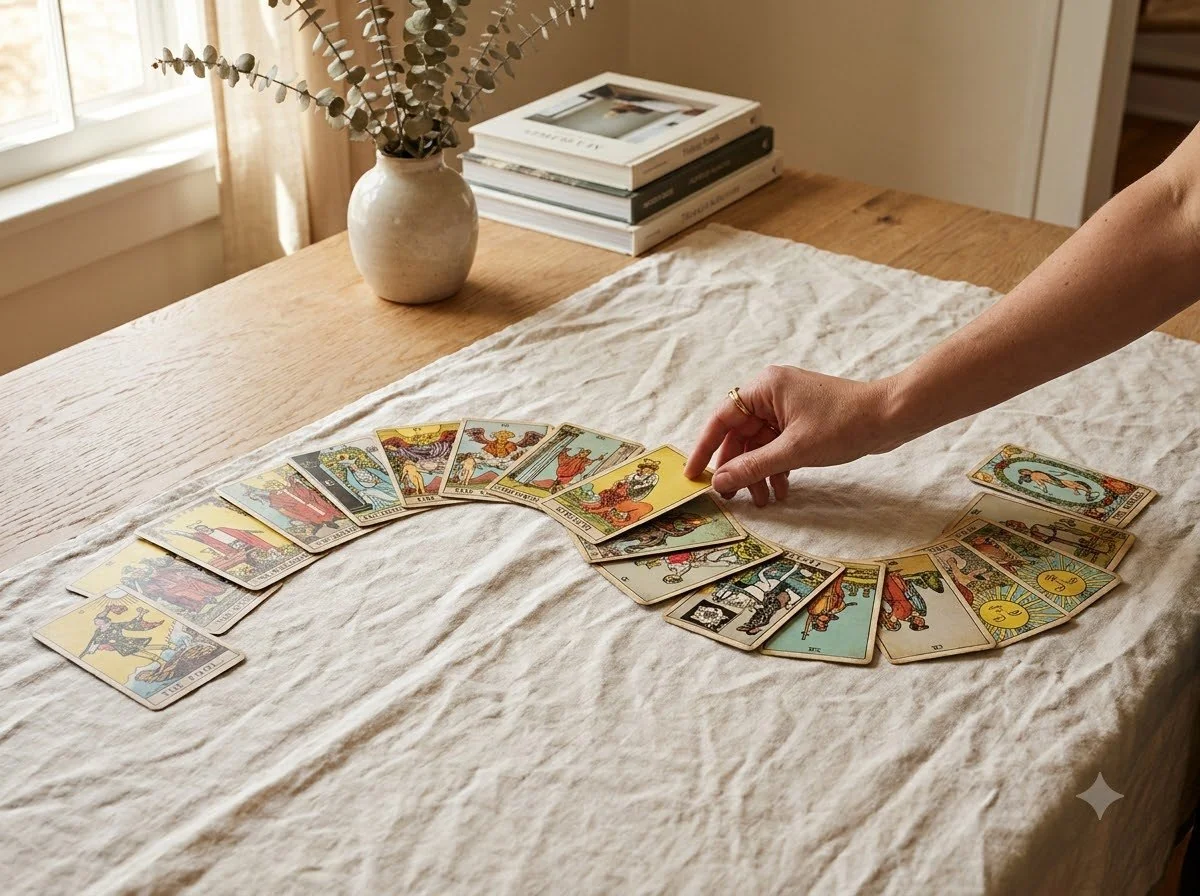
The Fool Opens the Door
Explore all 22 Major Arcana cards as a symbolic journey through beginnings, challenges, choices, transformation, and completion. Learn their traditional interpretations, upright and reversed keywords, and connections, from the Fool and Magician to the World.
-
Four Suits, Four Ways of Seeing Life
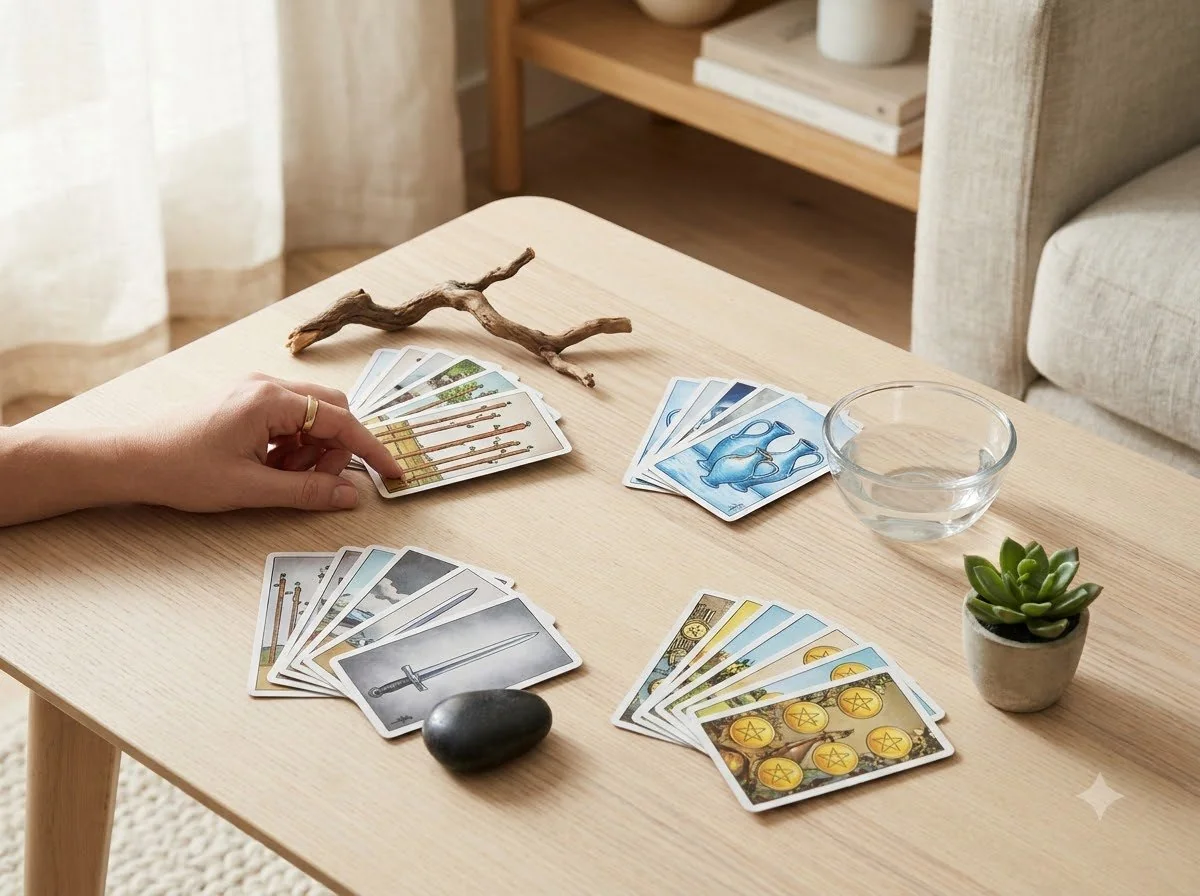
Meet the 56 Minor Arcana cards through the distinct themes of Wands, Cups, Swords, and Pentacles. Understand how numbers, elements, and suit associations help you interpret individual cards without memorizing isolated descriptions.
-
The Faces Behind the Court Cards
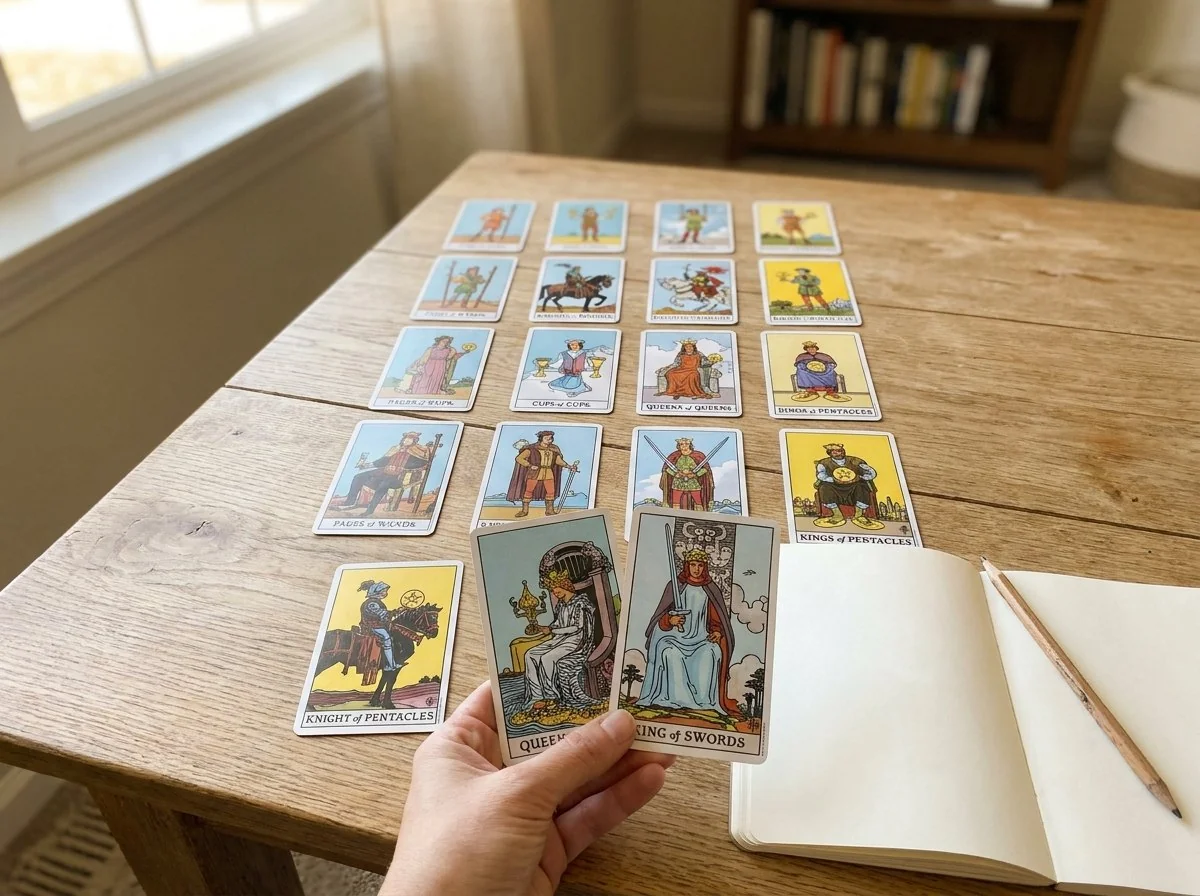
Understand the Pages, Knights, Queens, and Kings as characters, approaches, and symbolic personalities rather than confusing titles. Learn how court cards interact with surrounding cards and how to interpret them without making assumptions about specific people.
-
When a Card Turns Upside Down
Learn several traditional approaches to reversed cards, including blocked expression, internal reflection, imbalance, and alternative interpretations. Practice deciding when a reversal adds useful nuance and when a card's surrounding context matters more than its orientation.
-
The Cards That Ask You to Look Deeper
Take a closer look at powerful and frequently discussed Major Arcana cards, exploring their symbolism and interpretations within different reading contexts. Learn why Death represents transformation rather than a literal prediction, and how Justice, the Hierophant, and Temperance introduce different questions for reflection.
-
Love, Relationships, and the Stories We Tell
Explore how tarot can provide a reflective framework for questions about love, connection, boundaries, and relationship choices. Learn to interpret the Lovers, Star, and other relevant cards without treating a reading as a guaranteed prediction or a way to control another person's decisions.
-
Let the Cards Speak to Each Other
Move beyond isolated definitions and learn how card combinations, repeated symbols, suit patterns, and contrasting imagery create a coherent reading. Apply the Develop and Synthesize stages of the C.A.R.D.S. Method to interpret more complex situations.
-
Spreads That Give Your Questions Shape
Build confidence with practical layouts, beginning with one-card and three-card spreads before exploring larger arrangements. Learn how card positions influence interpretations and how to choose a spread that suits a question without making it unnecessarily complicated.
-
A Reading Comes Together: Real Examples
Follow complete sample readings from the initial question through card selection, individual meanings, combinations, and final interpretation. Examples explore personal direction, relationships, changing circumstances, and everyday decisions while showing how different readers might approach the same spread.
-
Trust Your Eye, Deepen Your Practice
Bring together everything you have learned through interpretation exercises, journaling, self-readings, and more advanced spreads. Develop a personal reference system for all 78 cards, recognize uncertainty, and build an independent reading style grounded in traditional meanings, observation, and thoughtful reflection.
About this book
You want to understand tarot card meanings, but 78 cards, unfamiliar symbols, upright and reversed interpretations, and endless lists of keywords can make learning feel like memorizing a dictionary with pictures. You may recognize individual cards yet still wonder how to know what they mean together in an actual reading.
The useful discovery is that tarot becomes easier to understand when you stop treating every card as an isolated definition and start noticing its imagery, traditional symbolism, position, and relationship to the cards around it. The C.A.R.D.S. Method gives you five repeatable steps for doing exactly that. You will build a practical understanding of all 78 cards, learn to remember their essential meanings without constantly reaching for a guidebook, interpret upright and reversed cards with more confidence, and bring individual meanings together into thoughtful readings about relationships, personal choices, work, and self-discovery.
The C.A.R.D.S. Method: Five Steps from First Impressions to a Complete Reading
- Connect — Begin by observing the card's imagery, symbols, colors, characters, and your immediate impressions before looking for a definition, making the card memorable as an image rather than another item on a vocabulary list.
- Associate — Connect the details you noticed with the card's traditional meaning and a small set of memorable keywords, giving you a practical foundation for understanding and remembering its symbolism.
- Read — Explore upright and reversed interpretations in relation to the actual question and spread position, recognizing that a reversal can suggest an inward focus, imbalance, blocked expression, or a different emphasis rather than automatically meaning something negative.
- Develop — Bring neighboring cards into the interpretation by noticing repeated symbols, suit patterns, contrasting images, and connections that help individual cards form a coherent story.
- Synthesize — Combine the spread's positions and card relationships into a clear, balanced interpretation that distinguishes traditional meanings from possible readings and offers a useful question for personal reflection.
Your First Three-Card Reading: A Simple Place to Begin
- Choose an open-ended question — Take a moment to identify something you would like to reflect on, such as a personal choice or a current situation; phrase it as a question about your perspective or options rather than asking for a guaranteed prediction.
- Meet three cards — Shuffle your deck in your usual way, draw three cards, and place them in a row. Leave them upright or use your preferred reversal approach, keeping the process simple rather than adding extra rules.
- Give each card a place — Assign the first card the role of "Current Situation," the second the role of "Something Worth Considering," and the third the role of "A Possible Direction or Next Question for Reflection."
- Look before you look up — Spend five minutes observing each image. Write down a few words for each card regarding its colors, symbols, characters, and your immediate impression. Do not look at a guidebook yet.
- Connect meanings and positions — Check the traditional meanings of your three cards. Consider whether any are reversed, and interpret each one specifically in light of its assigned position (e.g. how the "Current Situation" card interacts with the "Possible Direction" card) rather than just reading a list of definitions.
- Tell the story in your own words — Look at the three cards as a group. Notice one connection (e.g. two cards both have water imagery) or one contrast (e.g. one card is bright and yellow while another is dark and blue). Write a short paragraph that describes this "story" and end by writing down one question for yourself to consider.
Turn the next card with curiosity, follow the connections between its symbols and traditional meanings, and discover how 78 individual images can become a language you can read in your own way.
