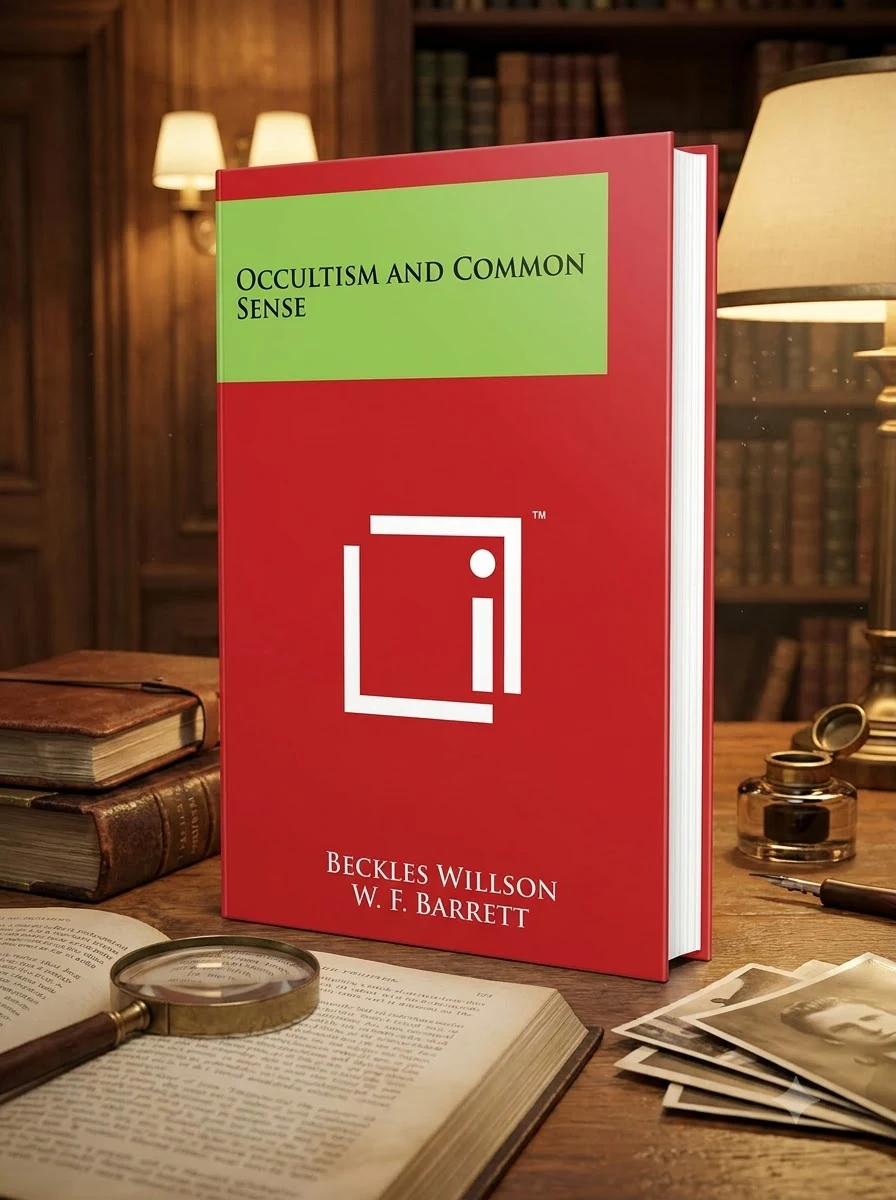
Occultism and Common Sense
Dive into an intriguing early 20th-century exploration that attempts to bridge the chasm between esoteric wisdom and pragmatic thought. This volume, originally penned in 1920 by Beckles Willson and W. F. Barrett, offers a unique perspective on various occult phenomena, psychic experiences, and spiritual traditions. Far from dismissing these subjects outright, the authors endeavor to dissect them with a blend of intellectual curiosity and a discerning eye. It's an insightful journey into how an earlier generation grappled with the mystical, seeking to understand its place within the broader human experience and historical narrative, challenging readers to re-evaluate conventional boundaries of belief.
📝 Description: Occultism and Common Sense
💎 Expert review
📖 Why choose it
Why this book is worth reading
Readers fascinated by the historical evolution of occult thought will find this text particularly rewarding, as it offers a rare bridge between mystical tradition and pragmatic analysis. Those who appreciate intellectual honesty in esoteric literature will value the authors' discerning approach to psychic experiences and spiritual phenomena without resorting to blind faith or outright dismissal. It serves as an excellent resource for those seeking to understand how early twentieth-century thinkers grappled with the boundaries of belief, providing a nuanced perspective that challenges conventional wisdom while maintaining a rigorous, curious mindset toward the unknown.
⭐ Reader reviews
Reader rating
This work is best suited for serious students of esoteric history who appreciate a balanced, analytical approach to mystical subjects. It may disappoint readers seeking straightforward dogmatic instruction or those expecting unadulterated supernatural wonder, as the text prioritizes intellectual dissection over mystical immersion. The modern reader must be prepared for early twentieth-century prose and a specific philosophical framework that seeks to rationalize rather than romanticize the occult. While insightful for its era, it lacks the contemporary depth found in later works, making it more of a historical artifact than a practical guide for current practitioners.
❓ Frequently asked questions
📖 Who should read this
If you're a seeker who values intellectual rigor alongside spiritual curiosity, this book is for you. Those fascinated by the historical interface between science and the supernatural, or anyone seeking to understand early 20th-century perspectives on the occult, will find this a thought-provoking read.
🎯 Key themes and symbolism
Rationalizing the Occult
The book critically examines supernatural claims and esoteric practices, not to debunk them entirely, but to seek underlying principles or psychological explanations that might reconcile them with logical understanding. It attempts to find a "common sense" foundation for phenomena often deemed inexplicable, bridging the gap between belief and reason.
Psychic Experience in Context
Exploring various forms of psychic phenomena, from telepathy to premonitions, the authors situate these experiences within a historical and cultural framework. They investigate how such events have been perceived and documented, offering early 20th-century interpretations that blend scientific curiosity with open-minded inquiry into human potential.
Historical Esoteric Traditions
This work delves into the lineage of occult thought, tracing how mystical and hidden knowledge has been transmitted and understood across different eras. It places specific practices and beliefs into their historical context, showing how they evolved and interacted with prevailing societal norms and intellectual currents, offering a rich historical perspective.
💬 Quotes from the book
“The truly profound mysteries are often those we fail to recognize within the mundane, awaiting only a shift in our rational gaze.”
“To dismiss all unseen forces as mere superstition is as unscientific as to accept every wild tale without scrutiny.”
📜 Historical context
📚 Glossary
- Occultism
- Psychic Phenomena
- Common Sense
📔 Questions to reflect on
- How do our contemporary understandings of psychology and science either affirm or challenge the early 20th-century perspectives on psychic phenomena presented in this book?
- Reflect on a time you encountered something seemingly inexplicable. How might the authors of "Occultism and Common Sense" have approached understanding that experience?
- In what ways can a "common sense" approach be both a strength and a limitation when exploring esoteric or mystical subjects?