Chaos Magic
Chaos magic is a modern, results-oriented approach to magic that emerged in England in the late 1970s. It treats belief as a tool: the practitioner adopts whatever symbols, gods or paradigms work for a given purpose, and drops them afterwards.
Where the word comes from
The name comes from the idea of "Chaos" as the formless, creative source behind all things, and from Peter J. Carroll's early writing, which described magic as the manipulation of that underlying randomness. The eight-pointed "chaos star" (chaosphere) used as its emblem was borrowed from Michael Moorcock's fantasy novels, where it stands for the forces of Chaos.
In depth
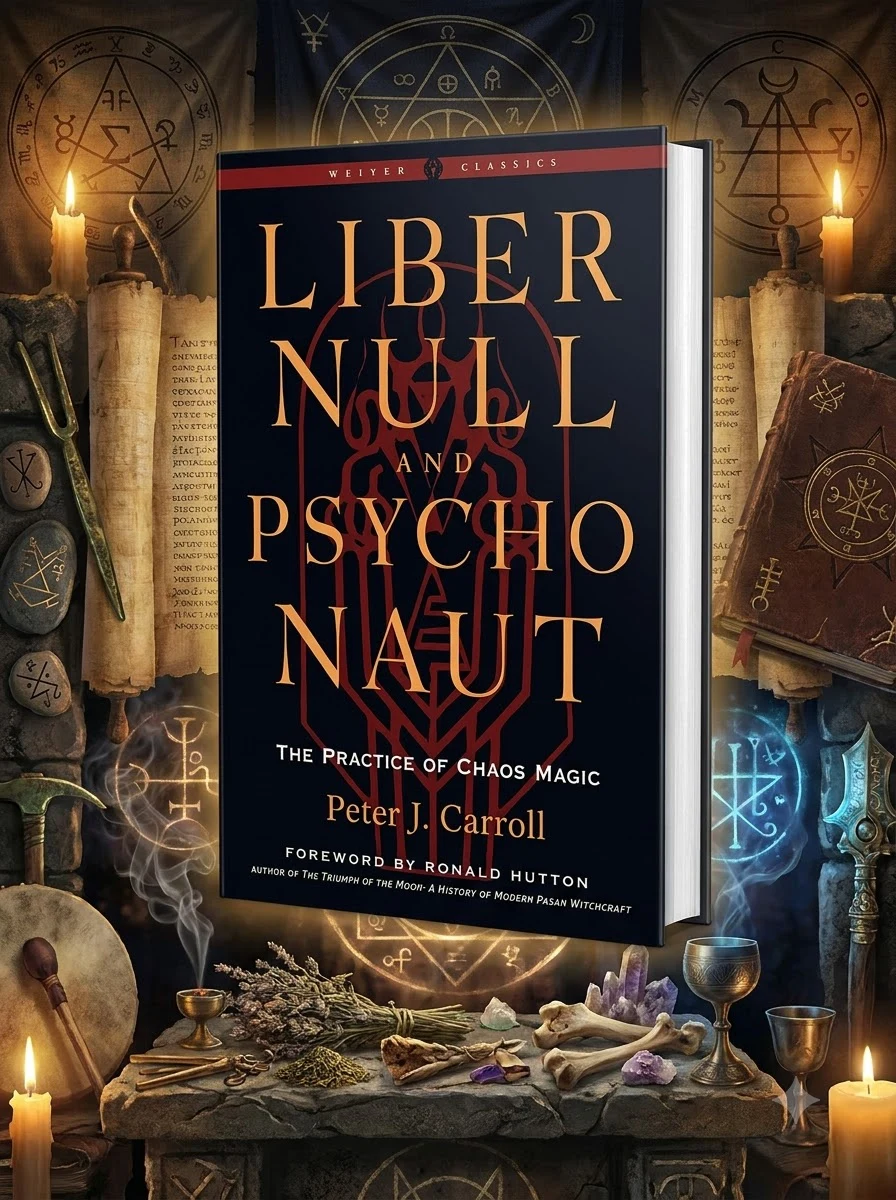
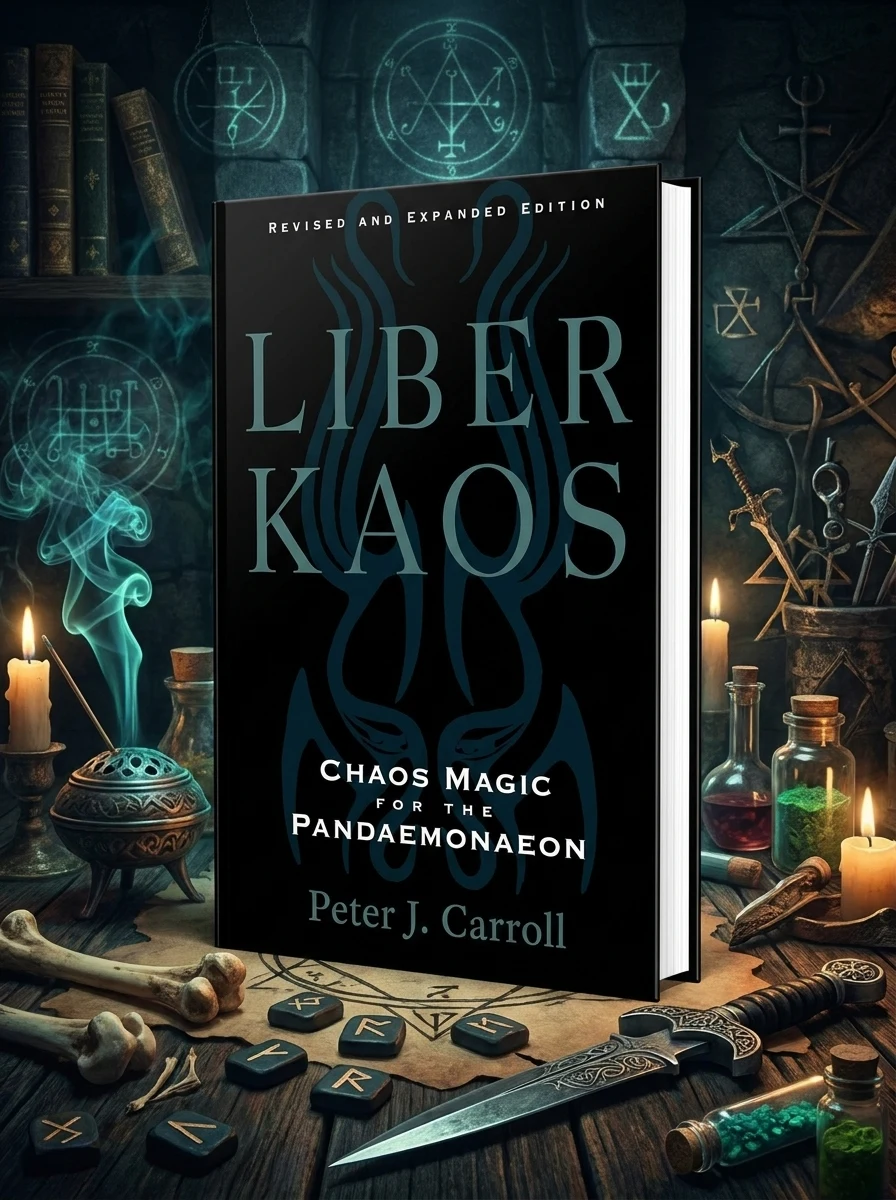
Chaos magic grew out of the English occult scene of the 1970s. Its key texts are Peter J. Carroll's Liber Null (1978) and Psychonaut (1982), later published together, and Ray Sherwin's The Book of Results (1978). In 1978 Carroll and Sherwin announced the Illuminates of Thanateros (IOT), a loose magical order that became the movement's main organisation.
Sources
Chaos magicians drew above all on Austin Osman Spare (1886 to 1956), an artist and occultist whose Book of Pleasure (1913) described a method of turning desires into abstract sigils and "forgetting" them so that they could work unconsciously. They also borrowed Crowley's experimental attitude and his insistence on keeping records, the playful religion of Discordianism, the "reality tunnels" of Robert Anton Wilson, and techniques from Eastern meditation and shamanism.
Belief as a tool
The central idea is that belief itself is a technique. Traditional systems insist that their gods, correspondences and rules are real and necessary. Chaos magic suggests that what matters is the state of mind a system produces. A practitioner might work with the Greek gods for a month, with fictional characters the next, and with a self-invented pantheon after that, and judge each by results. This is often called paradigm shifting.
Gnosis and sigils
Most chaos magic techniques aim at gnosis, a state in which ordinary conscious thought is quieted so that intent can bypass the "psychic censor". Carroll distinguished inhibitory gnosis (meditation, stillness, exhaustion) from excitatory gnosis (dance, drumming, sexual arousal, intense emotion).
The best-known technique is the Spare-style sigil. The practitioner writes a statement of desire, removes repeated letters, combines the rest into a single glyph, charges it in a state of gnosis, and then deliberately forgets it. Variants include mantric sigils (sounds), pictorial sigils and "hypersigils", longer creative works such as stories meant to act as spells, a term popularised by the comic writer Grant Morrison.
Servitors and other methods
Chaos magicians also create servitors: deliberately constructed thought-entities given a name, a form, a task and sometimes a lifespan. The practice overlaps with the older idea of the egregore. Other methods include banishing by laughter, invoking pop-culture figures, and altering habits or beliefs as a deliberate exercise in flexibility.
Later development
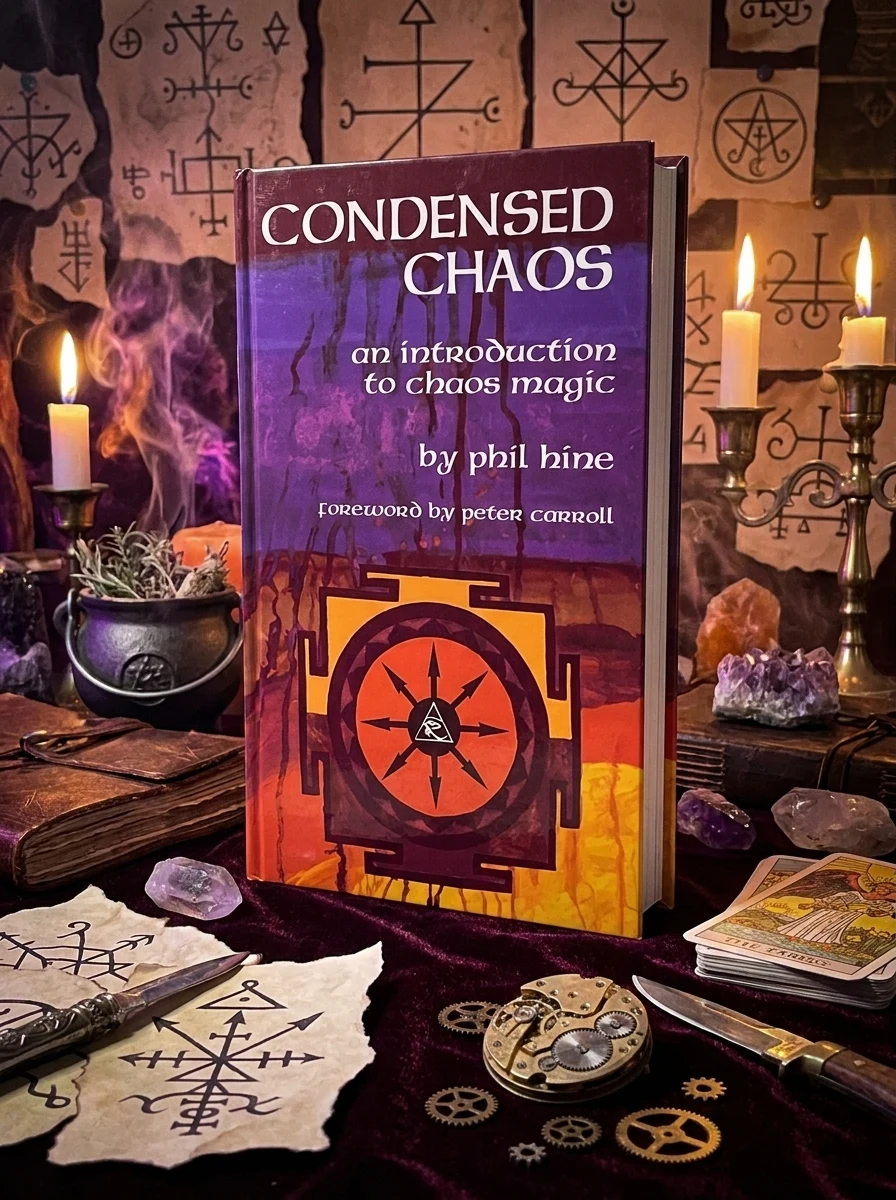
Through the 1980s and 1990s chaos magic spread through small presses and zines. Phil Hine's Condensed Chaos (1995) became a widely used introduction, and Morrison's essay Pop Magic! (2003) brought it to a wide audience. Today its influence reaches well beyond its own groups: much internet-era occultism, with its eclecticism and emphasis on "what works", owes it a debt.
How different paths see it
Where it appears
The Book of Pleasure (Austin Osman Spare, 1913). The source of the sigil method chaos magic adopted.
Liber Null (Peter J. Carroll, 1978) and Psychonaut (1982). The founding texts of chaos magic.
The Book of Results (Ray Sherwin, 1978). An early practical manual of results-based magic.
Condensed Chaos (Phil Hine, 1995). The standard introduction for beginners.
What it means today
Chaos magic is often summed up as "anything goes", which misses its discipline. Its founders expected practitioners to keep detailed records, test techniques against results, and be ruthless about what did not work. The freedom to use any symbol came with the obligation to measure.
It also raises a real philosophical question. If a practitioner can believe in a god on Monday and drop it by Friday, what is belief? Critics say this makes spiritual life shallow; defenders say it makes explicit what every tradition does implicitly.
Beginners usually start with Hine's Condensed Chaos, then Carroll's Liber Null and Psychonaut, then Spare's own writings for the sigil method at its source.