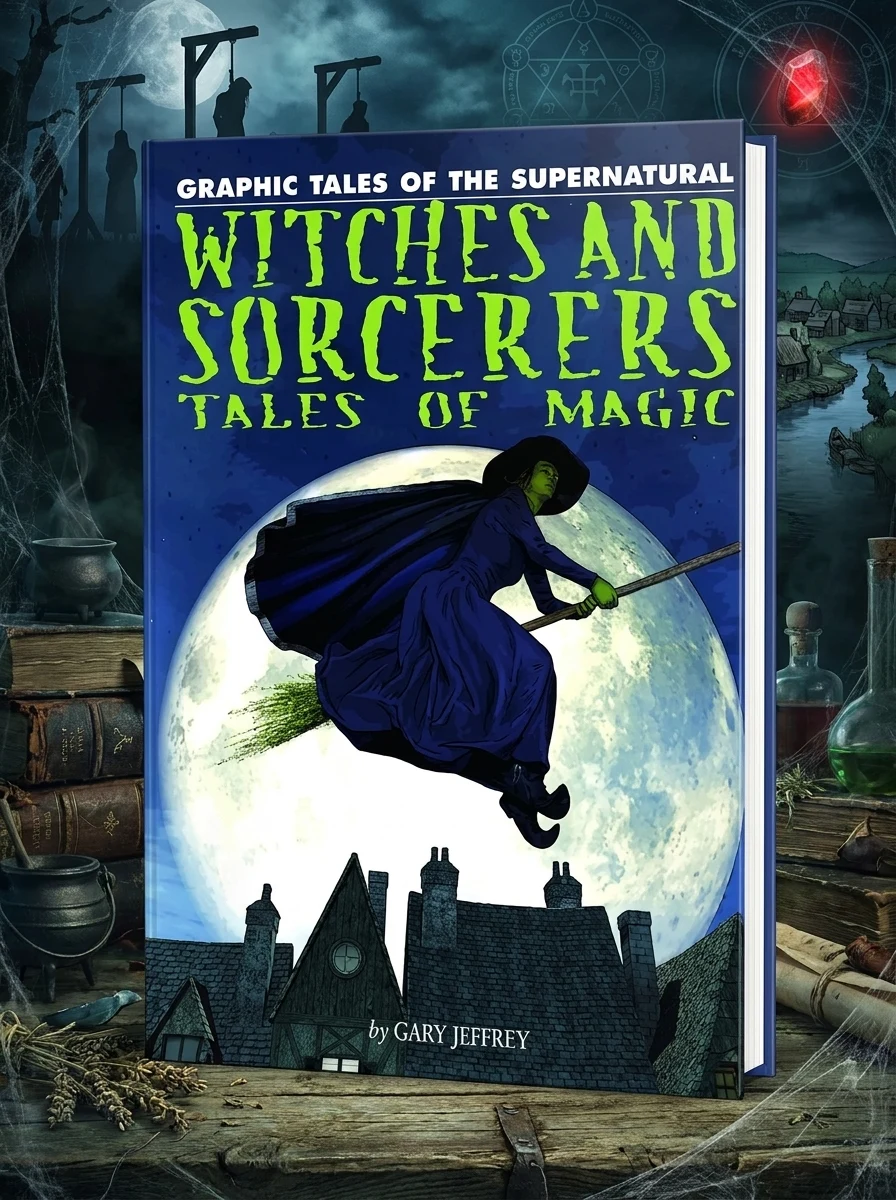
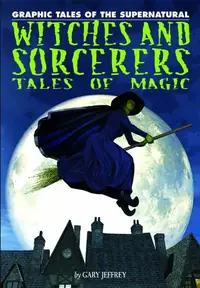
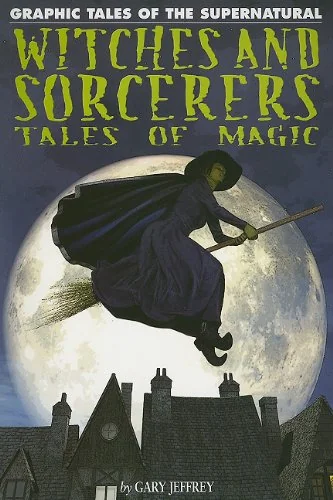
Witches and Sorcerers Jeffrey, Gary
Jeffrey, Gary; , Jeffrey, GaryThis edition can be ordered. No arrival date is confirmed.
Uncover the chilling real stories of witch accusations and sorcery in this compelling graphic novel.
This graphic narrative illuminates three true historical accounts of individuals accused of witchcraft or sorcery. Through vivid illustrations and compelling text, it explores the legendary quest of Nicholas Flamel for the Philosopher's Stone, the infamous Salem Witch Trials, and the intriguing case of Grace Sherwood, the "Witch of Pungo." Designed to engage even reluctant readers, this volume provides a unique and accessible window into the fear, superstition, and tragic accusations that defined historical perceptions of the supernatural.
This work situates itself within the historical study of European and American witchcraft accusations, focusing on specific legal and social cases rather than modern ritual practice. It bridges the gap between academic history and popular esoteric interest by examining the superstition and fear that defined perceptions of the supernatural in past eras.


📝 Description: Witches and Sorcerers Jeffrey, Gary
💎 Expert review
📖 Why choose it
Why this book is worth reading
Readers seeking an accessible entry point into the dark history of witchcraft will find this graphic novel particularly rewarding. It is specifically designed to engage reluctant readers who might otherwise find dense historical texts daunting, using vivid illustrations to make the chilling reality of accusations and sorcery tangible. Those interested in the tragic human stories behind famous cases like the Salem Witch Trials or Grace Sherwood will appreciate the unique window into the fear and superstition of the time. It offers a compelling, visual narrative that illuminates true accounts without overwhelming the audience with academic jargon, making complex historical events understandable for a broad audience eager to learn about the supernatural from a historical perspective.
⭐ Reader reviews
Reader rating
This volume succeeds in its primary goal of engaging reluctant readers through its graphic format and accessible text. However, scholars or enthusiasts seeking deep magical theory, ritual instruction, or nuanced theological debate will find it lacking. It is strictly a narrative overview of three specific cases—Nicholas Flamel, Salem, and Grace Sherwood—rather than a comprehensive guide to occult practice. Readers looking for modern Wiccan perspectives or detailed legal analysis of witch trials may feel the content is too superficial. It functions best as an introductory visual aid rather than a definitive historical resource, appealing more to general audiences than dedicated practitioners.
❓ Frequently asked questions
📖 Who should read this
If you're curious about true historical witchcraft accusations and prefer an engaging visual format, this book is for you. It's an excellent entry point for anyone seeking to understand the human drama of sorcery myths and trials, particularly those new to historical non-fiction.
🎯 Key themes and symbolism
Historical Witchcraft Accusations
This volume meticulously details actual historical instances where individuals faced accusations of witchcraft and sorcery. By presenting these events through a graphic format, it offers a stark portrayal of societal fear, prejudice, and the devastating consequences for those caught in the crosshairs of superstition, grounding fantastical elements in somber reality.
The Power of Superstition
The book explores how deeply ingrained beliefs in magic and malevolent forces influenced historical communities. It showcases the profound impact of superstition on legal proceedings, social ostracization, and personal freedoms, revealing how collective anxieties could manifest in tragic real-world outcomes, often with little tangible evidence.
Graphic Historical Narrative
Utilizing the graphic novel medium, the book transforms complex historical events into an easily digestible and visually engaging experience. This format makes the often-disturbing narratives of witch hunts and sorcery accusations accessible, allowing readers to connect with the human drama and historical context in a uniquely immediate way.
💬 Quotes from the book
“Across the flickering firelight, accusations ignited. A whisper became a roar, sealing fates in a time of fear.”
“Flamel's parchment hid more than ink; it held the whispers of forbidden knowledge, sought by many, understood by few.”
📜 Historical context
📚 Glossary
- Philosopher's Stone
- Salem Witch Trials
- Witch of Pungo
📔 Questions to reflect on
- How do you think societal fear and mass hysteria influenced the outcomes of historical witch trials?
- Where do you draw the line between folklore, historical events, and genuine belief in the supernatural as presented in these stories?
- Can you identify any modern-day parallels to the historical accusations of witchcraft or sorcery, where individuals are targeted based on fear or prejudice?
📖 From the series “Graphic Tales of the Supernatural”
All books in the series →
✍️ More books by this author Jeffrey, Gary; , Jeffrey, Gary
All books by this author →🏛 Books from this publisher Rosen Central
All books from this publisher →
 81
81
 80
80
You might also like
See more →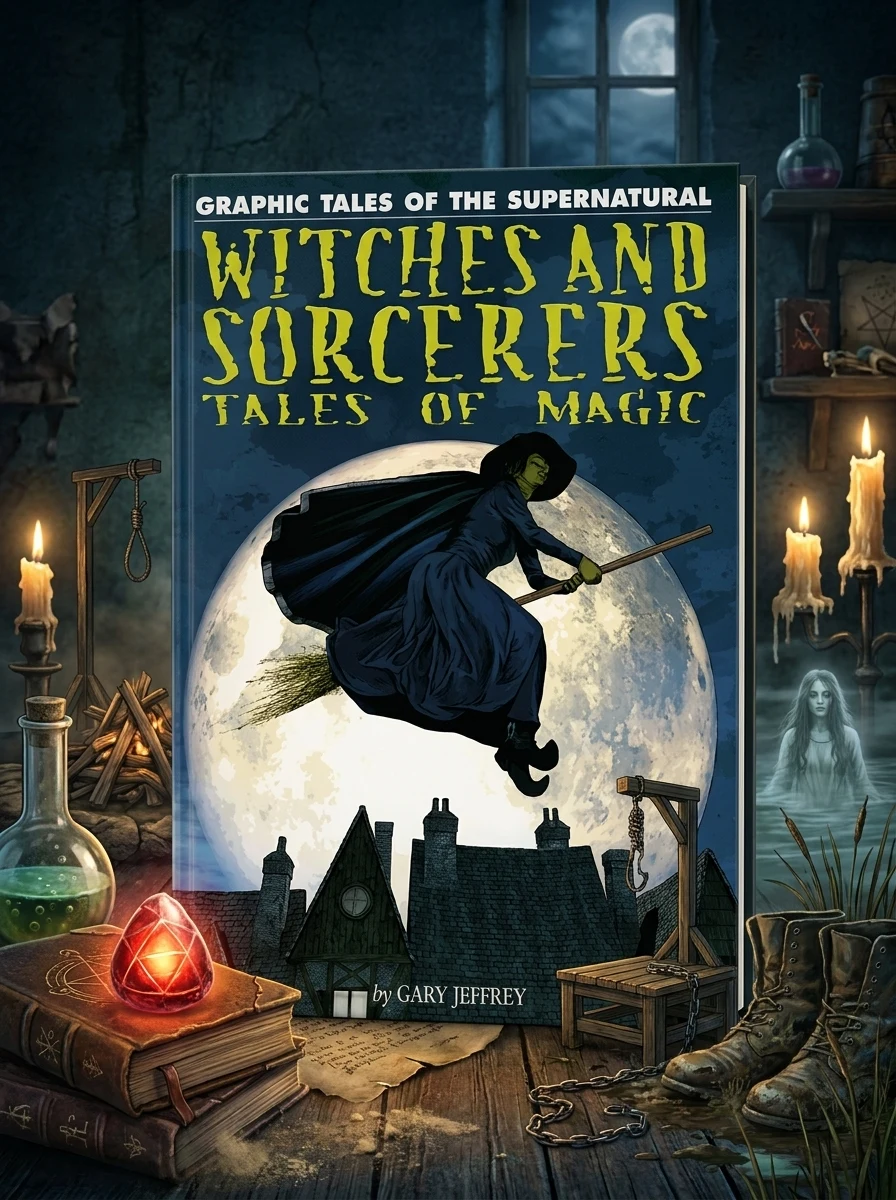 80
80
 82
82
 79
79