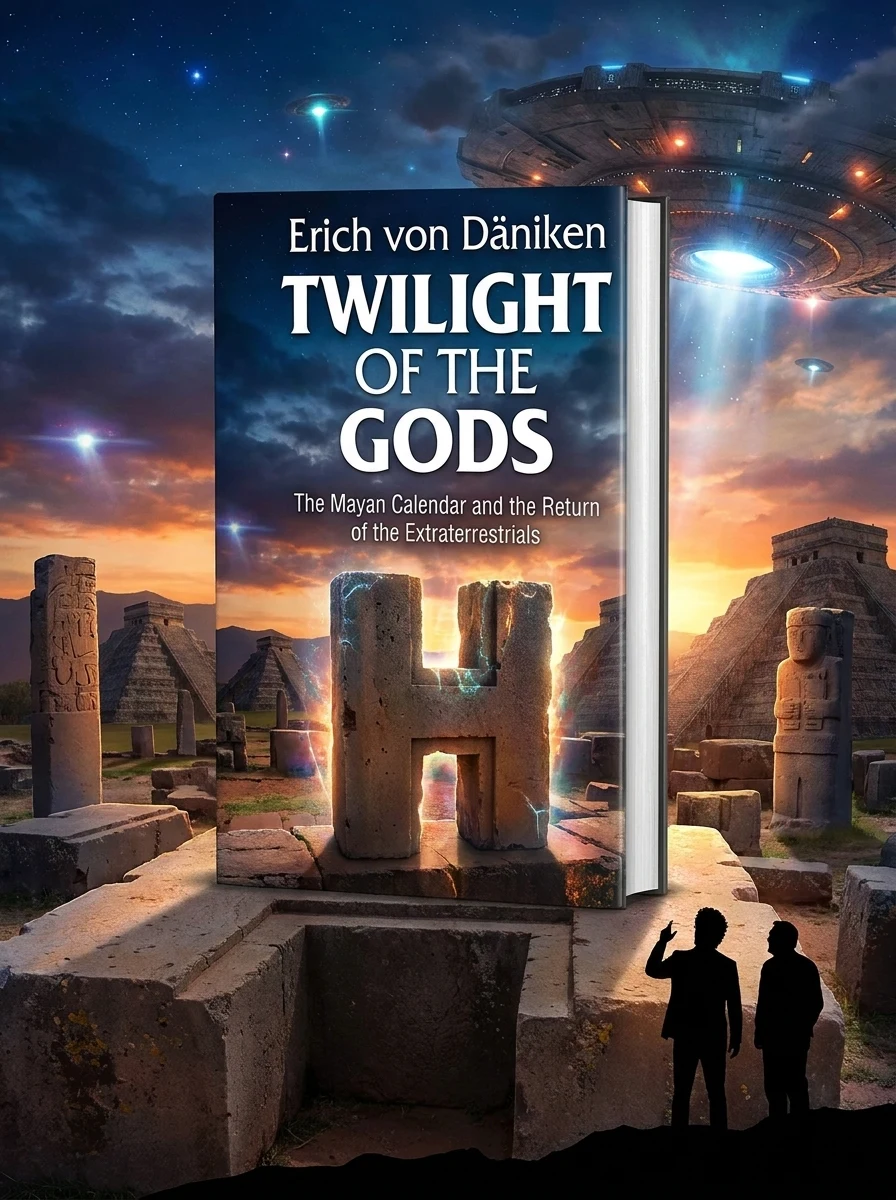
Twilight of the Gods: The Mayan Calendar and the Return of the Extraterrestrials Von Däniken, Erich
This edition can be ordered. No arrival date is confirmed.
Ancient gods or alien visitors? Prepare for their return.
Erich von Däniken, the pioneering voice of ancient astronaut theory, invites readers on an audacious journey into humanity's origins and its fated future. This compelling work dissects the enigmas surrounding the Mayan calendar's prophecies, particularly the much-debated 2012 date, interpreting it as a foretelling of extraterrestrial beings reappearing. Von Däniken scrutinizes inexplicable archaeological marvels like Puma Punku, arguing that their advanced construction defies ancient human capabilities. He posits that these sites are irrefutable evidence of a profound, non-terrestrial influence on our past, preparing us for a future cosmic encounter.
This work sits firmly within the ancient astronaut theory tradition, blending pseudohistorical speculation with esoteric interpretations of Mesoamerican prophecy. It reflects a period where mainstream interest in extraterrestrial origins intersected with popular occult movements and alternative history narratives.


📝 Description: Twilight of the Gods: The Mayan Calendar and the Return of the Extraterrestrials Von Däniken, Erich
💎 Expert review
📖 Why choose it
Why this book is worth reading
Readers fascinated by the intersection of archaeology and speculative mythology will find this book a captivating exploration. It appeals to those who enjoy challenging conventional historical narratives with bold, unconventional theories about human origins. If you are intrigued by the idea that ancient civilizations were influenced by non-terrestrial beings, this text offers a compelling, albeit controversial, perspective. It is particularly suitable for enthusiasts of the Mayan calendar's mysteries and those seeking answers to unexplained archaeological phenomena through an extraterrestrial lens. The book provides a narrative that bridges the gap between ancient prophecies and futuristic cosmic encounters, satisfying a curiosity about our place in the universe beyond standard academic explanations.
⭐ Reader reviews
Reader rating
This volume offers a sensationalist take on ancient history, appealing strongly to believers in the ancient astronaut hypothesis while likely alienating academic historians. It is not suitable for readers seeking rigorous archaeological evidence or peer-reviewed scientific consensus. The text prioritizes dramatic speculation over factual accuracy, making it entertaining but unreliable as a historical source. Critics of pseudoscience will find its arguments flimsy and its conclusions preposterous. However, for those already inclined toward esoteric theories, it serves as an engaging, if flawed, companion to other works in the genre. It lacks nuance but delivers on its promise of audacious speculation.
❓ Frequently asked questions
📖 Who should read this
For those who dare to question established history, who find conventional explanations lacking, and who are fascinated by extraterrestrial mysteries, this book offers a provocative, alternative perspective. If you are intrigued by ancient civilizations, advanced technology, and the possibility of cosmic visitors, prepare to have your worldview challenged.
🎯 Key themes and symbolism
Ancient Alien Hypothesis
Von Däniken rigorously presents his signature theory that advanced extraterrestrial civilizations visited Earth in antiquity, profoundly shaping human development, culture, and architecture. He meticulously examines ancient texts and structures, reinterpreting them as evidence of these 'gods' and their technological prowess, rather than purely human innovation or myth.
Mayan Calendar Prophecy
The author delves into the intricate Mayan calendrical system, particularly the Long Count cycle culminating in December 2012. He interprets this significant date not as an apocalyptic end, but as a prediction for the reappearance of the very extraterrestrial entities—the 'gods'—who first inspired ancient civilizations, heralding a monumental shift for humanity.
Unexplained Archaeological Sites
A central pillar of the book's argument is the inexplicable engineering found at sites such as Puma Punku in the Bolivian Andes. Von Däniken highlights the impossibly precise stonework and massive scale of these ruins, asserting that their construction methods were beyond the capacity of Stone Age people, pointing instead to advanced, non-human builders.
💬 Quotes from the book
“Something here really stinks to high heaven.”
“The so-called gods--the extraterrestrials--will come again. We're headed for a 'god shock' of major proportions.”
📜 Historical context
📚 Glossary
- Ancient Astronaut Theory
- Puma Punku
- Mayan Calendar
📔 Questions to reflect on
- If ancient 'gods' were indeed extraterrestrial visitors, how might this reframe our understanding of religious texts, creation myths, and human spirituality?
- Consider the ethical implications of archaeological evidence being 'intentionally destroyed' or suppressed, as von Däniken suggests. What would be the motivations, and what are the consequences for our collective history?
- Reflect on the concept of a 'god shock.' How would society, technology, and individual belief systems adapt to the undeniable return of advanced extraterrestrial beings?
📖 From the series “Erich Von Daniken Library”
All books in the series →
 91
91



🏛 Books from this publisher New Page Books
All books from this publisher →




You might also like
See more →
 91
91