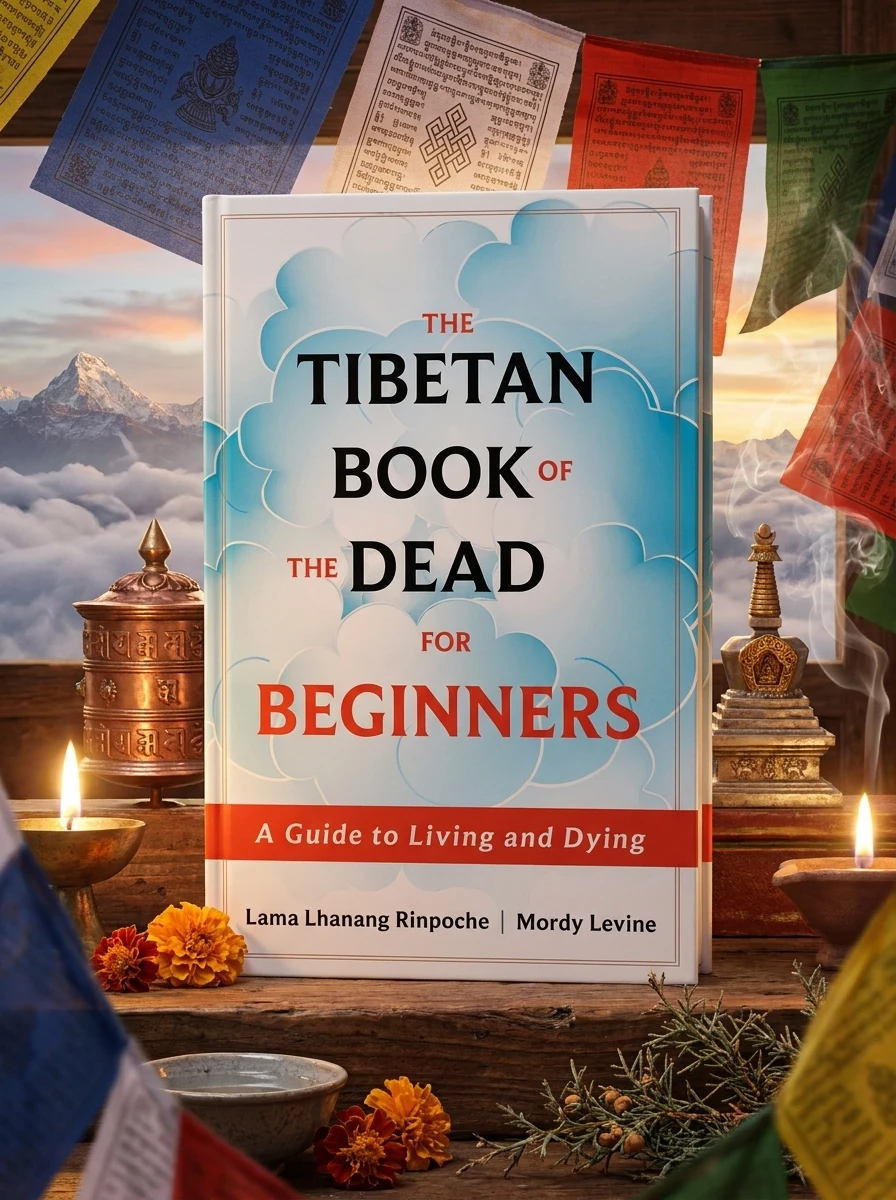
The Tibetan Book of the Dead for Beginners: A Guide to Living and Dying


Stock reported in the catalog; fulfillment is confirmed with your request.
Unveil ancient wisdom for a courageous life and a peaceful transition, embracing impermanence with open eyes.
This insightful volume distills the profound teachings of The Tibetan Book of the Dead into an accessible guide for contemporary seekers. Lama Lhanang Rinpoche and Mordy Levine illuminate the Buddhist perspective on life's ultimate transition, emphasizing that conscious living shapes our dying. Far from a morbid focus, it offers practical wisdom for cultivating joy, embracing impermanence, and navigating the mysteries of the bardos. Discover a path to face life's endings—and new beginnings—with courage, clarity, and deep peace.
This work bridges ancient Tibetan Buddhist traditions with contemporary Western self-help philosophy, translating esoteric teachings on the bardos for modern audiences. It serves as a practical entry point into Vajrayana wisdom regarding consciousness and death.


📝 Description: The Tibetan Book of the Dead for Beginners: A Guide to Living and Dying
💎 Expert review
📖 Why choose it
Why this book is worth reading
Readers seeking to demystify death and find courage in daily life will find profound value here. This guide distills complex Tibetan Buddhist teachings into accessible wisdom for those embracing impermanence. It is ideal for seekers who wish to cultivate joy and clarity while navigating life's transitions. By focusing on conscious living, it offers a peaceful framework for understanding the ultimate journey. Those ready to face endings with open eyes will discover practical tools for a courageous existence. The authors illuminate how present awareness shapes our final moments, making this essential for anyone desiring deep peace and spiritual preparedness without academic heaviness.
⭐ Reader reviews
Reader rating
This volume successfully demystifies dense Tibetan Buddhist concepts for the modern layperson, offering warmth and clarity where other texts may feel intimidating. It is particularly suited to beginners in esoteric philosophy who value practical application over scholarly rigor. However, it does not suit readers seeking rigorous academic analysis or those uncomfortable with spiritual frameworks that prioritize death awareness as a tool for living. The accessible tone might feel too simplistic for advanced practitioners already well-versed in the Bardos. Ultimately, it is a compassionate bridge rather than a comprehensive treatise.
❓ Frequently asked questions
📖 Who should read this
If you seek an accessible understanding of Tibetan Buddhist wisdom on life and death, this book is for you. It's vital for those wishing to cultivate inner peace, embrace impermanence, and approach life's ultimate transition with courage.
🎯 Key themes and symbolism
Mindful Living, Peaceful Dying
This work emphasizes that our present way of living profoundly shapes our ultimate transition. By cultivating wisdom and compassion in our daily lives, we build a foundation for a peaceful passing. It provides practical insights to integrate spiritual practice into everyday experiences, fostering a richer existence now and a courageous approach to death.
Navigating the In-Between
The book delves into the Buddhist concept of impermanence, not as a source of despair, but as a catalyst for conscious living. It introduces the "bardos," or transitional states, offering a map for understanding the journey between lives. This exploration provides a framework for comprehending the continuous cycle of endings and new beginnings.
Death's Transformative Cycle
Challenging Western society's avoidance of mortality, this guide reframes death not as a finality, but as a crucial stage in an ongoing cycle. It posits that every ending, including death, inherently contains the seed of a new beginning. This perspective encourages a courageous engagement with loss and the potential for rebirth.
💬 Quotes from the book
“The way we navigate our present moments, with all their joys and challenges, lays the groundwork for how we will ultimately face life's greatest transition.”
“Cultivating genuine compassion for oneself and others isn't merely a spiritual ideal; it's a practical skill that illuminates our path through every bardo.”
📜 Historical context
📚 Glossary
- Bardo
- Impermanence
- Karma
📔 Questions to reflect on
- How does my current way of living prepare me for future transitions, big or small?
- In what ways can I cultivate more compassion and awareness in my daily interactions?
- Reflect on an "ending" in your life that led to an unexpected new beginning. What did you learn?
🏛 Books from this publisher St. Martin's Essentials / Sounds True
All books from this publisher →

You might also like
See more →