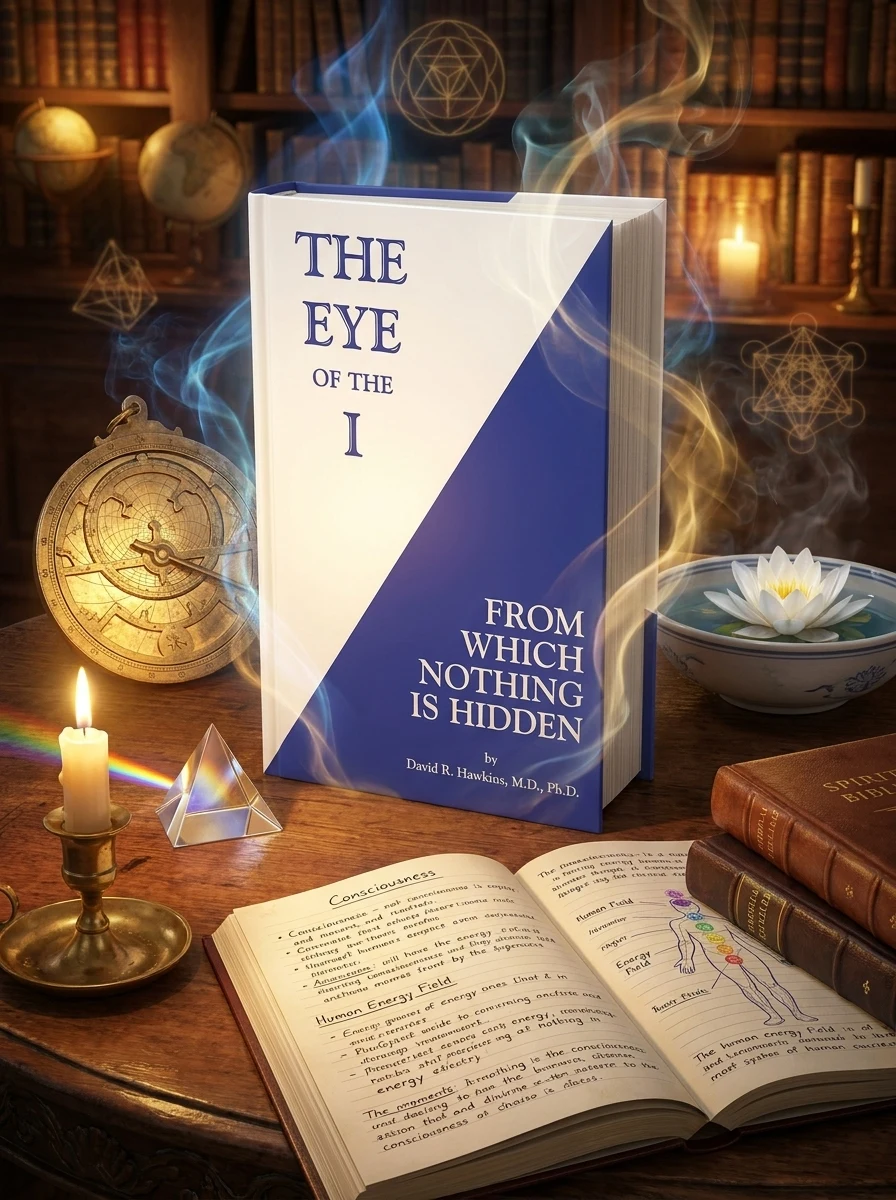

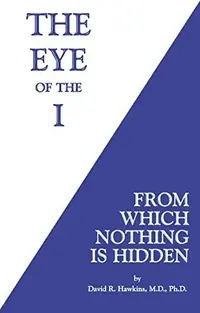
The Eye of the I: From Which Nothing Is Hidden
Hawkins, David R, MD/PhDStock reported in the catalog; fulfillment is confirmed with your request.
Hawkins maps the architecture of consciousness, bridging clinical psychiatry with mystical enlightenment.
This text serves as the pivotal middle volume in a trilogy on self-realization, moving beyond the foundational concepts of his earlier work to explore the advanced states of spiritual awakening. Hawkins, drawing upon his dual expertise in medicine and metaphysics, dissects the mechanisms of awareness and the dissolution of the ego. The narrative guides the reader through the intricate interface between physical perception and spiritual truth, offering a rigorous framework for understanding how consciousness expands. It is not merely inspirational but structural, providing a map for those seeking to navigate the transition from personal growth to absolute enlightenment.
This work sits at the intersection of New Age spirituality and transpersonal psychology, reflecting a late-20th-century trend of synthesizing clinical psychiatry with metaphysical inquiry. It belongs to the tradition of practical mysticism that seeks to demystify enlightenment through structured psychological frameworks.


📝 Description: The Eye of the I: From Which Nothing Is Hidden
💎 Expert review
📖 Why choose it
Why this book is worth reading
Readers who find standard inspirational literature lacking in structural depth will gain significantly from this text. It is ideal for those who have completed foundational self-help stages and now seek a rigorous map for navigating the complex transition from personal growth to absolute enlightenment. By bridging clinical psychiatry with mystical concepts, it offers a unique architectural framework for understanding consciousness expansion. Those weary of vague spiritual platitudes will appreciate the precise dissection of ego dissolution and awareness mechanisms. It serves as a vital tool for serious seekers who require both intellectual coherence and spiritual direction to understand the interface between physical perception and ultimate truth.
⭐ Reader reviews
Reader rating
This edition finally does the material justice. The historical context alone makes it worth the price. The print is clean and easy on the eyes for long sessions. Deserves a place on any esoteric bookshelf.
Added this to my reference shelf. Some chapters demand a slow, careful read, and that's exactly the point. The material is presented clearly and the structure makes it easy to revisit key passages. One of my better finds this year.
My book club chose this last month. The historical context alone makes it worth the price. One of my better finds this year.
Long-time student of the esoteric here. The print is clean and easy on the eyes for long sessions. The typesetting is comfortable for study, with good margins for notes. My only quibble is the cover feels thinner than expected. Solid, if not essential.
As someone who reads a lot in this field, I can be picky. It's become a regular reference in my practice. Solid binding, decent paper — holds up to heavy use. Delivery took a bit longer than quoted. Solid, if not essential.
Ordered this after seeing it referenced in another book I was studying. It connects ideas I'd only seen treated separately elsewhere. The font runs small in the appendices. Solid, if not essential.
Hawkins delivers a dense, structural analysis of consciousness that appeals to the analytical mind seeking spiritual expansion. However, this rigor may alienate readers looking for gentle comfort or simple motivational advice. The text is not for those who prefer emotional resonance over intellectual mapping, nor for skeptics of medical metaphysics. It demands active engagement with complex concepts regarding ego dissolution and awareness mechanisms. While valuable for its unique synthesis of psychiatry and mysticism, it lacks the narrative flow preferred by casual readers. It is best suited for students of esoteric philosophy who are ready to dissect the architecture of their own awakening rather than simply observe it.
❓ Frequently asked questions
📖 Who should read this
Seekers who have mastered introductory spiritual texts and are ready for a rigorous, clinical approach to metaphysics. Ideal for those dissatisfied with vague inspiration, preferring structured psychological models to explain mystical experiences and the mechanics of enlightenment.
🎯 Key themes and symbolism
Consciousness Calibration
Ego Dissolution
Mind-Body Unity
💬 Quotes from the book
“The barriers between the known and the unknown dissolve when one observes the mind without attachment.”
“Enlightenment is not a destination, but the realization of the nature of the observer.”
📜 Historical context
📚 Glossary
- Calibration
- The Eye of the I
- Subjectivity
📔 Questions to reflect on
- Where do you feel the boundary between your personal narrative and pure awareness blur?
- How does your physical body react when you attempt to observe your thoughts without judgment?
- What 'known' belief must you release to perceive the 'unknown' reality described in this text?
✍️ More books by this author Hawkins, David R, MD/PhD
All books by this author →


🏛 Books from this publisher Hay House LLC
All books from this publisher →






You might also like
See more →

 81
81
 79
79