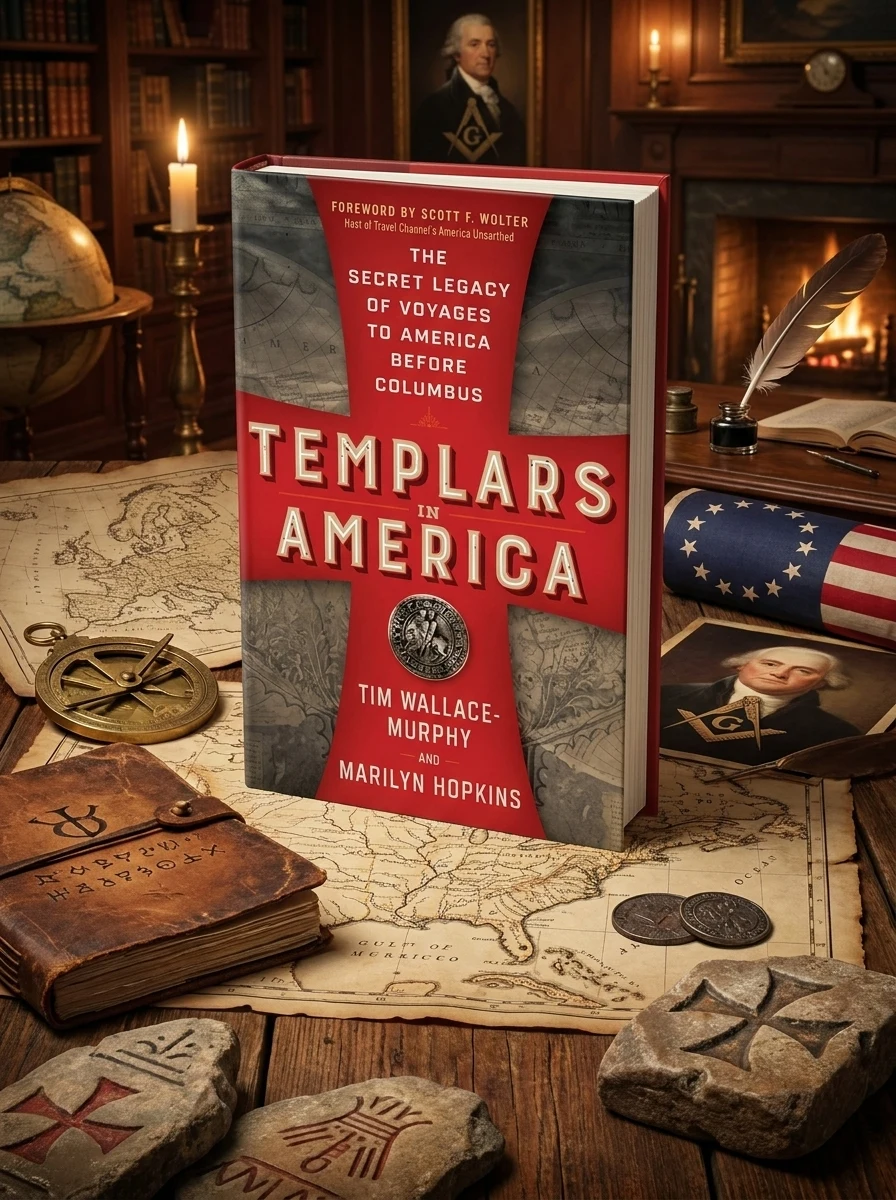
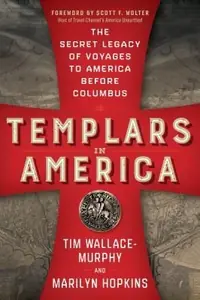
Templars in America: The Secret Legacy of Voyages to America Before Columbus
Stock reported in the catalog; fulfillment is confirmed with your request.
Uncover the hidden history of Templar voyages to America, centuries before Columbus, and their enduring legacy.
This compelling volume unearths a provocative narrative, suggesting the Knights Templar established a significant presence in the Americas long before Columbus. Drawing from historical archives and archaeological finds, the authors detail how two prominent European Templar families, Henry St. Clair and Carlo Zeno, forged an alliance to establish a new commonwealth. Their peaceful interactions with the Mi'qmaq people of Canada are supported by stone carvings, historical records, and enduring oral traditions. The book further explores how these early transatlantic connections influenced Templar traditions and Freemasonry, hinting at profound impacts on future nation-building.
This work sits firmly within the tradition of alternative history and esoteric archaeology, challenging mainstream narratives by proposing pre-Columbian European presence in the Americas. It bridges the gap between medieval chivalric orders and the later development of Freemasonry through speculative historical linkage.


📝 Description: Templars in America: The Secret Legacy of Voyages to America Before Columbus
💎 Expert review
📖 Why choose it
Why this book is worth reading
Readers fascinated by hidden histories and the mysterious origins of Western esoteric traditions will find this book deeply engaging. It offers a compelling alternative narrative that connects the Knights Templar to the indigenous peoples of North America, specifically the Mi'qmaq. Those interested in the roots of Freemasonry and the potential influence of medieval alliances on modern nation-building will appreciate the detailed exploration of stone carvings and oral traditions cited by the authors. This volume serves as an excellent resource for enthusiasts who enjoy piecing together historical puzzles that defy conventional timelines, providing a fresh perspective on transatlantic connections and cultural exchange long before the age of exploration.
⭐ Reader reviews
Reader rating
While intriguing, this book demands a reader open to speculative synthesis rather than rigorous academic proof. It appeals strongly to those who value esoteric lineage and alternative archaeological interpretations over mainstream historical consensus. However, it does not suit readers seeking peer-reviewed documentation or those who prefer strictly chronological, evidence-based historiography without metaphysical speculation. The narrative relies heavily on interpreting ambiguous artifacts and oral histories as definitive proof of Templar presence, which may frustrate skeptics. It is best approached as a provocative exploration of possibility rather than a settled historical fact, making it ideal for open-minded seekers but less appropriate for strict traditionalists.
❓ Frequently asked questions
📖 Who should read this
If you're a seeker of alternative histories, fascinated by secret societies, or simply curious about challenging established narratives, this book is for you. Prepare to question everything you thought you knew about the discovery and early influences on the American continent.
🎯 Key themes and symbolism
Pre-Columbian Transatlantic Contact
This work challenges conventional historical timelines by presenting a meticulously researched case for European voyages to the Americas centuries before Christopher Columbus. It highlights the journeys of Templar figures like Henry St. Clair and Carlo Zeno, showcasing how their expeditions established early, peaceful interactions with indigenous communities, reshaping our understanding of global exploration.
Templar and Masonic Lineage
The book intricately traces the evolution of the Knights Templar beyond their crusading origins, linking their esoteric knowledge and organizational structure to the foundational principles of Freemasonry. It posits that their transatlantic ventures played a crucial role in shaping these secret societies, embedding their influence into later historical developments, including American nationhood.
Alternative American Origins
Delve into a compelling reinterpretation of America's foundational history, moving beyond the familiar narratives. The authors explore how early Templar commonwealths in the New World, built on peaceful exchanges with the Mi'qmaq, could have sown seeds of self-governance and liberty that resonated through the centuries, subtly influencing the very ideals of the Founding Fathers.
💬 Quotes from the book
“The evidence, etched in stone and woven into the very fabric of indigenous oral traditions, consistently points to a sophisticated level of transatlantic interaction long before conventional histories admit.”
“Far from being an isolated event, the Templar ventures into the New World appear to be part of a grander, intergenerational plan, subtly shaping the esoteric undercurrents that would later define American nationhood.”
📜 Historical context
📚 Glossary
- Knights Templar
- Pre-Columbian
- Freemasonry
📔 Questions to reflect on
- How might our understanding of global history change if pre-Columbian transatlantic contact by groups like the Templars becomes widely accepted?
- Consider the implications of secret societies potentially influencing the foundational ideals of nations. How does this challenge or reinforce your views on history and power?
- If indigenous oral traditions hold verifiable historical truths, how should conventional archaeology and historical research better integrate these sources?
🏛 Books from this publisher New Page Books
All books from this publisher →





You might also like
See more →


 91
91
 91
91