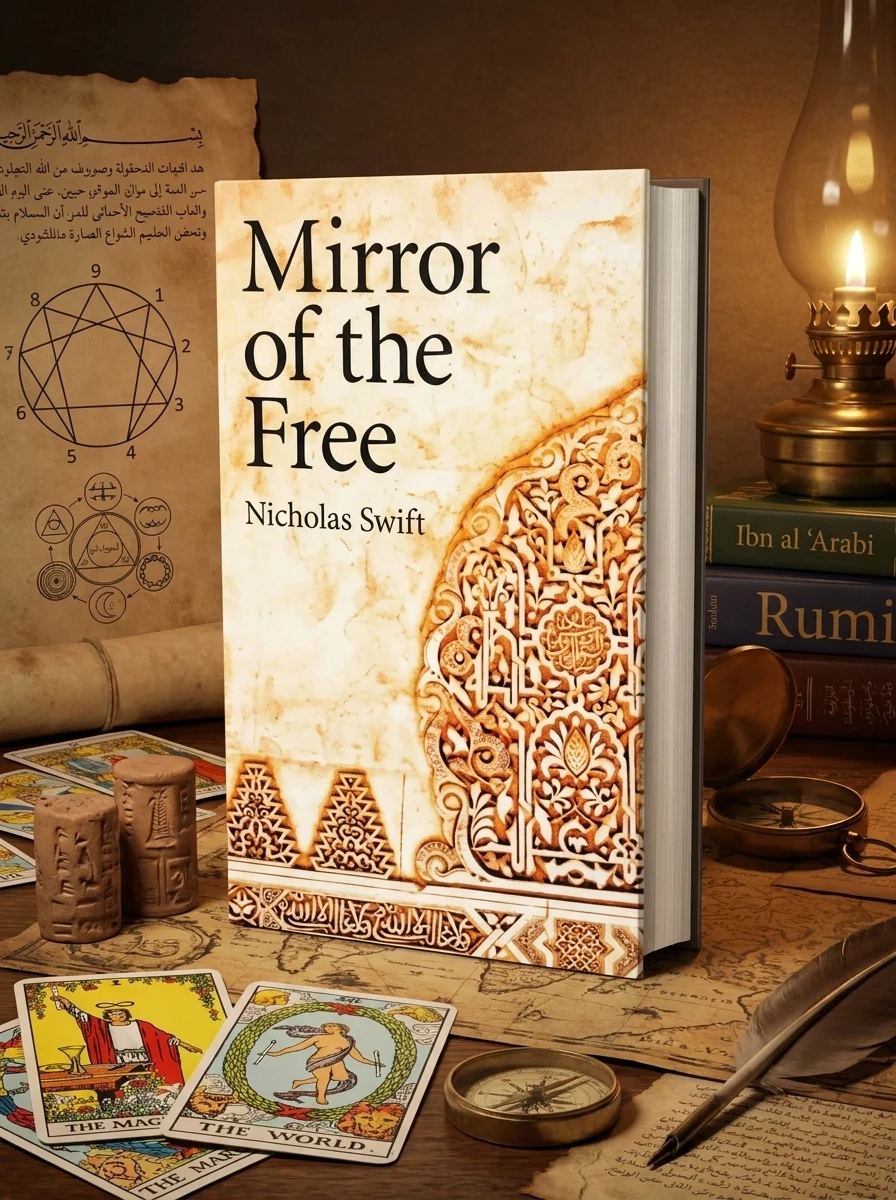
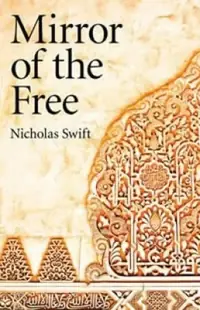
Mirror of the Free
Stock reported in the catalog; fulfillment is confirmed with your request.
Unlock the Sufi and Protosemitic secrets hidden within the ancient imagery of the Marseille Tarot.
Swift reveals that the Marseille Tarot’s visuals trace back to Sumero-Babylonian myths preserved on cylinder seals. These images encode wisdom shared by Sufi masters like Ibn Arabi and Gurdjieff. By analyzing Arabic consonantal roots and modern neuroscience, the author decodes these symbols, proving the Tarot and Kabbalah share identical origins. The work demonstrates that the original Kabbalah featured eight sefirot, not ten. This definitive study bridges ancient mythology, esoteric doctrine, and cognitive science to solve the card deck’s mysterious lineage.
This work sits at the intersection of esoteric tarot studies and comparative mythology, drawing heavily upon Sufi metaphysics and ancient Near Eastern religious traditions. It challenges established Kabbalistic structures by proposing a protosemitic lineage for the Marseille Tarot.


📝 Description: Mirror of the Free
💎 Expert review
📖 Why choose it
Why this book is worth reading
Readers deeply invested in the hidden histories of tarot and the syncretic nature of Western esotericism will find this text invaluable. Nicholas Swift offers a rigorous, interdisciplinary approach that bridges the gap between ancient Sumero-Babylonian cylinder seals and modern cognitive science. Those fascinated by the Sufi teachings of Ibn Arabi or the unconventional spiritual frameworks of Gurdjieff will appreciate the detailed decoding of Arabic consonantal roots within the Marseille imagery. This book is essential for scholars and practitioners who suspect that traditional Kabbalistic accounts are incomplete, specifically those intrigued by the theory of an original eight-sefirot system rather than the standard ten. It provides a compelling, evidence-based narrative for understanding the true, mythological origins of tarot symbolism.
⭐ Reader reviews
Reader rating
First purchase from this shop. I appreciated how the argument builds steadily from first principles. The typesetting is comfortable for study, with good margins for notes.
Swift’s work is a dense, academic exploration that demands patience and a strong background in linguistics and mythology. While its synthesis of neuroscience and ancient Sufi doctrine is ambitious, it may alienate casual tarot readers seeking practical divination advice or simple historical overviews. The argument that the Tarot and Kabbalah share identical origins is provocative but relies on highly specialized interpretations of Arabic roots that might feel speculative to traditionalists. This book is not for those who prefer established, orthodox occult histories. However, for dedicated researchers willing to navigate complex cognitive science and protosemitic analysis, it offers a fresh, albeit demanding, perspective on the Marseille deck’s enigmatic lineage.
❓ Frequently asked questions
📖 Who should read this
Readers fascinated by the intersection of ancient mythology, Sufi philosophy, and esoteric history. Ideal for Tarot scholars seeking alternative origins and those interested in the neurological basis of spiritual symbols.
🎯 Key themes and symbolism
Sufi Mythological Roots
The text argues that Tarot imagery originates from Sumero-Babylonian myths, preserved through oral and written traditions. These narratives align with Sufi teachings from Ibn Arabi and Rumi, revealing a shared esoteric lineage that transcends mere card illustration, connecting ancient mythology to spiritual truth.
Kabbalah Reinterpreted
Swift challenges traditional Kabbalistic structures by asserting the original system comprised eight sefirot. He links this directly to Tarot sources, using visual evidence to show their common Protosemitic ancestry. This redefinition shifts the understanding of Jewish mysticism, placing it in parallel with Sufi and Tarot traditions.
Neurological Symbolism
The author integrates modern neuroscience, specifically hemispheric specialization and conditioning, to decode ancient symbols. By linking Arabic consonantal roots to brain function, the book suggests that Tarot imagery operates on a neurological level, offering a scientific framework for understanding spiritual conditioning and esoteric wisdom.
💬 Quotes from the book
“The visual evidence alone is overwhelming: the mystery of where the Tarot comes from has been definitively solved.”
“That wisdom is identical with Sufi teachings as espoused by teachers like Ibn al 'Arabi and Rumi.”
📜 Historical context
📚 Glossary
- Protosemitic
- Sefirot
- Hemispheric Specialization
📔 Questions to reflect on
- How might your understanding of Tarot imagery shift if viewed through the lens of Sufi mythology?
- In what ways do your own cognitive processes influence your interpretation of esoteric symbols?
- What does the concept of 'eight sefirot' suggest about the nature of divine emanation compared to the traditional ten?
🏛 Books from this publisher Dodona Books
All books from this publisher →
 89
89
![The Instant Astrologer [With CD]](/img/the-instant-astrologer-with-cd.webp) 91
91
You might also like
See more →
 89
89


 82
82