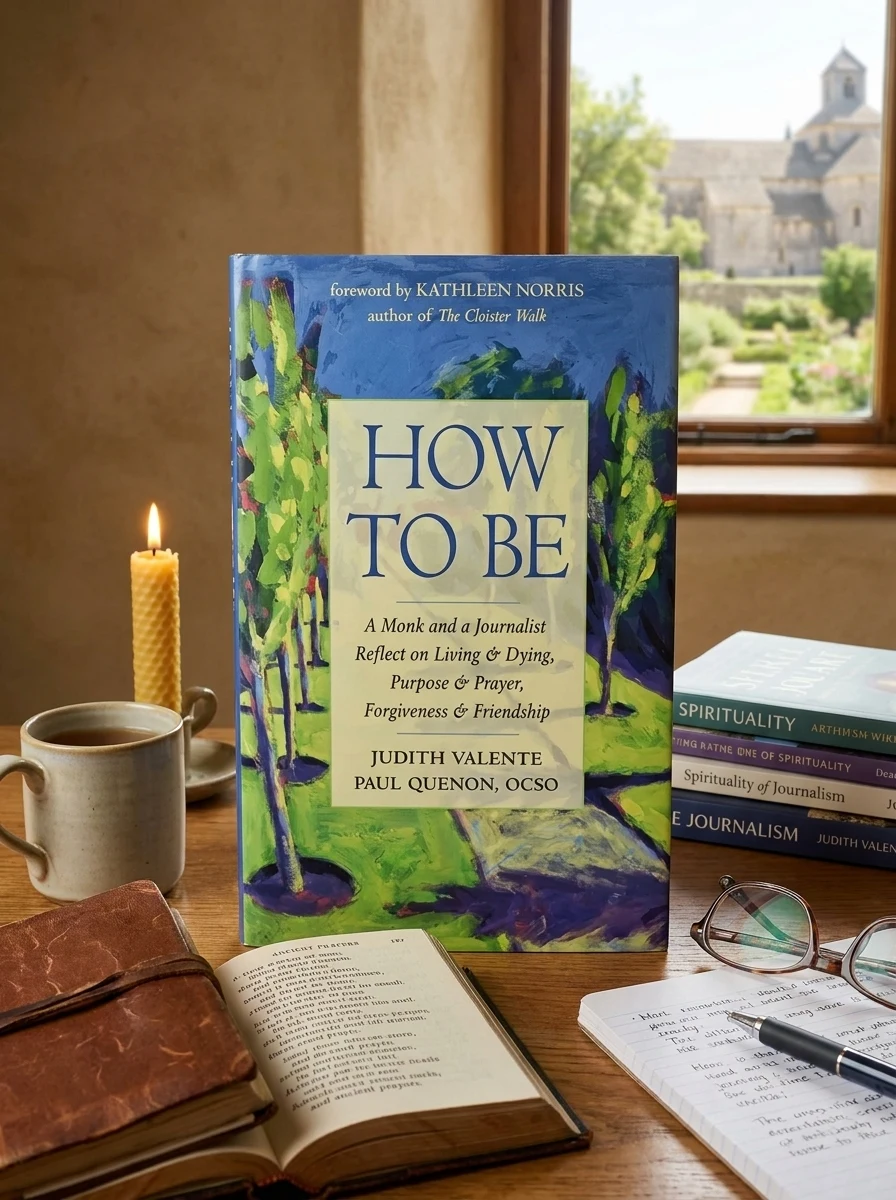
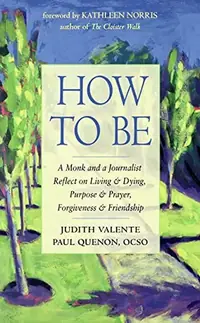
How to Be: A Monk and a Journalist Reflect on Living & Dying, Purpose & Prayer, Forgiveness & Friendship
Valente, JudithThis edition can be ordered. No arrival date is confirmed.
Two souls, one monk and one journalist, explore the profound silence of being in a noisy world.
In this lyrical dialogue, Trappist monk Brother Paul and journalist Judith Valente traverse the terrain of human existence. Valente, a secular professional, brings her chaotic, prayerful life to the table, while Brother Paul offers the stillness of centuries of monastic tradition. Their conversation begins with the startling notion that the purpose of life is simply to live it. They dissect faith, death, and mystery not as abstract concepts, but as lived experiences. The result is a tender, wise exchange that bridges the cloister and the concrete jungle, offering readers a map for authentic living.
This work sits within the contemporary interfaith dialogue tradition, specifically bridging Christian monastic spirituality with secular journalistic inquiry. It reflects the modern esoteric interest in finding mystical meaning through practical, lived experience rather than rigid dogma.


📝 Description: How to Be: A Monk and a Journalist Reflect on Living & Dying, Purpose & Prayer, Forgiveness & Friendship
💎 Expert review
📖 Why choose it
Why this book is worth reading
Readers seeking grounding in a chaotic world will find profound comfort here. This book is ideal for those feeling the tension between spiritual longing and secular duty. It offers a gentle guide to authentic living, proving that purpose is found in the act of living itself. Those curious about monastic wisdom without entering the cloister will appreciate this accessible bridge. It is perfect for individuals navigating grief, faith questions, or the search for inner peace amidst noise.
⭐ Reader reviews
Reader rating
I keep coming back to this one. It reads better in small doses — a chapter at a time with notes. Some chapters demand a slow, careful read, and that's exactly the point. Some archaic spellings slow things down. Recommended with reservations.
My third book from this store and this one might be the best. The symbolism is layered and generous to patient readers. The font runs small in the appendices. Recommended with reservations.
Honestly wasn't sure what to expect, but I'm impressed. The symbolism is layered and generous to patient readers. Well worth it.
As someone who reads a lot in this field, I can be picky. The print is clean and easy on the eyes for long sessions. It connects ideas I'd only seen treated separately elsewhere.
Was skeptical at first. There's real depth here that reveals itself on a second reading.
Bought this as a gift for my sister and ended up ordering a second copy for myself. It reads better in small doses — a chapter at a time with notes. Will be gifting a copy to a friend.
Been hunting for a decent copy of this text for ages. The material is presented clearly and the structure makes it easy to revisit key passages. A few pages arrived with light corner wear, though nothing serious. Still worth having on the shelf.
While beautifully lyrical and wise, this dialogue may not suit readers preferring dense theological treatises or dogmatic religious instruction. Those seeking concrete answers rather than contemplative exploration might find the abstract nature of 'being' frustrating. It is best enjoyed by those open to ambiguity and quiet reflection. The exchange is tender but lacks rigorous academic argumentation. Readers who prefer direct, actionable self-help steps may find the philosophical musings too diffuse for their needs.
❓ Frequently asked questions
📖 Who should read this
Seek those weary of self-help hustle culture, craving depth over advice. Ideal for Christians, interfaith readers, and anyone seeking peace amidst the noise of modern life.
🎯 Key themes and symbolism
The Virtue of Purposeless Being
The text challenges the modern obsession with productivity and utility. Brother Paul posits that we need not justify our existence through grand achievements. Instead, the book argues that simply inhabiting the present moment, with all its quiet dignity, is the ultimate spiritual practice and the truest form of integrity.
Contemplation in Chaos
Valente demonstrates how to weave prayer into the fragmented moments of a secular career. She shows that contemplation is not confined to the monastery but can be cultivated amidst deadlines and domestic duties, proving that spiritual depth and worldly engagement are not mutually exclusive but can mutually enrich one another.
Mortality as Companion
Rather than fearing death, the authors treat it as an integral part of the living process. They discuss how awareness of our finite time sharpens our appreciation for friendship and forgiveness. This perspective transforms grief and endings from sources of despair into profound teachers of love and presence.
💬 Quotes from the book
“The purpose of life is life. You're to live your life.”
“Two people stuttering to articulate life's universal questions.”
📜 Historical context
📚 Glossary
- Trappist Life
- Contemplative Prayer
- Secular Spirituality
📔 Questions to reflect on
- When was the last time you did something simply because it was, without needing a goal or outcome?
- How might you introduce a moment of silence into your busiest daily routine this week?
- What would change in your relationships if you viewed mortality as a companion rather than an enemy?
✍️ More books by this author Valente, Judith
All books by this author →
🏛 Books from this publisher Hampton Roads Publishing Company
All books from this publisher →

 88
88
You might also like
See more →
 91
91