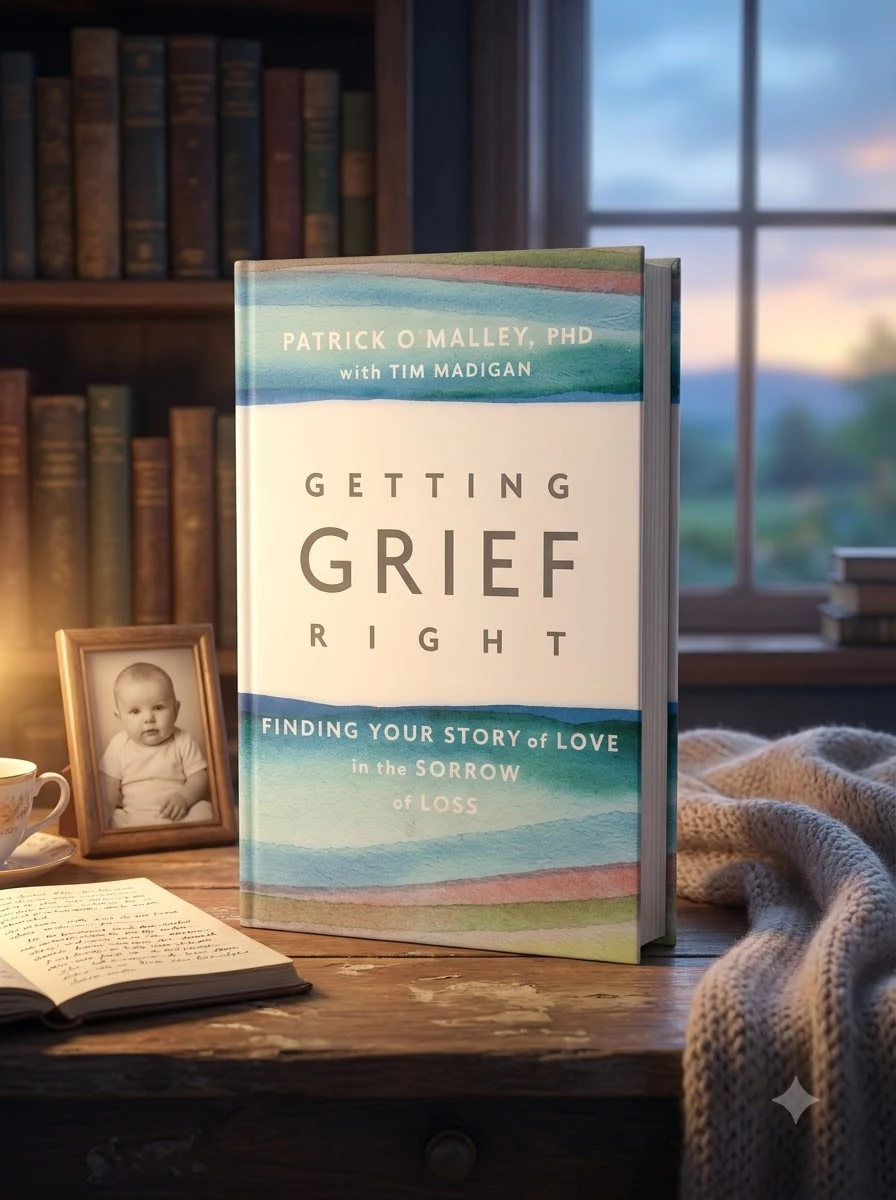

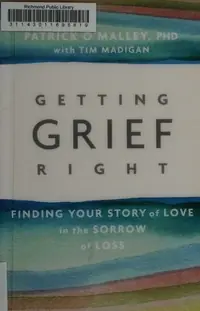
Getting Grief Right: Finding Your Story of Love in the Sorrow of Loss


This edition can be ordered. No arrival date is confirmed.
Grief is not a wound to heal, but a love story that refuses to end.
Patrick O'Malley dismantles the clinical myth that sorrow is a pathology requiring a cure. Drawing from his personal tragedy and clinical practice, he reframes bereavement as the enduring echo of love. Rather than forcing closure, this guide encourages readers to integrate loss into their daily narrative. It validates the messy, non-linear reality of mourning, offering a compassionate alternative to the rigid stages model. This work transforms shame into understanding, helping us carry our loved ones forward through continued connection rather than through the illusion of moving on.
This work emerges from the contemporary spiritual self-help movement, specifically bridging the gap between clinical psychology and esoteric philosophy by treating grief as a sacred, ongoing relationship rather than a medical condition to be cured.


📝 Description: Getting Grief Right: Finding Your Story of Love in the Sorrow of Loss
💎 Expert review
📖 Why choose it
Why this book is worth reading
Readers navigating the complex, non-linear terrain of bereavement will find profound solace in O'Malley’s compassionate reframing of sorrow. If you feel pressured by societal expectations to 'move on' or heal from a wound that feels endless, this book offers a vital alternative narrative. It is ideal for those who view loss not as a pathology but as the enduring echo of love. By validating the messy reality of mourning and encouraging continued connection with the deceased, it transforms shame into understanding. This guide helps you integrate your loved one’s memory into your daily life, allowing you to carry them forward with grace rather than forcing closure, ultimately honoring the story of love that refuses to end.
⭐ Reader reviews
Reader rating
My third book from this store and this one might be the best. The material is presented clearly and the structure makes it easy to revisit key passages. The font runs small in the appendices. Happy enough with the purchase.
As someone who reads a lot in this field, I can be picky. Plenty of passages worth underlining; my copy is already full of margin notes. I found myself reading passages aloud just to sit with them. Will be gifting a copy to a friend.
Finally got around to ordering this. The print is clean and easy on the eyes for long sessions. The text itself is dense but rewarding — you get out what you put in. Recommended with reservations.
O'Malley provides a necessary antidote to the rigid stages model, offering a deeply humanizing perspective on loss. However, readers seeking quick fixes, clinical detachment, or strict cognitive-behavioral protocols will likely find this approach too abstract or emotionally unanchored. It is not suitable for those who prefer hard data over narrative metaphor or who view grief strictly through a biomedical lens of pathology. The book’s strength lies in its spiritual and emotional validation, making it less appropriate for skeptics who demand empirical evidence over lived experience. While the tone is warm and inviting, it requires an openness to redefining love and loss that may not resonate with individuals resistant to esoteric or philosophical interpretations of mental health.
❓ Frequently asked questions
📖 Who should read this
Readers exhausted by the pressure to 'get over' their loss. It is for those seeking permission to keep loving the dead, and for practitioners tired of outdated psychological models that pathologize natural sorrow.
🎯 Key themes and symbolism
Love as enduring connection
Rejection of clinical closure
Narrative integration of loss
💬 Quotes from the book
“Our grief is not a mental illness to be cured, but part of the abiding connection with the one we've lost.”
“Explore grief not as a process of recovery, but as the ongoing narrative of our relationship with the one we've lost.”
📜 Historical context
📚 Glossary
- Abiding Connection
- Narrative of Love
- Clinical Pathologizing
📔 Questions to reflect on
- How might your relationship with the deceased change if you stopped trying to 'finish' your grief?
- What specific memories or feelings would you add to the 'narrative of love' if shame were removed?
- In what ways does your culture pressure you to 'move on,' and how does that feel in your body?
🏛 Books from this publisher St. Martin's Essentials / Sounds True
All books from this publisher →
You might also like
See more →