
Did You Hear What Happened in Salem?: The Witch Trials of 1692 Kennedy, Katie
This edition can be ordered. No arrival date is confirmed.
Enter the chilling 1692 Salem trials through the eyes of an unexpected, snarky witness.
Step into the chilling annals of 1692 Massachusetts Bay Colony, where a seemingly innocent outbreak of strange fits quickly escalated into a maelstrom of accusations and terror. Katie Kennedy masterfully reinterprets the infamous Salem Witch Trials through the audacious lens of a snarky, first-person historical narrator. Witness how whispers turned to widespread panic, as vulnerable villagers were scapegoated, leading to ruined lives and tragic deaths. This fresh perspective peels back layers of fear and injustice, offering a compelling, unforgettable re-examination of America's darkest true-crime saga.
This work sits firmly within the tradition of alternative history and speculative non-fiction that re-examines pivotal moments through unconventional narrative lenses, specifically targeting the Salem Witch Trials of 1692. By employing a snarky, first-person perspective, it blends historical fact with modern satirical commentary to reinterpret America's most infamous true-crime saga.


📝 Description: Did You Hear What Happened in Salem?: The Witch Trials of 1692 Kennedy, Katie
💎 Expert review
📖 Why choose it
Why this book is worth reading
Readers who crave a fresh, unburdened approach to heavy historical subjects will find immense value in this unique interpretation. It is ideal for those who feel overwhelmed by dry academic texts but still desire factual grounding. The book offers a compelling re-examination of injustice through an audacious lens, making the terrifying events of 1692 accessible and engaging. If you enjoy witnessing how whispers escalate into panic through a modern, witty voice, this narrative provides a refreshing escape from traditional solemnity while honoring the tragic realities faced by scapegoated villagers.
⭐ Reader reviews
Reader rating
Kennedy’s audacious choice to use a snarky narrator creates a jarring yet effective contrast with the grim reality of the Salem Witch Trials. This stylistic decision makes the historical trauma feel immediate and oddly relatable, though it may alienate purists seeking respectful, somber documentation. It is not suitable for readers who prefer straightforward, unadorned historical accounts or those sensitive to humor applied to tragic events. However, for those open to a candid, modern twist on classic history, it delivers an unforgettable re-examination that balances terror with sharp wit, effectively peeling back layers of fear without losing the core truth.
❓ Frequently asked questions
📖 Who should read this
If you're seeking a fresh, engaging entry point into one of history's most compelling mysteries, this is for you. Ideal for curious minds, including younger occult enthusiasts, who appreciate historical events presented with a surprising, often irreverent, narrative voice.
🎯 Key themes and symbolism
Salem's Dark Hysteria
This book vividly chronicles the swift descent of Salem Village into mass hysteria. It explores how fear, superstition, and communal anxiety fueled an environment where rational thought was abandoned, leading to widespread accusations and a tragic loss of life, driven by a perceived evil force.
Scapegoats and Accusation
The narrative delves into the targeting of society's most vulnerable—the poor, elderly, or simply "strange"—as alleged witches. It examines the insidious mechanisms of accusation, where personal grievances and social anxieties converged to unjustly condemn individuals, highlighting the devastating power of collective blame.
Unreliable Narratives
A central theme is the exploration of truth through a highly unique, first-person historical narrator. This approach challenges conventional historical accounts, offering a subjective, often snarky, yet deeply insightful perspective on the events, forcing readers to question how history is told and interpreted.
💬 Quotes from the book
“Oh, the fits! You'd think they were practicing for a stage play, all that screaming and rolling. But then the naming started, and suddenly it wasn't so amusing, was it?”
“They called it 'evil hand,' but I saw plenty of human hands pointing fingers. Funny how easy it is to see a witch when you're looking for someone to blame.”
📜 Historical context
📚 Glossary
- Bewitched
- Spectral Evidence
- Puritanism
📔 Questions to reflect on
- If you had been a resident of Salem in 1692, how might you have reacted to the initial accusations, and what choices would you have faced?
- Consider the role of fear and community pressure in historical events like the witch trials. Can you identify similar dynamics in modern society?
- How does the unique first-person narration affect your understanding and emotional response to the Salem events compared to a traditional historical account?
📖 From the series “Did You Hear What Happened”
All books in the series →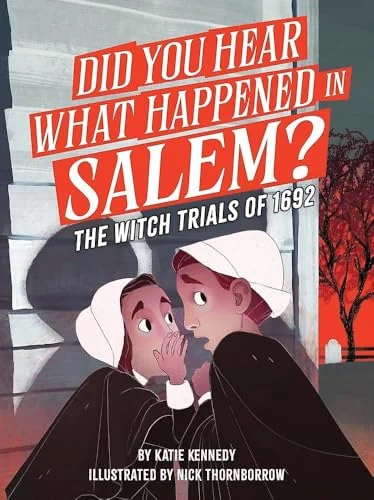
🏛 Books from this publisher Bound to Stay Bound Books
All books from this publisher →
 91
91

You might also like
See more →