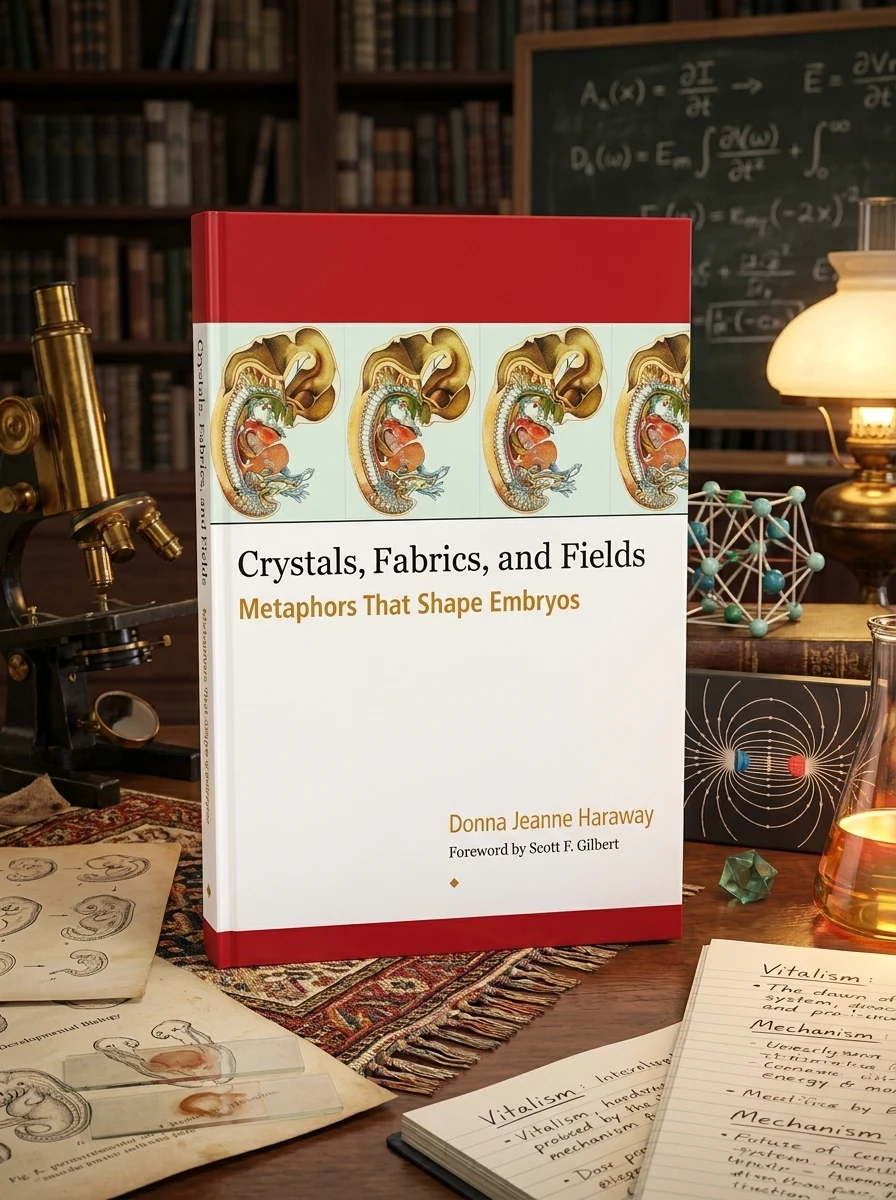
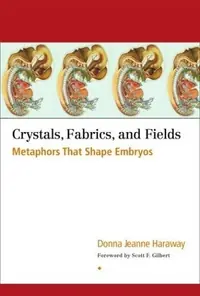
Crystals, Fabrics, and Fields: Metaphors That Shape Embryos
This edition can be ordered. No arrival date is confirmed.
Uncover the arcane influence of language on the very blueprint of life itself.
Donna Haraway, in collaboration with Scott Gilbert, delves into the foundational metaphors that have historically shaped developmental biology. Through the lens of seminal figures like Ross G. Harrison, Joseph Needham, and Paul Weiss, this work meticulously unpacks how conceptual frameworks—be they 'crystals,' 'fabrics,' or 'fields'—are not merely descriptive but profoundly formative. It traces a fascinating intellectual journey from early vitalist and mechanistic perspectives towards a more nuanced understanding of biological unfolding, revealing how these underlying metaphors dictate the questions asked, the experiments designed, and the truths perceived within the life sciences.
This text sits at the intersection of the history of science and feminist theory, challenging traditional biological narratives through critical epistemology. It belongs to a lineage of scholarly works that examine how language constructs scientific reality within the life sciences.


📝 Description: Crystals, Fabrics, and Fields: Metaphors That Shape Embryos
💎 Expert review
📖 Why choose it
Why this book is worth reading
This book offers a profound intellectual reward for readers fascinated by the hidden architectures of scientific knowledge. If you are intrigued by how abstract metaphors like 'crystals' or 'fields' actively shape our understanding of embryonic development, this collaboration provides essential insight. It is ideal for those who seek to understand the philosophical underpinnings of biology rather than just its empirical data. By revealing how conceptual frameworks dictate experimental design and perceived truth, it empowers readers to critically evaluate the narratives that define life sciences. It is a must-read for scholars and philosophers interested in the materiality of language and its power to form biological reality.
⭐ Reader reviews
Reader rating
Haraway and Gilbert deliver a rigorous deconstruction of developmental biology's conceptual history, exposing how metaphors function as formative forces rather than mere descriptions. While intellectually stimulating for those versed in philosophy of science, this work is not suited for readers seeking practical applications or straightforward biological facts. It may frustrate audiences preferring empirical immediacy over theoretical abstraction. The dense focus on historical figures like Needham and Weiss requires patience and a specific academic background. It is best appreciated by those willing to engage with complex epistemological arguments about the nature of scientific truth-making.
❓ Frequently asked questions
📖 Who should read this
If you are fascinated by the hidden frameworks that underpin scientific understanding, the philosophy of biology, or the subtle power of language to sculpt our perception of reality, this book is for you. It challenges conventional notions of scientific objectivity, urging you to look beyond the surface of biological facts.
🎯 Key themes and symbolism
Metaphor's Generative Power
Haraway argues that scientific metaphors are not just linguistic devices but active agents that construct reality. Concepts like the embryo as a 'crystal' or a 'fabric' didn't just describe phenomena; they dictated investigative methods, theoretical models, and the very boundaries of what was considered knowable, shaping the trajectory of biological discovery itself.
Evolution of Biological Thought
The book meticulously charts the intellectual shifts within developmental biology. It explores the transition from rigid vitalist or mechanistic views, which saw life either as divinely imbued or purely machine-like, to more dynamic and systemic understandings. This evolution is presented not as a linear progression but as a series of conceptual battles fought through competing metaphors.
Scientists as Storytellers
This work highlights how the personal philosophies and chosen metaphors of pioneering biologists—Harrison, Needham, and Weiss—profoundly influenced their research. It reveals how their individual 'stories' about life's origins and development guided their experimental approaches, demonstrating that science is deeply intertwined with human interpretation and conceptual framing.
💬 Quotes from the book
“The crystal, the fabric, the field—these were not mere descriptive tools, but potent incantations that summoned certain realities into scientific being, while banishing others.”
“To track the embryo's unfolding is to trace the shifting metaphors through which we dare to comprehend its magic, from the static blueprint to the dynamic dance of emergent properties.”
📜 Historical context
📚 Glossary
- Vitalism
- Mechanism
- Developmental Biology
📔 Questions to reflect on
- Reflect on a scientific concept you've learned. What underlying metaphors or analogies do you recognize within its explanation, and how might they shape your understanding?
- Consider how the 'language' we use in everyday life might inadvertently guide our perceptions and actions, much like scientific metaphors. Provide an example.
- If you were to propose a new metaphor for life's fundamental processes, what would it be and why? How might it challenge existing views?
🏛 Books from this publisher North Atlantic Books
All books from this publisher →






You might also like
See more →




 82
82