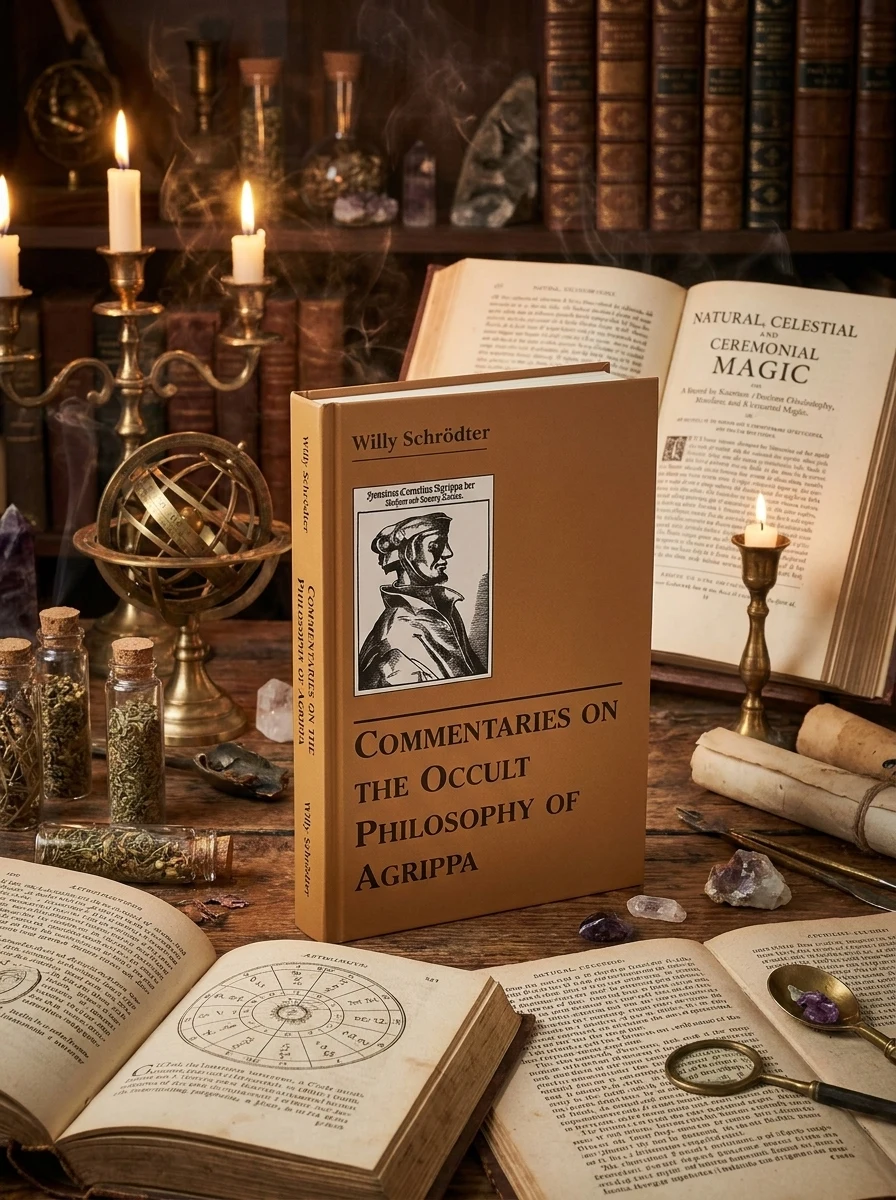
Commentaries on the Occult Philosophy of Agrippa
Schrodter, WillyStock reported in the catalog; fulfillment is confirmed with your request.
Unveil the cryptic genius of Agrippa with this indispensable commentary.
Willy Schrodter's "Commentaries" serves as an indispensable key to navigating the intricate labyrinth of Heinrich Cornelius Agrippa's foundational "Three Books of Occult Philosophy." For centuries, Agrippa's magnum opus has remained a pivotal, yet often opaque, text in Western esotericism, delving into the realms of natural forces, celestial influences, and ceremonial practices. Schrodter meticulously dissects Agrippa's complex ideas, offering clarity and context that illuminates the profound depths of this 16th-century classic. This work is not merely an explanation but an invitation to truly grasp the principles underpinning a cornerstone of magical thought.
This commentary resides within the rich tradition of Western esotericism, specifically addressing the Hermetic corpus and Renaissance magical theory. It bridges the gap between 16th-century occult philosophy and contemporary seekers by clarifying Agrippa's foundational texts.


📝 Description: Commentaries on the Occult Philosophy of Agrippa
💎 Expert review
📖 Why choose it
Why this book is worth reading
Readers who have struggled with the dense and intricate labyrinth of Heinrich Cornelius Agrippa's 'Three Books of Occult Philosophy' will find immense value in this essential guide. Willy Schrodter meticulously dissects complex ideas, offering the clarity and context needed to grasp the profound depths of natural forces and celestial influences. It is an indispensable key for those seeking not just explanation, but a true understanding of the principles underpinning cornerstone magical thought. If you wish to move beyond opaque theory into genuine comprehension of this 16th-century classic, this work invites you to unlock its cryptic genius with confidence.
⭐ Reader reviews
Reader rating
Schrodter’s commentary serves as a vital tool for navigating Agrippa's magnum opus, illuminating ceremonial practices and natural forces that often remain hidden. While it successfully offers an invitation to grasp foundational magical principles, it is not suited for casual readers or those seeking light, accessible introductions to the occult. This text demands engagement with serious esoteric study. It will frustrate anyone looking for a simplified overview or quick tips on spellcasting. However, for dedicated practitioners willing to delve into the intricate architecture of Renaissance magic, this volume provides necessary depth and scholarly rigor that lighter works simply cannot match.
❓ Frequently asked questions
📖 Who should read this
If Agrippa's "Three Books" has ever felt impenetrable, this volume is your indispensable guide. Ideal for serious students of Western esotericism, aspiring practitioners, and anyone seeking to genuinely understand the historical and philosophical underpinnings of Renaissance magic, Schrodter demystifies a foundational text.
🎯 Key themes and symbolism
Natural Magic's Secrets
Schrodter clarifies Agrippa's insights into the hidden sympathies and antipathies within the natural world. He explores how Agrippa perceived the intrinsic magical properties of herbs, stones, and animals, revealing the subtle connections that bind the terrestrial realm. This commentary helps readers understand the practical applications of these natural forces.
Celestial Influences Unveiled
This section delves into Agrippa's intricate system of celestial magic, exploring the influence of planets and constellations on earthly existence. Schrodter illuminates how Agrippa connected astrological correspondences with magical operations, explaining the timing and alignment necessary for invoking planetary powers and understanding their profound impact on human fate and will.
Ceremonial Rites Decoded
Schrodter meticulously breaks down Agrippa's discourse on ceremonial magic, addressing the invocation of spirits and the use of ritual tools. He provides crucial context for Agrippa’s often-misunderstood instructions for creating sacred spaces, invoking divine names, and performing elaborate rites, guiding the reader through the complexities of formal magical practice.
💬 Quotes from the book
“Schrodter deftly unravels the dense philosophical underpinnings that often obscure Agrippa's practical instructions, revealing the logical framework beneath the arcane symbolism.”
“Through meticulous textual analysis, Schrodter demonstrates how Agrippa synthesized disparate classical and medieval magical traditions into a singular, albeit controversial, Renaissance vision.”
📜 Historical context
📚 Glossary
- Natural Magic
- Celestial Magic
- Ceremonial Magic
📔 Questions to reflect on
- How might Agrippa's principles of "Natural Magic" be reinterpreted or applied in a contemporary understanding of environmental interconnectedness?
- In what ways do Agrippa's ideas about the influence of celestial bodies resonate with or diverge from modern psychological or spiritual concepts of self and destiny?
- Considering Agrippa's views on ceremonial practices, what ethical considerations arise when seeking to interact with non-physical entities, and how do you personally approach such boundaries?
✍️ More books by this author Schrodter, Willy
All books by this author →
🏛 Books from this publisher Weiser Books
All books from this publisher →





 87
87


You might also like
See more →