US shipping Secure card payment Occult and esoteric books

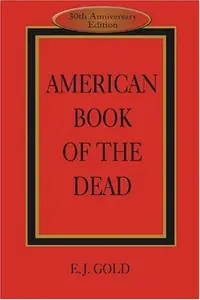
American Book of the Dead

Gold, E J
Reader rating
4.6
(1 reviews) 41 sold
In stock

Stock reported in the catalog; fulfillment is confirmed with your request.

📚 ABOUT THE BOOK

Navigate the liminal space between life and death with ancient wisdom reimagined for our modern world.

E. J. Gold's seminal work offers a contemporary interpretation of the Tibetan Bardo teachings, adapting them for a Western audience. This guide provides a structured 49-day program of readings designed to spiritually assist individuals transitioning from life or those preparing for their final journey. Rather than focusing on conventional grief, the text empowers caregivers to offer a profound spiritual service. Its included commentaries, like "Notes on the Labyrinth," elucidate the bardo concept for a modern context, making it accessible and non-denominational. Practical instructions ensure ease of use, enabling anyone to facilitate this ancient practice in short, manageable sessions.

Key themes
Active Compassion in Transition Bridging Belief Systems
Historical context

This work sits at the intersection of Western esotericism and adapted Eastern spiritual traditions, specifically reinterpreting Tibetan Bardo teachings for a modern American audience. It reflects a period where Gateways Books & Tapes disseminated accessible, non-denominational guides to consciousness expansion.


Difficulty
● Easy
Fans will love it
Dolores Cannon · Edgar Cayce · Sri Aurobindo · The Tibetan Book of the Dead
🕊️ Spiritualism
🏛 Gateways Books & Tapes 📅 2005 📖 200 pages 📔 Paperback 📐 Paperback ISBN: 9780895560513
Fun fact
E. J. Gold's "American Book of the Dead" is a truly pivotal work, providing an accessible bridge to profound esoteric wisdom. It excels in offering a practical, non-sectarian framework for navigating death, empowering individuals to offer meaningful spiritual assistance. While invaluable for those seeking active participation in end-of-life care, it may disappoint readers looking solely for a traditional grief counseling resource. Its academic recognition underscores its enduring significance in contemporary spiritual literature.

📝 Description: American Book of the Dead

With over 120,000 copies sold, this unique contemporary work brings the timeless Tibetan Bardo teaching into current American culture and language, with 49 days of readings for someone who has died or who is preparing for the dying experience. This book has been and still remains an important tool for providing a spiritual service to a dying person as opposed to grieving, processing loss, or mourning for that person's passage. Front matter includes "Notes on the Labyrinth" (or the Bardo...) and other commentary by the author that provides insights for an American reader who wishes to provide this guiding service to a family member, spouse, friend, or anyone who is terminal. The reading instructions very clearly outline when and what to read, without any limitation of belief system--the practice is presented as non-denominational, not requiring Buddhist or Christian or Jewish prayers, but also not in conflict with any of these. A schedule of readings shows graphically how to carry out the full series of 49 days of readings, at approximately 10 to 20 minutes per reading. The book has been in use since 1974 in various editions, taught in university courses on Death & Dying and related subjects (it is referenced in a recent handbook of acting exercises, for example...), and used by hospice workers and nurses internationally. The American Book of the Dead is often referenced in discussions of the 1970's West Coast spiritual renaissance, and many of the baby boomer generation will recall it in circulation when they were in college or beginning their careers. Translated editions have appeared in Spanish and Greek languages, with editions in preparation in German, French, Italian, and Polish. There is a course available by correspondence and on the internet that gives additional training for readers who wish to pursue the practice of performing "Labyrinth Readings" or "Bardo guiding" as a service to others--beyond one's own family and personal network.

💎 Expert review

💎
Esoterica Books editorial team
Occult literature desk
E. J. Gold provides a contemporary interpretation of Tibetan Bardo teachings that is both structured and accessible. The inclusion of 'Notes on the Labyrinth' helps clarify the Bardo concept for a modern context, ensuring ease of use for facilitators. However, this text may not suit readers seeking traditional religious dogma or those uncomfortable with Eastern mystical frameworks applied to Western contexts. It is best for those open to non-denominational spiritual assistance who desire practical instructions over theoretical debate. The focus on empowering caregivers makes it unique, though its specific utility depends entirely on the reader's willingness to engage with this particular synthesis of ancient and modern esoteric practices.
✓ EDITOR'S REVIEW

📖 Why choose it

📖

Why this book is worth reading

This book is ideal for caregivers and individuals seeking a structured, non-denominational approach to spiritual transition. It empowers readers to navigate the liminal space between life and death with ancient wisdom reimagined for our modern world. The text offers a practical service rather than focusing on conventional grief, allowing anyone to facilitate profound spiritual support through short, manageable sessions. Its accessible commentaries elucidate complex concepts like the labyrinth of the Bardo, making it an invaluable tool for those preparing for their final journey or assisting others in doing so. It transforms a daunting process into an empowering, organized practice.

⭐ Reader reviews

The starting rating comes from the team Esoterica Books —
⭐ Esoterica editorial review Editorial rating 4.6/5
★★★★
If you seek a profound way to support a loved one's passage, or wish to consciously prepare for your own, this book offers an invaluable guide. It's for anyone desiring to transform the dying process into a sacred spiritual journey, moving beyond conventional mourning with active, compassionate…

Reader rating

4.6
Based on 1 reviews
5
0
4
1
3
0
2
0
1
0
E
Esoterica Books editorial team

E. J. Gold provides a contemporary interpretation of Tibetan Bardo teachings that is both structured and accessible. The inclusion of 'Notes on the Labyrinth' helps clarify the Bardo concept for a modern context, ensuring ease of use for facilitators. However, this text may not suit readers seeking traditional religious dogma or those uncomfortable with Eastern mystical frameworks applied to Western contexts. It is best for those open to non-denominational spiritual assistance who desire practical instructions over theoretical debate. The focus on empowering caregivers makes it unique, though its specific utility depends entirely on the reader's willingness to engage with this particular synthesis of ancient and modern esoteric practices.

❓ Frequently asked questions

No, the practices are deliberately non-denominational. While rooted in Tibetan wisdom, the text is structured to be universally applicable, compatible with, yet independent of, any particular religious or spiritual belief system.
Each of the 49 daily readings is designed to be concise, typically requiring only 10 to 20 minutes. This structured approach makes it manageable to integrate into daily life, even during a challenging time.

📖 Who should read this

If you seek a profound way to support a loved one's passage, or wish to consciously prepare for your own, this book offers an invaluable guide. It's for anyone desiring to transform the dying process into a sacred spiritual journey, moving beyond conventional mourning with active, compassionate service.

🎯 Key themes and symbolism

Active Compassion in Transition

The book champions a unique approach to end-of-life care, emphasizing spiritual support over traditional expressions of grief. It equips individuals to actively participate in the dying process of loved ones, offering guidance and comfort through structured readings. This service transforms passive mourning into a profound act of spiritual assistance.

Bridging Belief Systems

Crafted to transcend specific religious doctrines, this work presents its practices as universally beneficial. It avoids sectarian language, making its profound insights accessible to people of all faiths or none. The principles are framed to resonate with diverse spiritual paths, fostering broad application without requiring adherence to any singular tradition.

💬 Quotes from the book

“Our purpose is not to mourn what has ended, but to illuminate the path forward for the consciousness embarking on its next great journey.”

“The labyrinth of transition is universal; the signposts we offer speak to the spirit, independent of creed or doctrine.”

📜 Historical context

First published in 1974, this book stands as a pioneering effort to adapt the ancient Tibetan Bardo Thodol, or "Book of the Dead," for a modern Western consciousness. It democratized these esoteric teachings, moving them beyond monastic traditions into practical application for everyday individuals. Its enduring relevance is evidenced by its consistent use in university death studies programs for decades.

📚 Glossary

Bardo
Spiritual Service
Non-denominational

📔 Questions to reflect on

  1. How might understanding the bardo transform your perspective on mortality and the act of grieving?
  2. Consider a time you witnessed someone's passing. How might a structured spiritual service have altered that experience for you or for them?
  3. What personal preparations might you undertake to consciously approach your own eventual transition, informed by these teachings?

You might also like

See more →