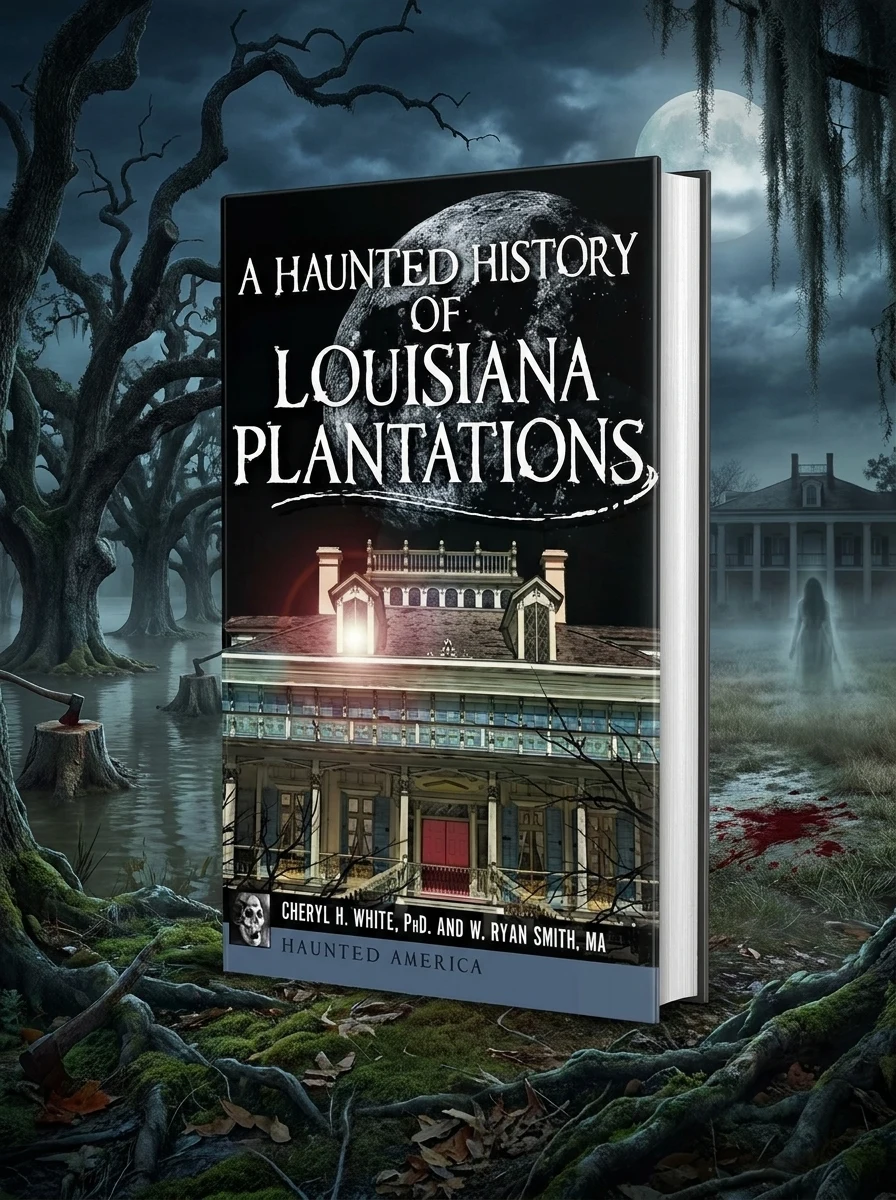


A Haunted History of Louisiana Plantations
Stock reported in the catalog; fulfillment is confirmed with your request.
Shadows linger where grace once stood in this haunting exploration of Louisiana's plantation legacy.
This volume strips away the romanticized veneer of antebellum grandeur to expose the visceral trauma embedded in Louisiana’s soil. The authors chronicle specific sites like the Myrtles and Houmas House, detailing how historical atrocities birthed enduring supernatural lore. From the weeping oaks of Houmas to the spectral figures of Natchez, the narrative bridges documented history and folklore. It is not merely a collection of ghost stories, but a somber examination of the human cost of slavery and the persistent echoes of violence that continue to resonate through these historic estates.
This work resides within the niche of Southern Gothic literature and critical heritage studies, intersecting with the broader tradition of haunted history that examines how physical spaces retain the memory of past atrocities. It contributes to the ongoing discourse on post-colonial trauma by grounding supernatural folklore in the documented reality of slavery.


📝 Description: A Haunted History of Louisiana Plantations
💎 Expert review
📖 Why choose it
Why this book is worth reading
Readers seeking a profound, emotionally resonant exploration of how history shapes present-day landscapes will find this book invaluable. It is particularly suited for those interested in the intersection of folklore and historical truth, offering a necessary counter-narrative to romanticized depictions of the antebellum South. By focusing on specific sites like Myrtles and Houmas House, it provides tangible entry points into understanding the enduring impact of slavery. This volume appeals to readers who want more than just scary stories; they desire a somber examination of human cost and violence. It serves as a bridge between academic history and accessible folklore, making the persistent echoes of these estates understandable and felt. If you are drawn to the idea that shadows linger where grace once stood, this book offers a haunting yet essential perspective on Louisiana's plantation legacy.
⭐ Reader reviews
Reader rating
White’s volume offers a compelling, albeit heavy, synthesis of documented history and spectral lore. It successfully strips away the romanticized veneer of grandeur to expose visceral trauma, making it a significant addition to Southern Gothic studies. However, readers seeking lighthearted ghost stories or purely aesthetic descriptions of architecture will find this text deeply unsatisfying. The narrative is unflinching in its focus on atrocities and violence, which may be too distressing for those sensitive to the realities of slavery. It is not a casual read but a serious inquiry into the human cost of these estates. While the blend of history and folklore is engaging, the somber tone demands emotional resilience from the audience. Those looking for escapism should look elsewhere; this book forces confrontation with the past.
❓ Frequently asked questions
📖 Who should read this
Readers drawn to Southern Gothic literature, paranormal investigators, and those seeking to understand the intersection of American history and local legend beyond the tourist narrative.
🎯 Key themes and symbolism
Haunted Landscapes
Slavery's Legacy
Gothic Folklore
💬 Quotes from the book
“The twisted oaks did not just bend; they grieved, mirroring the suffering of those who tended them.”
“Beneath the stately facade lies a narrative of subjugation that no amount of renovation can erase.”
📜 Historical context
📚 Glossary
- Plantation Gothic
- Oral Tradition
- Natchez
📔 Questions to reflect on
- How does the physical environment of a historic site shape the stories we tell about it?
- In what ways do supernatural narratives serve as a vessel for processing historical trauma?
- What ethical responsibilities do we have when exploring sites associated with suffering?
🏛 Books from this publisher History Press Library Editions
All books from this publisher →
 87
87
 81
81
 80
80


You might also like
See more →
 89
89
 88
88
 87
87