Source · Dhammapada 1.7
#mind#meditation#freedom
Read the source
Editions of Dhammapada in the Esoterica Books catalog.
Editions of Dhammapada in the Esoterica Books catalog.
Leave your email and we'll send you a one-time code. Free US shipping from $35.
By signing up you agree to receive emails from us. Unsubscribe anytime.
It's saved to your cart and on its way to your inbox. Valid 14 days, once.



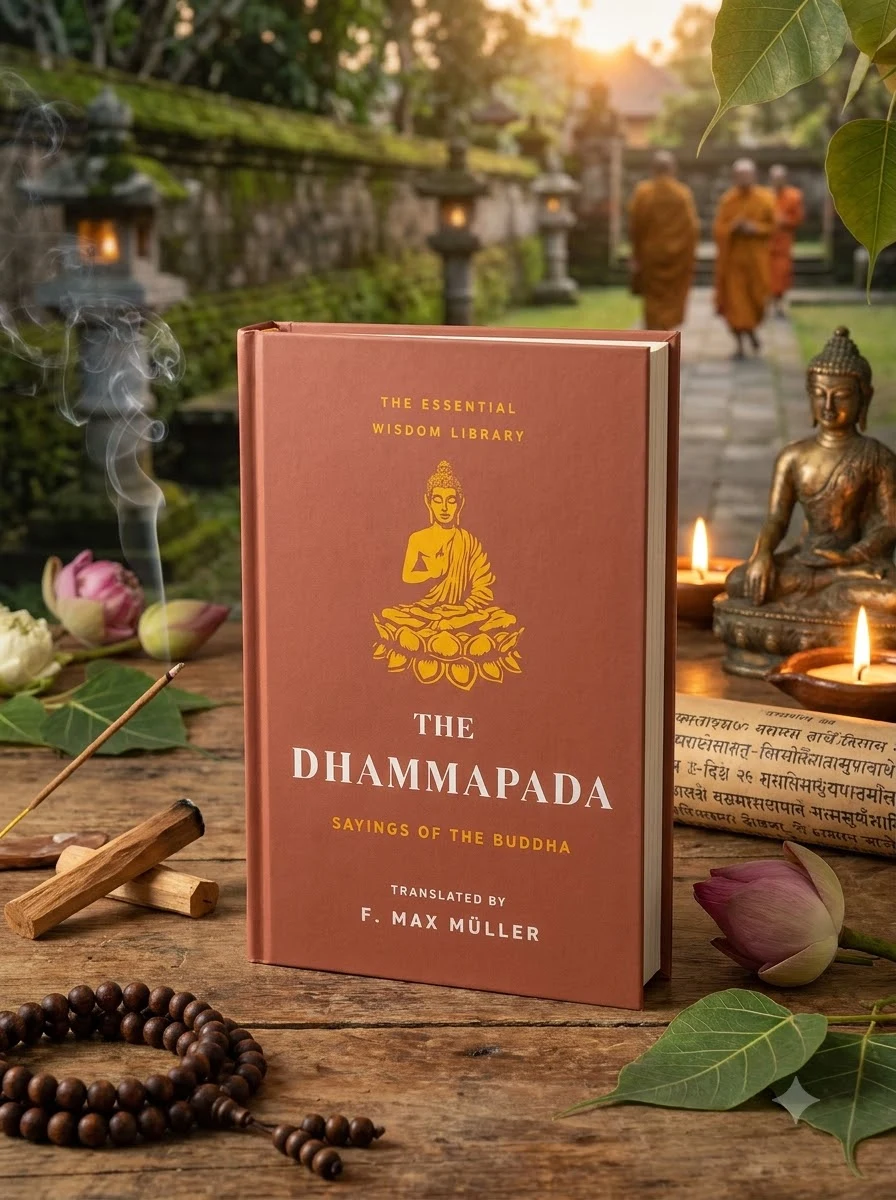


The literal meaning is straightforward: when you exert control over your thoughts and impulses, you experience a greater sense of well-being. This isn't about suppressing emotions, but about understanding their nature and not being enslaved by them.
The deeper Buddhist understanding, as found in texts like the Dhammapada, connects this disciplined mind to the cessation of suffering (dukkha). Through practices like mindfulness (sati) and concentration (samadhi), cultivated in meditation, one observes the impermanent and unsatisfactory nature of conditioned phenomena. This insight weakens the grip of craving (tanha) and aversion, the root causes of suffering. A mind free from the incessant chatter of desires and anxieties is not merely happy; it is liberated, experiencing a profound peace that is independent of external circumstances. This is the ultimate goal, nirvana.
In your life: Practice observing your thoughts without judgment for five minutes each day, noticing patterns of desire or aversion, to begin cultivating this inner discipline.