US shipping Secure card payment Occult and esoteric books

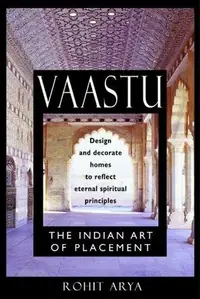
Vaastu: The Indian Art of Placement: Design and Decorate Homes to Reflect Eternal Spiritual Principles (Original)

Arya, Rohit
Reader rating
4.6
(1 reviews) 23 sold
Availability to be confirmed

This edition can be ordered. No arrival date is confirmed.

📚 ABOUT THE BOOK

Align your sanctuary with cosmic harmony through India's ancient art of spatial energy.

Rohit Arya unveils Vaastu Shastra, the Vedic predecessor to Feng Shui, offering a comprehensive guide to harmonizing living spaces with universal forces. This volume details how to orient structures and arrange interiors to invite prosperity, health, and mental clarity. It provides practical remedies for correcting energetic imbalances in existing homes, drawing on ancient principles attributed to the trinity of Brahma, Vishnu, and Shiva. By bridging historical theory with modern application, Arya helps readers transform their dwellings into active instruments of spiritual alignment and environmental balance.

Key themes
Vedic spatial geometry Energy rectification Cosmic harmony
Historical context

This work belongs to the Vaastu Shastra tradition, presenting it as a Vedic precursor to contemporary spatial design practices like Feng Shui. It bridges ancient spiritual principles attributed to Hindu deities with modern environmental balance applications.


Difficulty
● Easy
Fans will love it
Feng Shui practitioners · Vedic philosophy enthusiasts · Spiritual interior designers · Esoteric architecture students
🃏 Tarot & Divination
🏛 Destiny Books 📖 128 pages 📔 Paperback 📐 Paperback ISBN: 9780892818853
Fun fact
Arya succeeds in demystifying a complex tradition for a Western audience without diluting its spiritual depth. The practical remedies are accessible, yet the historical context adds necessary weight. It may disappoint those seeking purely aesthetic design tips rather than energetic intervention. Situated between anthropology and self-help, it is essential for those viewing the home as a living entity.
📚 This book appears in Esoterica Books

📝 Description: Vaastu: The Indian Art of Placement: Design and Decorate Homes to Reflect Eternal Spiritual Principles (Original)

The first book in English on the Hindu precursor to feng shui. - Allows readers to design homes that conform to eternal spiritual principles. - Offers suggestions to rectify existing buildings with inauspicious energy. The subtle art of energy management for prosperity, good health, and calm mind has been introduced to the West through feng shui. Until now the ancient practice of vaastu, the Hindu art of environmental design, has been relatively unknown. Born of the movement of forces within the trinity of the great Hindu gods--Brahma, Vishnu, and Shiva--vaastu is the human expression of life's impulse to harmonize itself with the cosmos. The great culture at Harrapa, in 3000 b.c., applied vaastu to create cities at a level of sophistication that would only be reached again in the nineteenth and twentieth centuries. Housed in a library in north India, the codified tenets of vaastu were destroyed in medieval times by successive invaders into the country; however, the art of vaastu remained alive, through oral tradition and buried deep within other treatises. The rediscovery of these texts in the 1930s has led to a modern revival of this art in India--brought to Western readers for the first time in

💎 Expert review

💎
Esoterica Books editorial team
Occult literature desk
Arya successfully demystifies Vaastu Shastra for a Western audience, positioning it as a practical tool for modern living rather than just historical theory. The emphasis on correcting energetic imbalances in existing structures makes the content highly actionable and relevant. However, readers seeking rigorous academic archaeology or complex mathematical proofs will find this work lacking in depth. It is not suitable for skeptics who dismiss spiritual principles entirely or those looking for purely aesthetic design advice without metaphysical components. Despite these limitations, it remains a solid entry point for novices eager to explore spatial energy.
✓ EDITOR'S REVIEW

📖 Why choose it

📖

Why this book is worth reading

Readers seeking to transform their living environments into active instruments of spiritual alignment will find immense value in this guide. It is ideal for those who feel their current space lacks energetic harmony or prosperity. By offering practical remedies for existing homes, it empowers individuals to correct imbalances without major construction. Those interested in the intersection of ancient Vedic wisdom and modern home decor will appreciate the accessible approach. It serves anyone wishing to invite health, mental clarity, and cosmic balance into their daily life through intentional placement and design choices.

⭐ Reader reviews

The starting rating comes from the team Esoterica Books —
⭐ Esoterica editorial review Editorial rating 4.7/5
★★★★
Readers interested in alternative architecture, Vedic philosophy, and holistic home design seeking to move beyond Western interior trends toward ancient energetic practices.

Reader rating

4.6
Based on 1 reviews
5
0
4
1
3
0
2
0
1
0
E
Esoterica Books editorial team

Arya successfully demystifies Vaastu Shastra for a Western audience, positioning it as a practical tool for modern living rather than just historical theory. The emphasis on correcting energetic imbalances in existing structures makes the content highly actionable and relevant. However, readers seeking rigorous academic archaeology or complex mathematical proofs will find this work lacking in depth. It is not suitable for skeptics who dismiss spiritual principles entirely or those looking for purely aesthetic design advice without metaphysical components. Despite these limitations, it remains a solid entry point for novices eager to explore spatial energy.

❓ Frequently asked questions

While both manage environmental energy, Vaastu is rooted in Hindu theology and Vedic geometry, focusing on the directions associated with specific deities, whereas Feng Shui relies on Taoist philosophy and the flow of Qi.
Yes, the text provides methods for adapting these ancient guidelines to modern living spaces, including high-rise apartments, by focusing on the orientation of your immediate environment rather than just the building's foundation.

📖 Who should read this

Readers interested in alternative architecture, Vedic philosophy, and holistic home design seeking to move beyond Western interior trends toward ancient energetic practices.

🎯 Key themes and symbolism

Vedic spatial geometry

Energy rectification

Cosmic harmony

💬 Quotes from the book

“Vaastu is the human expression of life's impulse to harmonize itself with the cosmos.”

“Born of the movement of forces within the trinity of the great Hindu gods.”

📜 Historical context

Vaastu Shastra originates from the sophisticated urban planning of the Indus Valley Civilization around 3000 B.C. Though medieval invasions scattered its written texts, the practice survived through oral tradition and embedded treatises. Its rediscovery in the 1930s sparked a revival in India, now entering the Western consciousness as a profound counterpart to Chinese Feng Shui, rooted in Hindu theological principles.

📚 Glossary

Vaastu Shastra
Purusha
Brahmasthan

📔 Questions to reflect on

  1. Which areas of your home feel heaviest or most stagnant, and what ancient directional correspondences might explain this?
  2. How might rearranging your workspace toward the east alter your daily sense of clarity and intention?
  3. In what ways can you introduce natural elements to balance the five energies described in the Vaastu tradition?

🏛 Books from this publisher Destiny Books

All books from this publisher →

You might also like

See more →