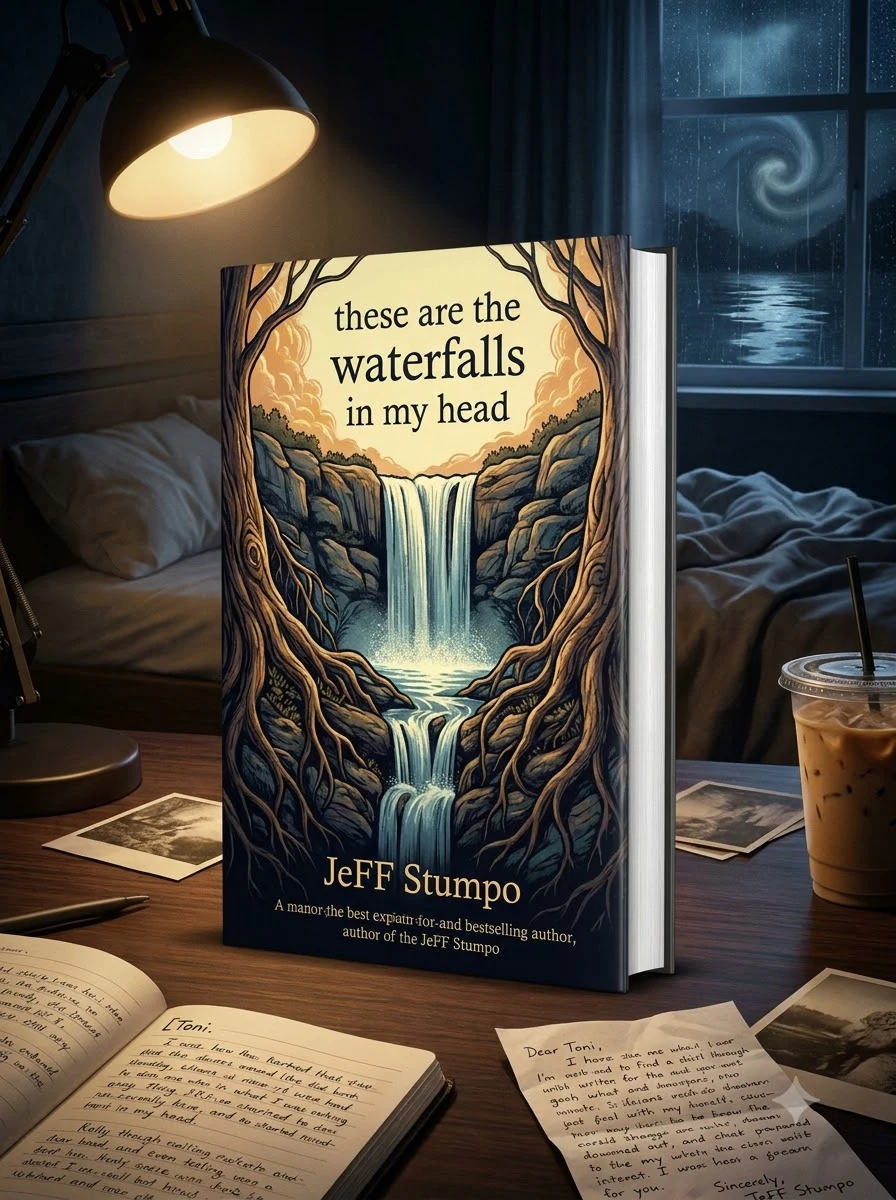


these are the waterfalls in my head (2026)
Stock reported in the catalog; fulfillment is confirmed with your request.
Dive into the raw, immediate currents of your own mind and dreams.
Jeff Stumpo's debut collection masterfully pulls the reader into an intensely personal present moment. Each poem, deliberately commencing with the phrase "tonight," creates an urgent, inescapable intimacy, blurring the line between observer and participant. Through its unique second-person address, the work explores the intricate landscape of the mind, body, memory, and dream states, challenging readers to confront their immediate inner experiences. It's a profound journey into the self, insisting that our deepest realities unfold right now, demanding our full, unmediated attention.
This collection emerges from the contemporary tradition of immediate, visceral poetry that prioritizes raw mental and dream states over traditional narrative structures. It aligns with modern esoteric explorations of the self, focusing on the unmediated present moment as a site of mystical or psychological discovery.


📝 Description: these are the waterfalls in my head (2026)
💎 Expert review
📖 Why choose it
Why this book is worth reading
Readers seeking a profound, immersive journey into the labyrinth of their own consciousness will find this work essential. Jeff Stumpo’s debut invites you to drop the barriers between observer and participant, offering an urgent, intimate encounter with the self. If you are drawn to poetry that dissolves the line between waking life and dream states, this collection provides a raw, immediate current of thought. It is ideal for those willing to confront their deepest realities without mediation, demanding full attention to the intricate landscape of memory and body. This book serves as a mirror for anyone interested in the esoteric power of the present moment and the transformative potential of looking inward with unflinching honesty.
⭐ Reader reviews
Reader rating
Stumpo’s work is intense and deliberately claustrophobic, trapping the reader in an unrelenting second-person address that blurs identity. While masterful for those seeking immediate psychological immersion, it will likely alienate readers who prefer detached observation or traditional narrative arcs. The repetitive structure may feel tedious to some, and the lack of external context demands a high tolerance for abstract introspection. It is not for casual browsing; it requires active engagement with one’s own mind. However, for those prepared to dive into the raw currents of their inner world, it offers a unique, potent exploration of the self that feels both urgent and timeless.
❓ Frequently asked questions
📖 Who should read this
If you seek poetry that doesn't just describe but *envelops* you, challenging your perceptions of self and reality, this collection is for you. It's for those ready to confront the raw, immediate truth of their inner world, and who appreciate innovative poetic structures.
🎯 Key themes and symbolism
Immersive Present Moment
This collection forcefully grounds the reader in the 'now.' By beginning each poem with 'tonight' and employing a direct second-person address, it dismantles any intellectual distance, compelling you to experience the unfolding psychological and emotional landscapes as your very own. It's an insistence on immediate, inescapable engagement with the unfolding present.
Inner Psychological Scapes
Stumpo delves deeply into the complex interplay of mind, body, and spirit. The poems navigate the often-unsettled terrain of dreams, personal memory, and mental well-being, offering raw, unfiltered glimpses into the human psyche. It's an exploration of the internal world's constant, fluid state, reflecting the hidden currents of our consciousness.
Poetic Form as Ethics
The distinctive structural choice—the repeated 'tonight' and direct address—is more than a stylistic flourish; it's a moral imperative. This deliberate formal constraint underscores the book's core message: our internal experiences are happening *now*, demanding our full, unmediated attention, rendering detached observation impossible and insisting on participation.
💬 Quotes from the book
“[Tonight you are washing your hands in the bathroom sink...]”
“[Tonight you are not the sailor but the shipwreck...]”
📜 Historical context
📚 Glossary
- Second-person address
- Ethical Stance
- Implication
📔 Questions to reflect on
- How does the recurring phrase 'tonight' alter your perception of time and immediacy within the poems, and in your own life?
- Reflect on a moment where you felt 'not the sailor but the shipwreck.' How did that experience manifest in your mind and body?
- Consider how the second-person address influences your emotional connection to the narratives. Does it make you more or less empathetic or self-aware?
You might also like
See more →


 91
91