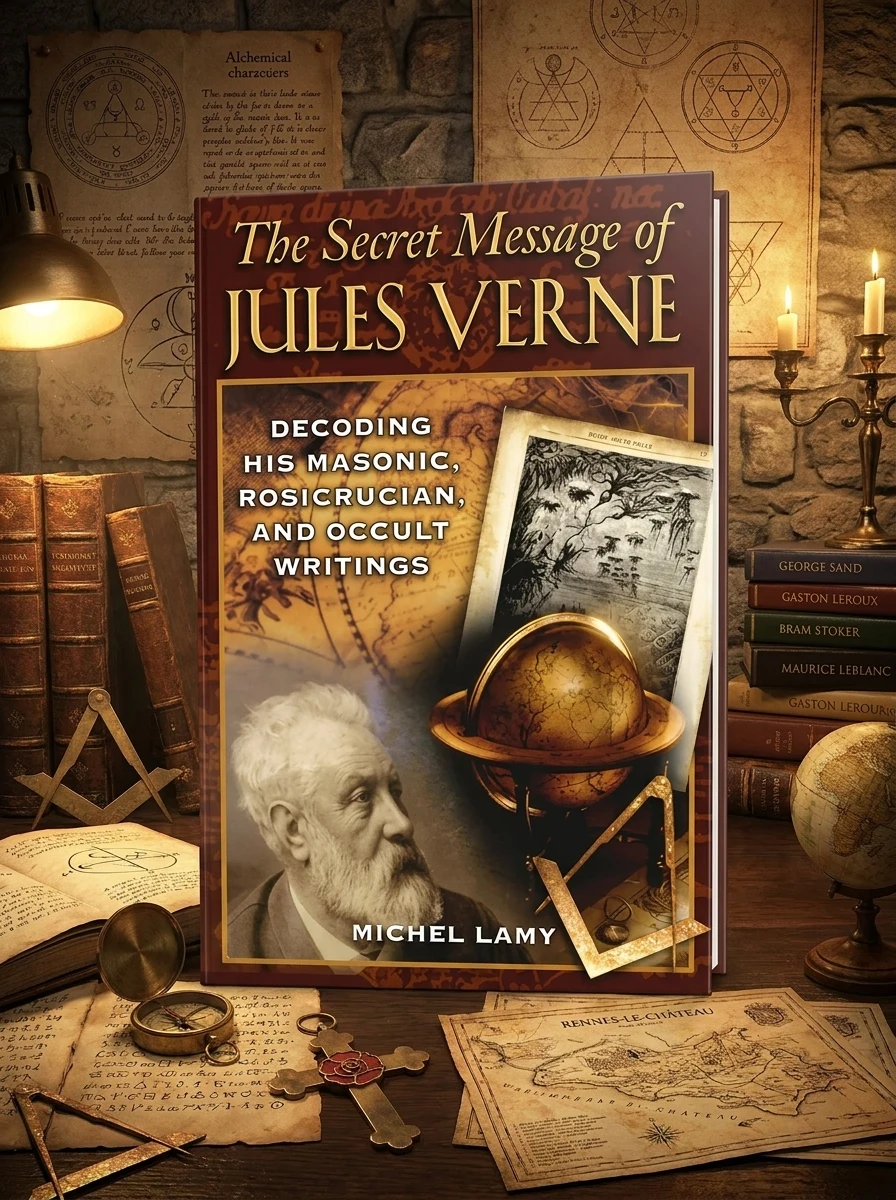
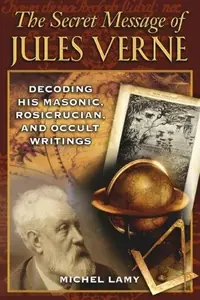
The Secret Message of Jules Verne: Decoding His Masonic, Rosicrucian, and Occult Writings


This edition can be ordered. No arrival date is confirmed.
Uncover the hidden, esoteric blueprint woven into Jules Verne's imaginative worlds.
This intriguing volume decrypts the veiled spiritual dimensions within Jules Verne's celebrated works, revealing his profound engagement with the occult landscape of 19th-century France. Lamy meticulously traces Verne's affiliations with prominent secret societies, including Freemasons, Rosicrucians, and the Golden Dawn. Beyond mere literary analysis, the book posits that Verne embedded sacred symbols and coded messages, offering tantalizing clues to the enigmatic Rennes-le-Château mystery and even insights into Rosicrucian doctrines of eternal life. It suggests Verne's narratives are not just adventures, but intricate initiatory journeys mirroring Masonic structures.
This volume situates Jules Verne within the dense web of 19th-century French esotericism, linking his literary output to the era's prominent secret societies like the Freemasons and Rosicrucians. It reframes classic adventure narratives as vessels for hidden spiritual doctrines and initiatory journeys rather than mere entertainment.


📝 Description: The Secret Message of Jules Verne: Decoding His Masonic, Rosicrucian, and Occult Writings
💎 Expert review
📖 Why choose it
Why this book is worth reading
Readers fascinated by the intersection of literature and hidden history will find this text deeply rewarding. If you have ever suspected that Jules Verne’s adventures contained layers deeper than simple exploration, this book validates that intuition with scholarly rigor. It is ideal for those interested in the occult undercurrents of Victorian culture, Masonic symbolism, and the mysterious allure of Rennes-le-Château. By decoding these veiled spiritual dimensions, the author transforms familiar stories into intricate puzzles, offering a fresh perspective on how sacred symbols were woven into popular fiction. This work appeals to anyone seeking to understand the secret blueprints behind imaginative worlds and the esoteric motivations of 19th-century intellectuals.
⭐ Reader reviews
Reader rating
Lamy’s work offers a compelling, if niche, re-examination of Verne’s bibliography through an occult lens. The author successfully argues that these texts function as initiatory journeys, mirroring Masonic structures rather than serving as simple adventure tales. However, skeptics who view Verne strictly as a hard science-fiction pioneer may find the Rosicrucian connections speculative and overly interpretive. Readers seeking straightforward literary criticism or historical biography will likely feel alienated by the heavy reliance on esoteric decoding. It is best suited for those already predisposed to believe in hidden spiritual messages within classic literature, rather than general readers expecting factual analysis of Verne’s scientific accuracy.
❓ Frequently asked questions
📖 Who should read this
If you're a devoted Verne enthusiast, a seeker of forgotten mysteries, or fascinated by the intersection of literature and esotericism, this book will transform your understanding of a beloved author. Prepare to see his adventures through a completely new, illuminating lens.
🎯 Key themes and symbolism
Verne's Secret Societies
Explore how Verne's literary genius was deeply intertwined with his active participation in the clandestine circles of his era. This book unveils his connections to influential groups like Freemasonry, the Rosicrucian Order, and the Golden Dawn, demonstrating how their philosophies subtly shaped his narratives and characters.
Rennes-le-Château Deciphered
Delve into the sensational claim that Verne's fantastical tales hold crucial keys to unlocking the enduring mystery of Rennes-le-Château. The author presents compelling evidence suggesting Verne's works contain coded information about a significant treasure and even the potential survival of the ancient Merovingian lineage within this legendary region of France.
Esoteric Symbolism & Initiation
Uncover the rich tapestry of esoteric symbolism and initiatory structures embedded throughout Verne's bibliography. From Rosicrucian concepts of immortality to narratives structured like Masonic rituals akin to Mozart's 'The Magic Flute,' the book reveals a profound, deliberate spiritual undercurrent guiding his imaginative output.
💬 Quotes from the book
“Beneath the thrilling narratives of exploration and invention, Jules Verne meticulously encoded a secret language, a 'passe-partout' revealing the true Rosicrucian quest for eternal life.”
“The very structure of Verne's tales, from character archetypes to narrative progression, mirrors the degrees of Masonic initiation, offering a profound journey for those with eyes to see.”
📜 Historical context
📚 Glossary
- Rosicrucianism
- Rennes-le-Château
- Merovingian Dynasty
📔 Questions to reflect on
- Reflect on a favorite Jules Verne story. What elements, characters, or plot points might take on new meaning through an esoteric lens?
- How does the idea of authors embedding secret knowledge in their work change your perception of literature and its potential power?
- Consider the late 19th-century fascination with secret societies. What anxieties or aspirations of the era might have fueled this widespread interest?
🏛 Books from this publisher Destiny Books
All books from this publisher →



You might also like
See more →
![The Book of Runes: The Bestselling Book of Divination, Complete with Set of Rune Stones [With Ceramics Rune Stones and Drawstring Bag]](/img/the-book-of-runes-the-bestselling-book-of-divination-complete-with-set-of-rune-stones-with-ceramics-rune-stones-and-drawstring-bag-scene.webp)