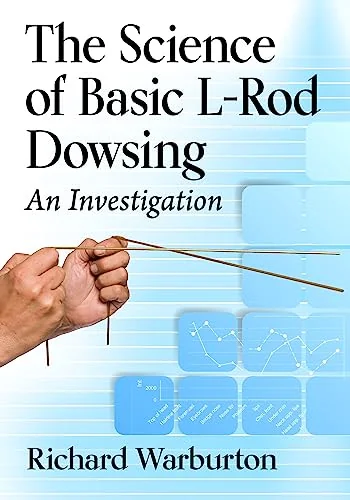
The Science of Basic L-Rod Dowsing: An Investigation
A scientific investigation into the physical forces behind L-rod dowsing by Richard Warburton.
Warburton applies his expertise in new product development and patent law to analyze dowsing through the lens of hard science. He dissects the practice using principles of electromagnetism and nuclear physics. The work challenges traditional views by focusing on measurable phenomena like telluric currents and subatomic particles. This approach provides a unique perspective for those studying the physical basis of divination tools.
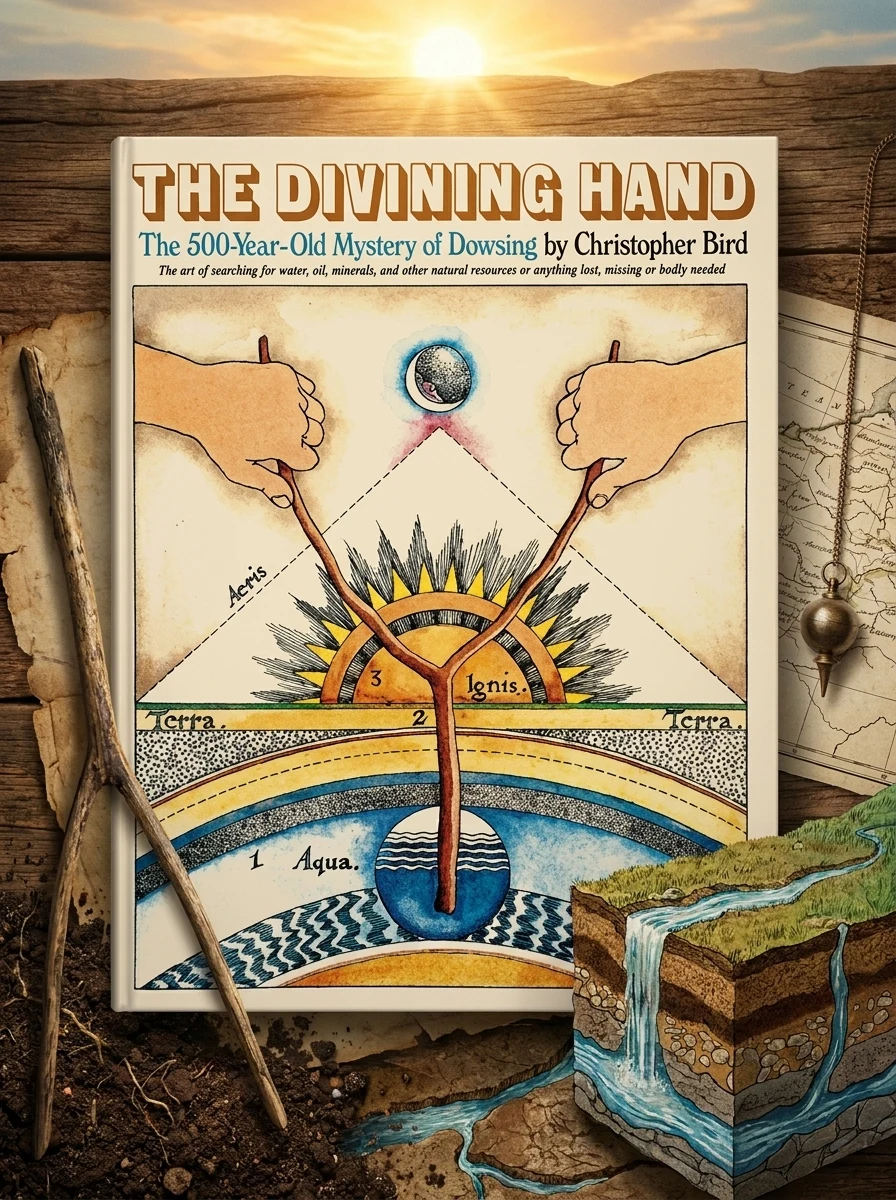
Dowsing has been practiced for at least five hundred years, with evidence suggesting use for millennia. Historically, practitioners used forked Y-shaped sticks to locate water and minerals. This book updates that ancient tradition by applying modern scientific frameworks to the historical practice.


📝 Description: The Science of Basic L-Rod Dowsing: An Investigation
📑 What's inside
- Acknowledgments
- Symbols and Abbreviations Used in This Book
- Preface
- 1. Introduction
- 2. General Observations of the Dowsing Signal
- 3. Preliminary Observations and Requirements for the Dowsing Effect
- 4. The Psychology of Dowsing
- 5. Radioactivity and Subatomic Particles
- 6. Gravity
- 7. Parallel Bands and Fields Produced by Rotating Objects
- 8. Nuclear Magnetic Resonance
- 9. Sound
- 10. Electric Fields and Static Electricity
- 11. Telluric Magnetism and Currents
- 12. Nature of the Dowsing Response
- 13. Location of Dowsing Sense Organ
- 14. Magnetism and Magnetic Fields
- 15. Electromagnetic Fields and Dowsing
- 16. Dowsing Frequency Band
- 17. Source of Electromagnetic Radiation
- 18. Resolution of Dowsing Signal
- 19. Memory Effects
- 20. Depth
- 21. Measuring the Dowsing Response Instrumentally
- 22. Dowsing in Three Dimensions
- 23. Mechanisms for Detection of Magnetic Fields in Animals
- 24. Interaction of Electromagnetic Fields with Biological Systems
- 25. Remaining Mysteries and Interesting Reports
- 26. Conclusions
- Final Words
- Appendix: Properties of Waves
- Annex: Instrumentation Used
- Chapter Notes
- Selected Bibliography
- Index
💎 Expert review
📖 Why choose it
Why this book is worth reading
Readers fascinated by the intersection of intuition and empirical observation will find this volume particularly rewarding. It serves those who wish to move beyond the mystical obscurity often surrounding dowsing, offering instead a meticulous investigation into its underlying principles. Whether you are seeking to understand how L-rods reveal hidden energies or exploring forgotten knowledge with scientific rigor, this book provides a structured approach to a time-honored art. It is ideal for the curious mind that values practical applications alongside theoretical exploration, inviting you to uncover truths through precise methodologies rather than vague speculation.
⭐ Reader reviews
Reader rating
Warburton presents a compelling case for dowsing as a subject of serious inquiry, successfully shifting focus from traditional forked branches to the specific mechanics of L-rod usage. The text offers valuable insights into the scientific explanations behind these practices, appealing to those who seek empirical grounding in esoteric arts. However, it may not suit readers looking for purely spiritual or dogmatic guidance, nor those expecting conventional laboratory validation. It is best appreciated by individuals open to exploring the nuanced boundary between intuition and observation without demanding absolute proof.
❓ Frequently asked questions
📖 Who should read this
If you're a seeker intrigued by the subtle forces that shape our world, or someone eager to explore divination with a practical, investigative mindset, this book is for you. It offers a structured approach to a seemingly mystical art, ideal for both beginners and experienced practitioners looking for depth.
🎯 Key themes and symbolism
Investigating Dowsing's Mechanics
This work meticulously examines the practical application and theoretical underpinnings of L-rod dowsing. It moves beyond anecdotal accounts, seeking to understand the repeatable aspects and energetic principles that govern the dowsing response, positioning it as a verifiable skill rather than pure intuition.
Ancient Roots, Modern Practice
Delving into dowsing's long historical lineage, the book traces its evolution from ancient divinatory techniques using simple tools like forked branches for water or mineral detection. It then bridges this rich past with contemporary L-rod methodologies, showing how age-old wisdom adapts to modern inquiry.
Detecting Hidden Energies
The core of L-rod dowsing, as presented here, lies in its capacity to detect subtle energies and unseen information. Whether it's locating geological features, energetic ley lines, or even answering specific questions, the book explores the methodology behind accessing data beyond conventional perception.
📜 Historical context
📚 Glossary
- Dowsing
- L-Rod
- Subtle Energies
📔 Questions to reflect on
- How might a systematic approach to dowsing challenge or confirm your existing beliefs about intuition and unseen forces?
- Consider a specific area in your life where detecting "hidden information" could be beneficial. How would you apply L-rod dowsing to it?
- Reflect on the concept of subtle energies. Where have you intuitively sensed them in your own experiences, even without a dowsing rod?
📖 Read on the blog
🏛 Books from this publisher McFarland & Company
All books from this publisher →






You might also like
See more →





Have a question about this item?
Ask about the edition, condition, delivery or anything else — we reply by email or phone, usually within a day.
