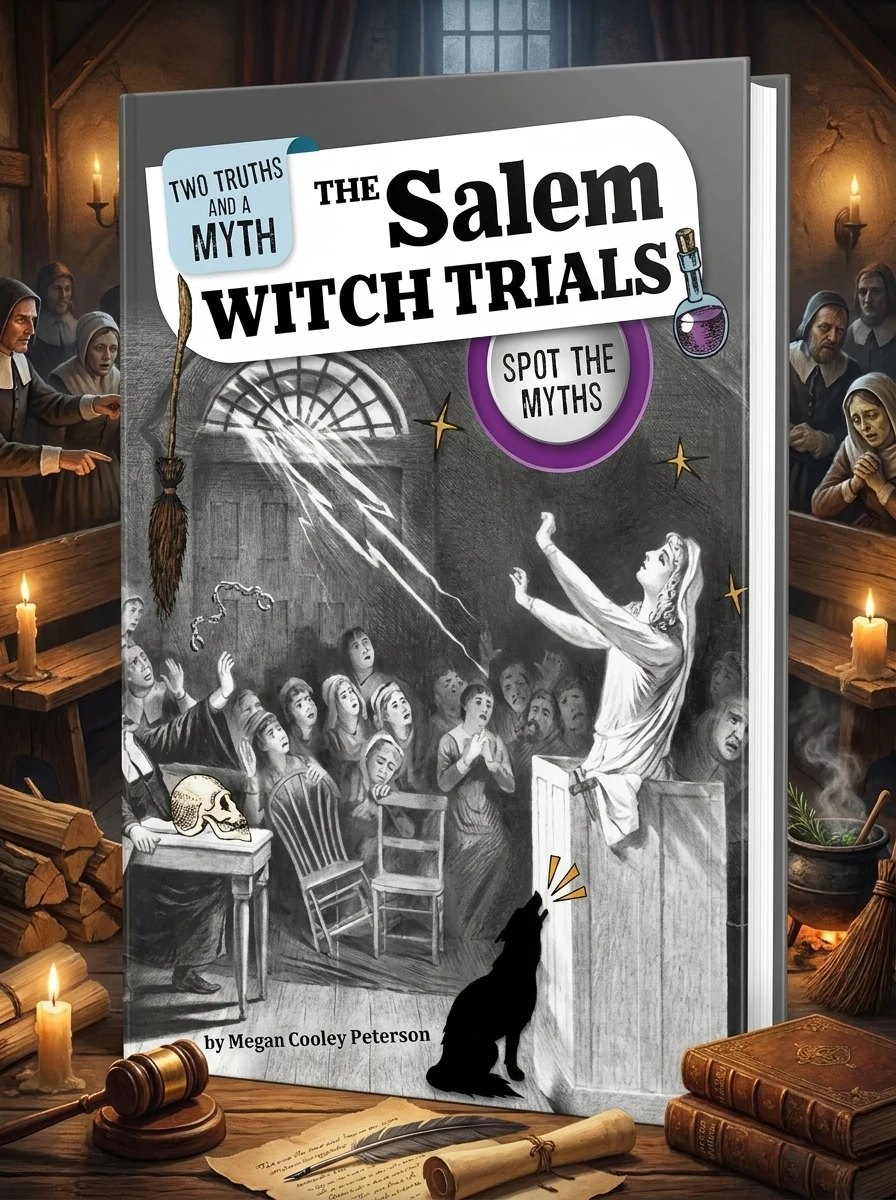
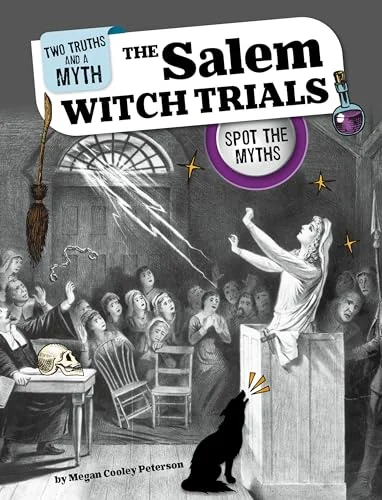
The Salem Witch Trials: Spot the Myths Peterson, Megan Cooley
Peterson, Megan CooleyThis edition can be ordered. No arrival date is confirmed.
Uncover the chilling truths hidden beneath centuries of Salem witch trial legends.
Step into the shadowy history of 17th-century Salem, Massachusetts, where hysteria gripped a community and led to tragic injustice. This compelling volume invites you to peel back layers of popular lore surrounding the infamous witch trials. It delves into the events of 1692, presenting a clear challenge: can you discern factual accounts from the persistent myths that have shaped our understanding for centuries? Explore the true origins of the panic, the diverse identities of those accused, and the profound human cost, all while sharpening your critical eye against historical inaccuracies.
This volume sits within the broader tradition of historical revisionism that seeks to dismantle persistent folklore surrounding early American colonial events. It specifically addresses the cultural memory of New England, challenging the romanticized narratives often associated with witchcraft history.


📝 Description: The Salem Witch Trials: Spot the Myths Peterson, Megan Cooley
💎 Expert review
📖 Why choose it
Why this book is worth reading
This book is an ideal resource for readers who crave clarity amidst the fog of historical legend. It serves those eager to separate fact from fiction regarding the Salem hysteria, offering a structured way to identify misconceptions that have lingered for centuries. By peeling back layers of popular lore, it empowers the reader to understand the true origins of the panic and the diverse identities of the accused. It is particularly beneficial for students or casual historians seeking a straightforward, accessible entry point into this dark chapter without getting lost in academic jargon. The engaging challenge to discern truth from myth makes learning about the profound human cost both educational and intellectually stimulating, ensuring a deeper appreciation for the tragic injustice that gripped 17th-century Salem.
⭐ Reader reviews
Reader rating
Peterson offers a compelling, accessible dissection of Salem’s legacy, effectively guiding readers through the shadowy history of 1692. The format invites critical engagement, helping audiences identify persistent myths that have distorted our understanding of these events. However, this work is not suited for scholars seeking deep archival analysis or those who prefer immersive narrative storytelling over educational fact-checking. It may feel too simplistic for advanced historians and potentially too dry for readers expecting atmospheric horror rather than historical correction. It stands firmly as an educational tool for clarifying misconceptions rather than a literary exploration of the era’s emotional depth.
❓ Frequently asked questions
📖 Who should read this
If you're fascinated by American history, intrigued by the supernatural, or simply love a good mystery, this book is for you. Perfect for curious minds eager to learn the unvarnished truth about one of history's most compelling and often misunderstood events.
🎯 Key themes and symbolism
Deconstructing Historical Myths
This book meticulously dissects long-held beliefs about the Salem Witch Trials, separating sensationalized fiction from verifiable historical records. It challenges readers to question narratives passed down through generations, fostering a deeper, more accurate understanding of this pivotal moment in American history.
Colonial Justice & Hysteria
Explore how societal anxieties, religious fervor, and a flawed legal system converged to fuel the witch panic. The text examines the mechanisms of accusation, the lack of due process, and the devastating consequences for innocent individuals caught in the grip of collective fear.
Who Was Accused?
Beyond common stereotypes, this book sheds light on the diverse individuals caught in the Salem accusations, both as alleged witches and as accusers. It challenges the misconception that only women were targeted, revealing a more complex social dynamic at play during the trials.
💬 Quotes from the book
“The notion that the Salem trials began with two girls suffering from 'food poisoning' is a persistent fabrication, obscuring the complex social anxieties truly at play.”
“Far from being solely a female affliction, the accusations at Salem ensnared individuals from across the community's social spectrum, including numerous men.”
📜 Historical context
📚 Glossary
- Spectral Evidence
- Puritanism
- Witch Panic
📔 Questions to reflect on
- How might understanding the true origins of the Salem panic influence our perceptions of modern-day collective hysteria or misinformation?
- What ethical responsibilities do historians and storytellers have when presenting historical events, especially those shrouded in myth?
- Considering the role of "spectral evidence," how do we ensure justice today when faced with accusations that lack tangible proof?
📖 From the series “Two Truths and a Myth”
All books in the series →✍️ More books by this author Peterson, Megan Cooley
All books by this author →
🏛 Books from this publisher Capstone Press
All books from this publisher →
 79
79
You might also like
See more →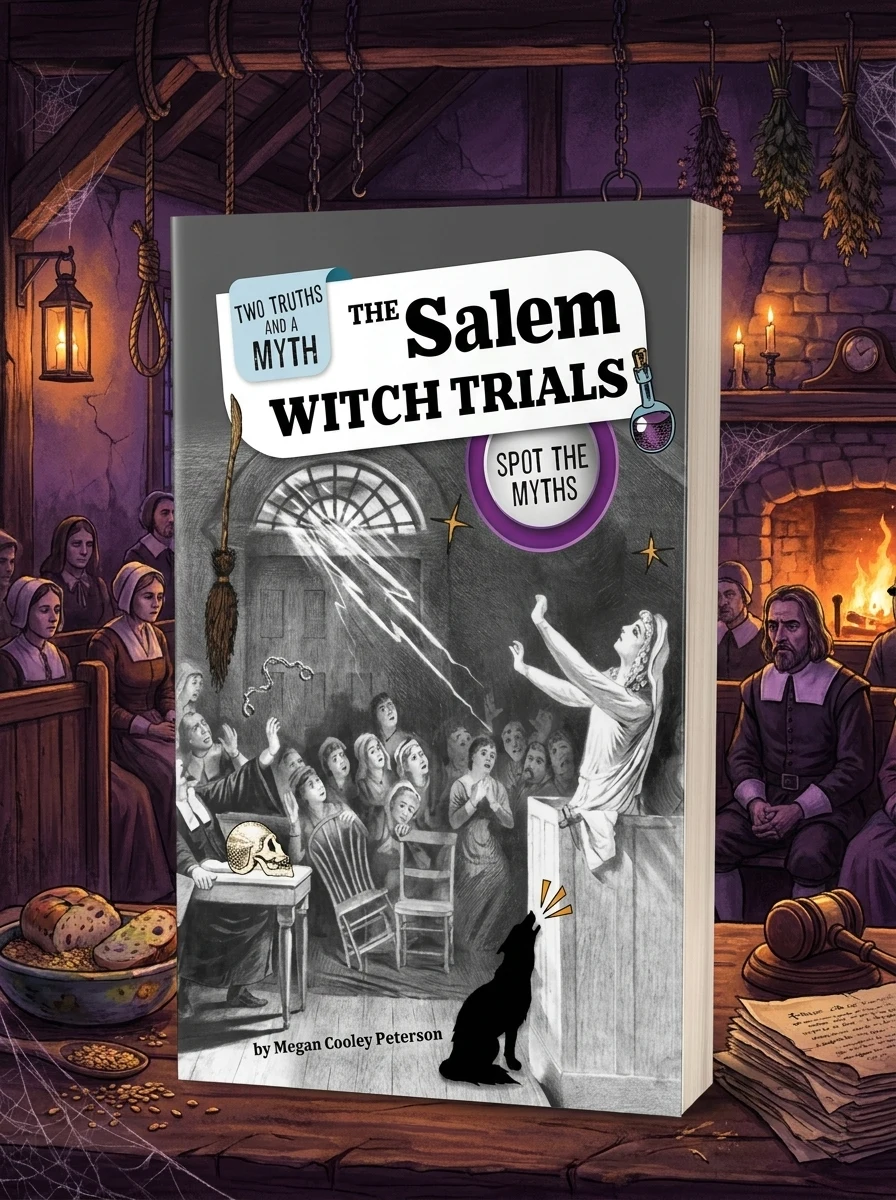

 82
82