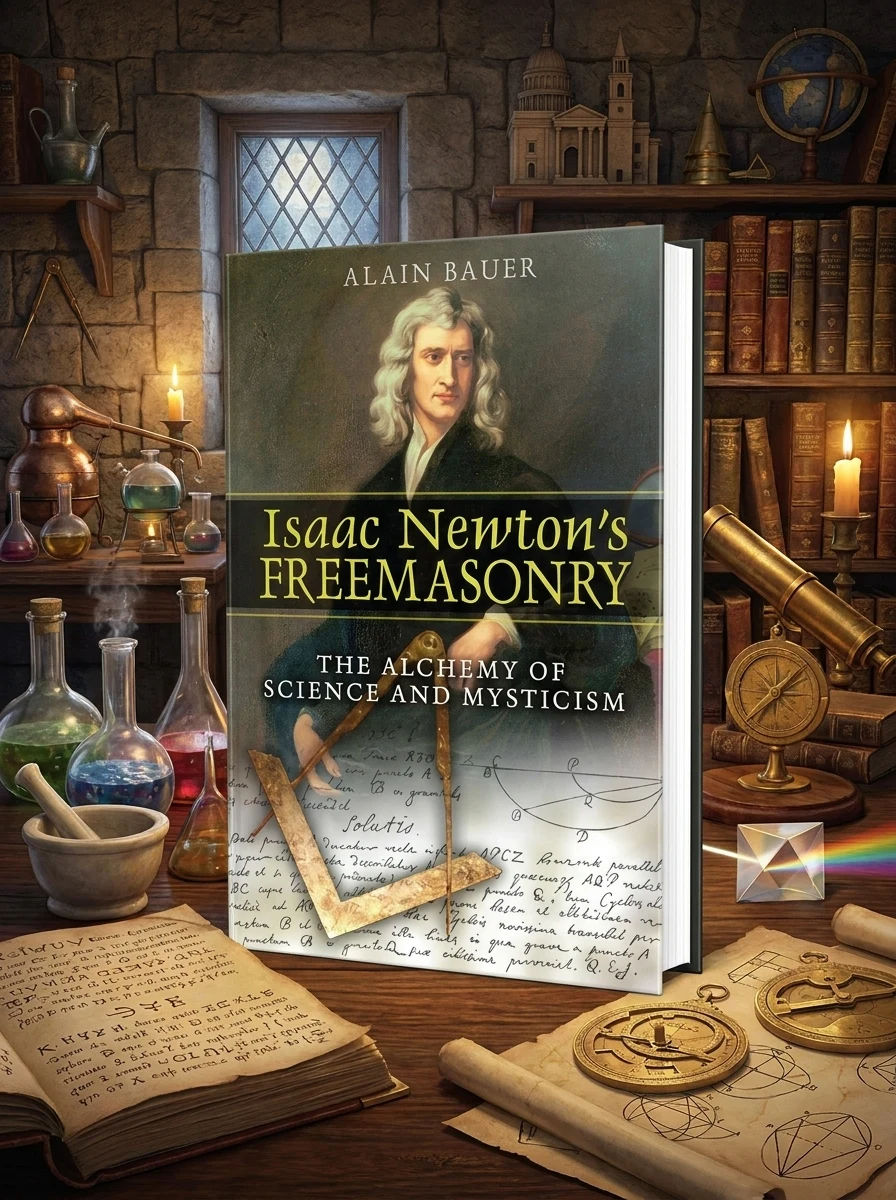
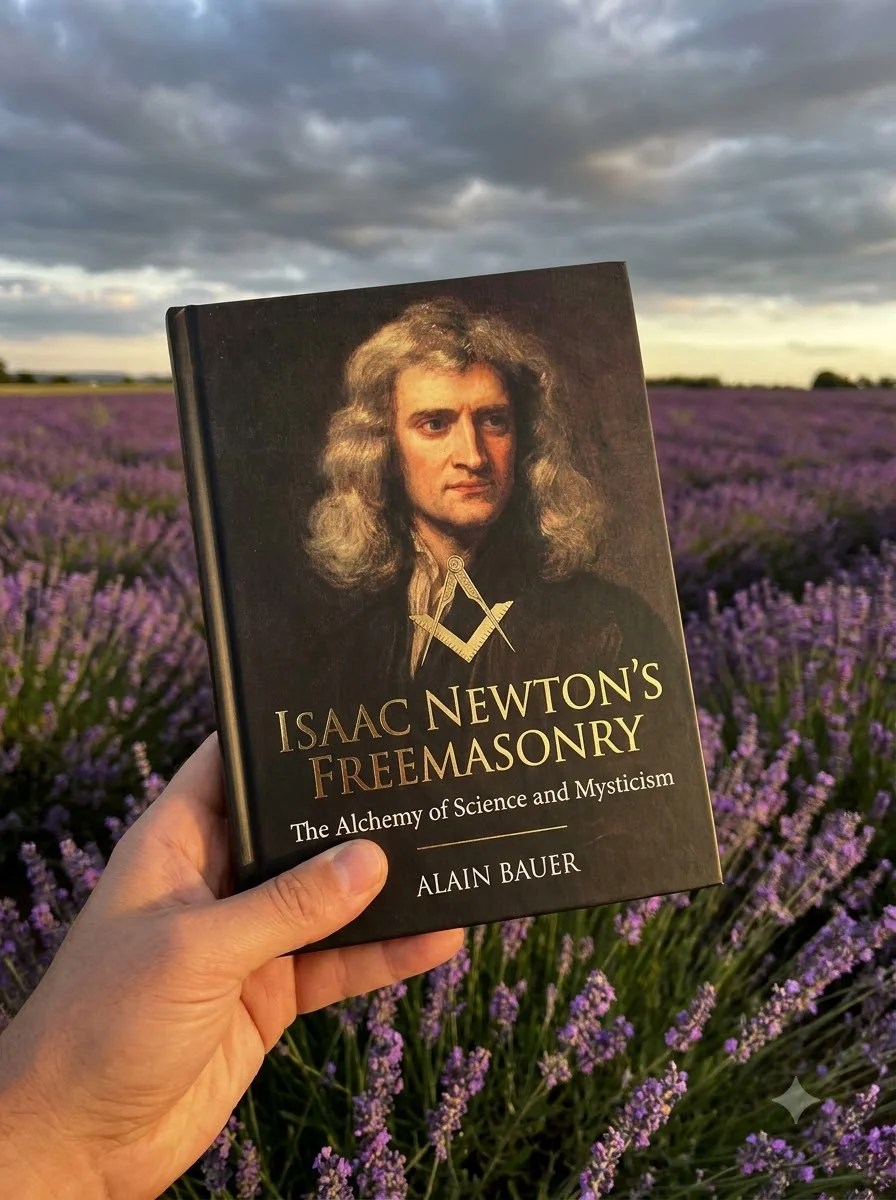
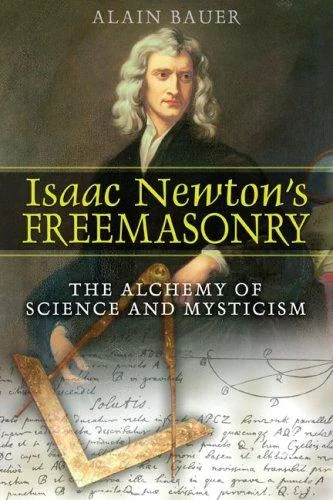
Isaac Newton's Freemasonry: The Alchemy of Science and Mysticism
Alain Bauer presents a groundbreaking reinterpretation of early modern Freemasonry, revealing its unexpected origins. Far from an ancient guild, this volume argues it was a revolutionary 17th-century construct, ingeniously forged by scientific luminaries like Isaac Newton. This "speculative" order, born from a fusion of alchemical thought and nascent scientific inquiry, served as a clandestine vehicle for progressive social and intellectual ideals, envisioning a new future for England. Bauer meticulously connects key historical figures and esoteric groups, illustrating Newton's pivotal role in crafting this unique blend of science and mysticism.


Praise for this book
“. . . tells the tale of how this famous first scientist envisioned expressing spirituality through the scientific method.”
📝 Description: Isaac Newton's Freemasonry: The Alchemy of Science and Mysticism
📑 What's inside
- FOREWORD by Michel Barat, Grand Master of the Grand Lodge of France
- INTRODUCTION
- 1 A RETURN TO THE ORIGINS
- 2 ROBERT MORAY AND THE ROYAL SOCIETY
- The Founders
- The First Presidents of the Royal Society
- 3 NEWTON: SCIENTIST, ALCHEMIST, AND SORCERER
- 4 THE BIRTH OF FREEMASONRY
- AFTERWORD by Roger Dachez, President of the Masonic Institute of France
- APPENDIX 1: Summary of the History of Freemasonry
- APPENDIX 2: The Grand Masters of England
💎 Expert review
📖 Why choose it
Why this book is worth reading
Readers fascinated by the hidden threads connecting scientific revolution and mystical tradition will find this book essential. Alain Bauer offers a compelling narrative for those who suspect that Isaac Newton was more than just a physicist, revealing him as a key figure in shaping modern fraternal ideals. If you enjoy uncovering how secret societies influenced public intellectual history, this volume provides a fresh perspective on the fusion of alchemy and science. It is particularly rewarding for scholars and enthusiasts eager to understand how progressive social visions were encoded within esoteric groups during the 17th century, making complex historical connections accessible and intriguing.
⭐ Reader reviews
Reader rating
Bauer’s reinterpretation is bold but may frustrate readers seeking rigorous academic historiography over thematic synthesis. Those who prefer strictly documented, non-speculative accounts of Freemasonry might find the arguments too conjectural. The book shines for those open to esoteric interpretations of scientific history, yet it lacks the dry precision some historians demand. It is not for skeptics who dismiss alchemical influences on Newton as mere fringe theory. However, for readers willing to engage with speculative connections between mysticism and early modern science, it offers a stimulating, if debatable, perspective on the intellectual foundations of fraternal orders.
❓ Frequently asked questions
📖 Who should read this
For seekers intrigued by history's hidden currents, the esoteric roots of scientific revolution, or Newton's influence on secret societies. If you question established narratives and crave a deeper understanding of mysticism's role, this book is essential.
🎯 Key themes and symbolism
Newton's Esoteric Influence
This book posits Isaac Newton not merely as a scientific genius, but as a central architect in the formation of modern Freemasonry. It explores how his profound engagement with alchemy and mysticism directly informed the symbolic and philosophical underpinnings of this new fraternal order, moving beyond the purely operative craft.
Alchemy Meets Enlightenment
The text illuminates the surprising synergy between alchemical traditions and the emerging scientific paradigm that characterized 17th-century thought. It demonstrates how early Freemasonry provided a unique intellectual crucible where these seemingly disparate disciplines converged, fostering an environment where esoteric wisdom and rational inquiry could flourish side-by-side.
Speculative Origins Revealed
Bauer challenges conventional narratives by arguing that Freemasonry, as we understand its symbolic and philosophical depth, was a deliberate invention of its time, not a direct continuation of medieval stonemason guilds. This "speculative" form was conceived as a radical blueprint for societal advancement, driven by intellectual and spiritual egalitarianism.
📜 Historical context
📚 Glossary
- Operative Freemasonry
- Speculative Freemasonry
- Invisible College
📔 Questions to reflect on
- How might our understanding of the Enlightenment change if we fully acknowledge the esoteric and mystical underpinnings of its key figures and movements?
- Consider the implications of a 'secret society' being founded not on ancient tradition, but as a deliberate, progressive social experiment. What are the advantages and disadvantages of such an approach?
- In what ways do you see the ongoing tension or synergy between scientific rationality and spiritual/esoteric thought in contemporary society, mirroring the 17th-century blend described?