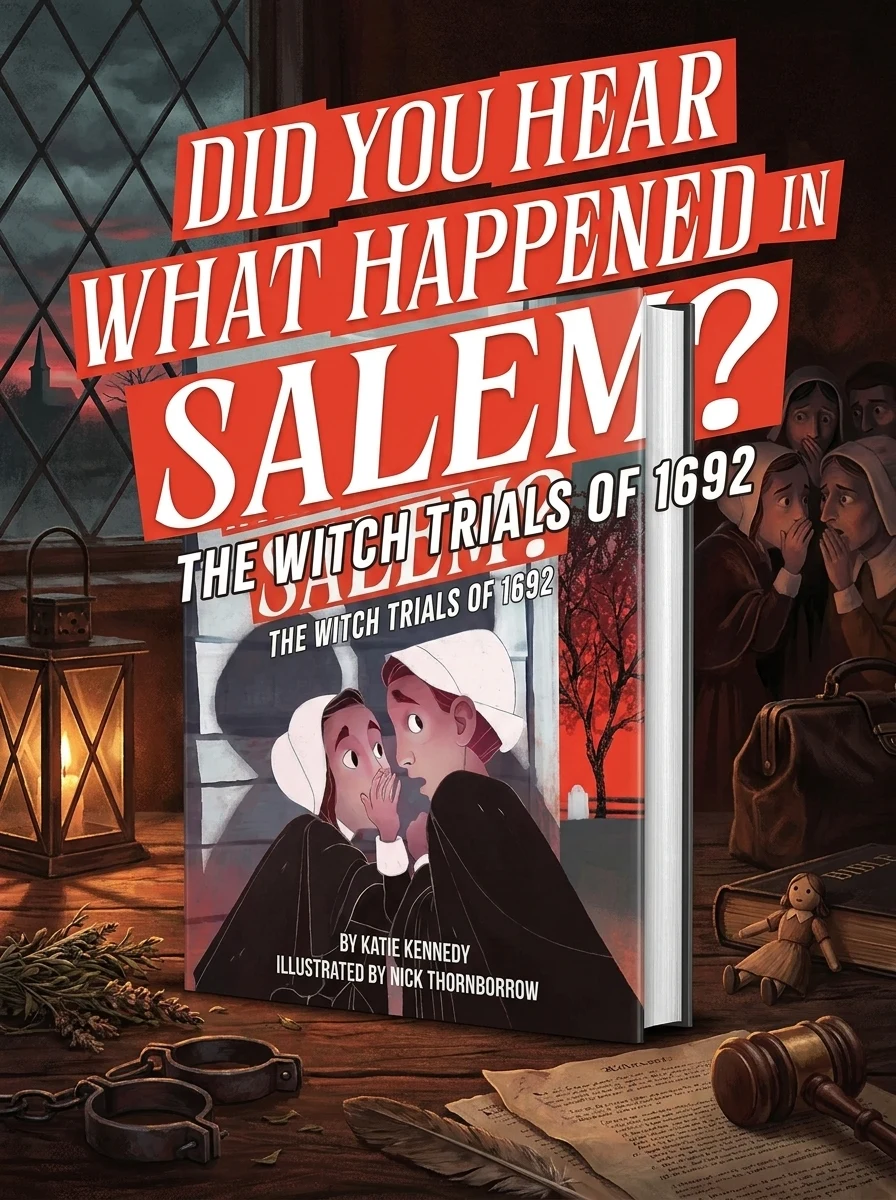
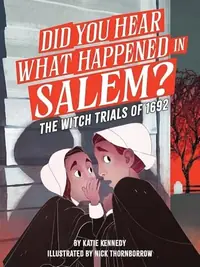
Did You Hear What Happened in Salem?: The Witch Trials of 1692
Kennedy, KatieStock reported in the catalog; fulfillment is confirmed with your request.
Witness Salem's chilling descent into hysteria through the eyes of a most unexpected observer.
Step back into the harrowing year of 1692, as the Massachusetts Bay Colony became gripped by an inexplicable terror. What began with a few girls exhibiting strange fits quickly spiraled into a village-wide panic, fueled by fear and suspicion. A doctor's ominous diagnosis of "an evil hand" ignited a desperate search for witches among the vulnerable—the poor, the elderly, the ostracized. This gripping account, delivered by a snarky and surprising first-person narrator, unravels the tragic events, revealing how accusations mounted, lives were shattered, and twenty innocent individuals perished in one of America's darkest chapters.
This work sits within the tradition of young adult historical nonfiction that utilizes creative narrative techniques to make complex past events accessible to modern audiences. It specifically engages with the American colonial period and the enduring cultural legacy of the Salem witch trials.


📝 Description: Did You Hear What Happened in Salem?: The Witch Trials of 1692
💎 Expert review
📖 Why choose it
Why this book is worth reading
Readers who crave history without the dryness of textbooks will find this book an irresistible entry point into one of America’s most infamous eras. It is ideal for students or casual learners who might otherwise dread academic accounts of the Salem witch trials. The snarky, unexpected narrator transforms a tragic period of hysteria and fear into an engaging story that highlights the human cost of suspicion. Those interested in how community dynamics can spiral into collective panic will appreciate the clear unraveling of events. It serves as a gentle yet poignant reminder of the dangers of ostracizing the vulnerable, making it a valuable tool for understanding historical social structures through an entertaining lens.
⭐ Reader reviews
Reader rating
While this book succeeds brilliantly in its goal to entertain and inform younger readers through its humorous voice, it is unlikely to satisfy those seeking rigorous academic analysis or deep theological debate. Serious historians or readers expecting solemn, traditional nonfiction may find the snarky tone dismissive of the gravity of the twenty executions described. It is not suited for adults looking for comprehensive primary source documentation or complex socio-political theory. However, for its intended demographic, it effectively demystifies the events of 1692 without glorifying the violence, offering a balanced yet accessible overview that prioritizes narrative flow over exhaustive detail.
❓ Frequently asked questions
📖 Who should read this
If you're captivated by historical mysteries, the psychology of crowd behavior, or the enduring lessons of injustice, this book is for you. Readers seeking a fresh, engaging perspective on a pivotal moment in American history will find it particularly compelling.
🎯 Key themes and symbolism
Mass Hysteria's Grip
This book vividly explores how collective fear can consume a community, demonstrating the rapid escalation from perplexing symptoms to widespread accusations. It offers a fascinating look at the psychological underpinnings of panic, showing how seemingly minor events can ignite a devastating chain reaction that overrides reason and compassion.
Vulnerability and Scapegoating
Kennedy's narrative powerfully illustrates how societal anxieties often target the marginalized. It scrutinizes the tragic pattern of accusing those already on the fringes—the unprotected, the unconventional—turning them into convenient scapegoats for collective distress. The book highlights the profound injustice faced by these individuals when fear eclipses fairness.
The Peril of Accusation
Through a compelling first-person lens, the work dissects the destructive power of unsubstantiated claims. It reveals how mere words, spoken in panic or malice, could ruin reputations, livelihoods, and ultimately lead to death. The story serves as a stark reminder of the devastating consequences when due process and critical thought are abandoned in favor of mob mentality.
💬 Quotes from the book
“They said 'evil hand,' but I saw clumsy fear, tripping over itself to find a villain where none truly stood.”
“Twenty souls gone, and for what? A few shrieks and a whole lot of pointing. I tell you, the devil himself couldn't have managed such a mess.”
📜 Historical context
📚 Glossary
- Witch Trials
- Mass Hysteria
- Colonial Massachusetts
📔 Questions to reflect on
- Consider the power of rumor and fear. How might a similar situation unfold in our modern, digitally connected world?
- If you were an impartial observer in Salem, what actions might you have taken to challenge the escalating accusations?
- Reflect on historical figures who were unjustly accused. What lessons can we draw from their stories about justice and societal prejudice?
✍️ More books by this author Kennedy, Katie
All books by this author →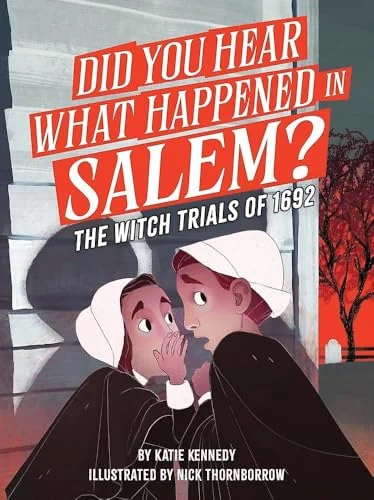
You might also like
See more →

 91
91