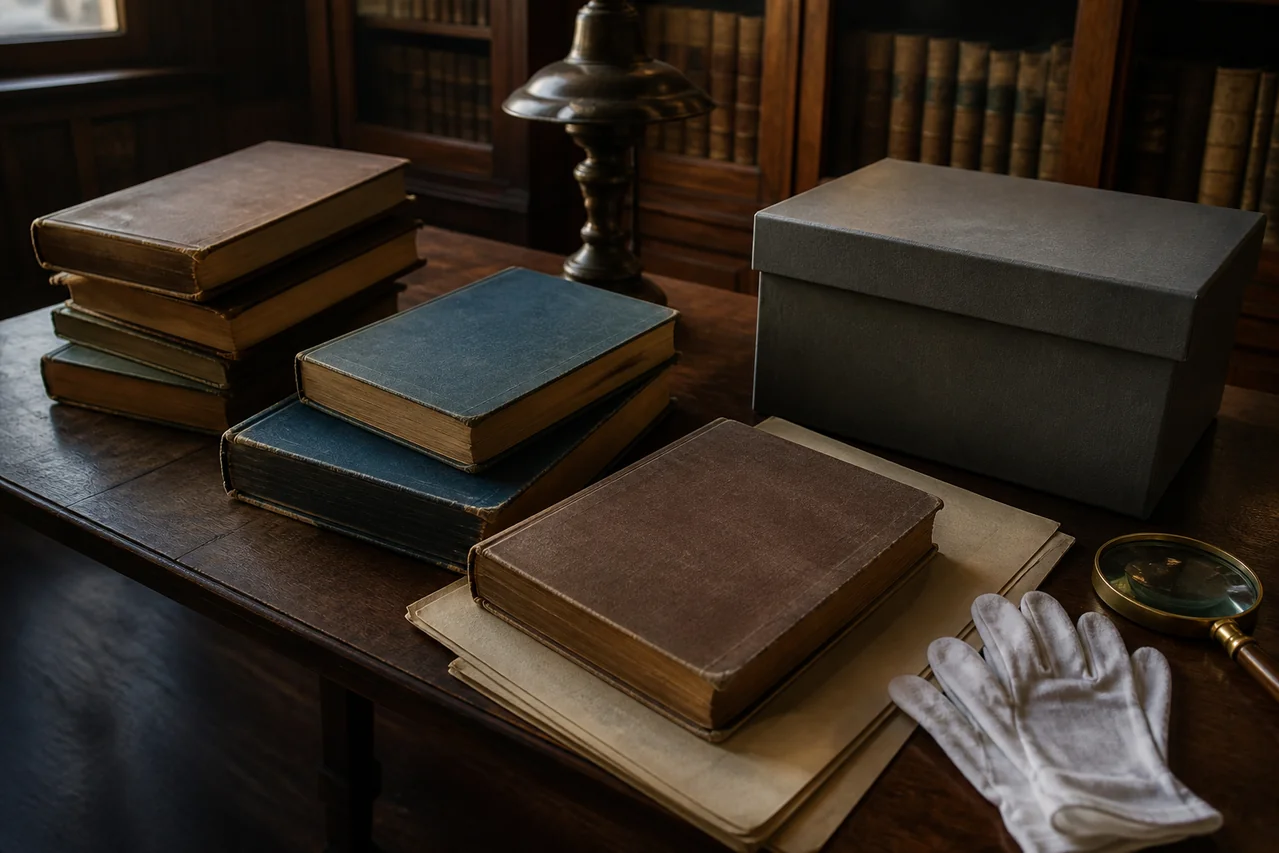
An old-looking edition is not automatically an old text, a complete text or a reliable text. Read its publication history before trusting its authority.
Separate work, translation and printing
A book may contain an ancient or early modern work, a nineteenth-century translation and a twenty-first-century facsimile. Each layer has its own assumptions. The date printed on a modern cover may tell you almost nothing about the text inside.
Read the title page, copyright page and editor's note. Look for “abridged,” “selected,” “modernized” or “from the edition of.” Missing diagrams and plates can change a practical or symbolic work substantially.
Translator choices are part of the book
Older translators often normalize technical terms, Christianize unfamiliar concepts or leave passages in Latin and Greek. Compare a crucial passage with a newer translation and consult the notes where a term carries several possible meanings.
When the old edition is worth owning
Choose it for historical reception, typography, illustrations or influence. Choose a modern critical edition for textual study. Often the best shelf contains both, with each book doing a different job.
