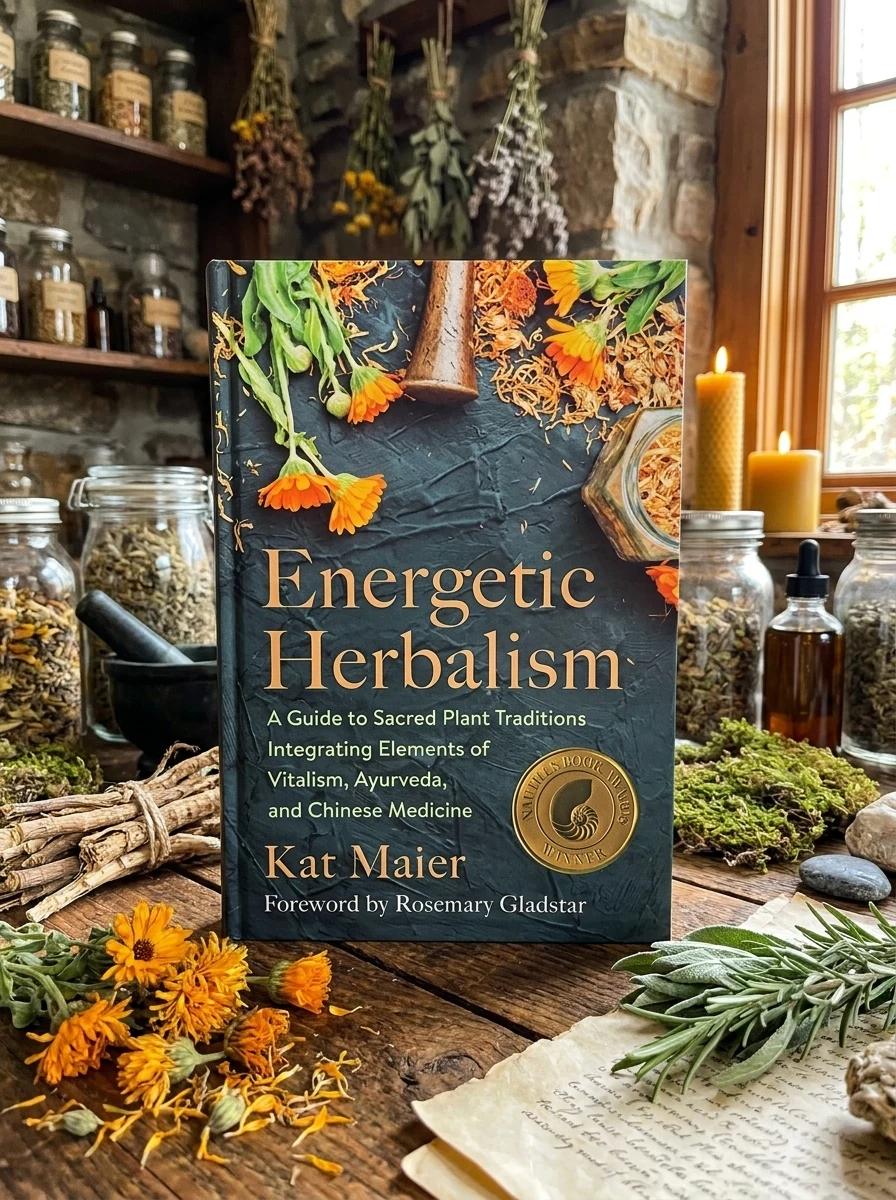
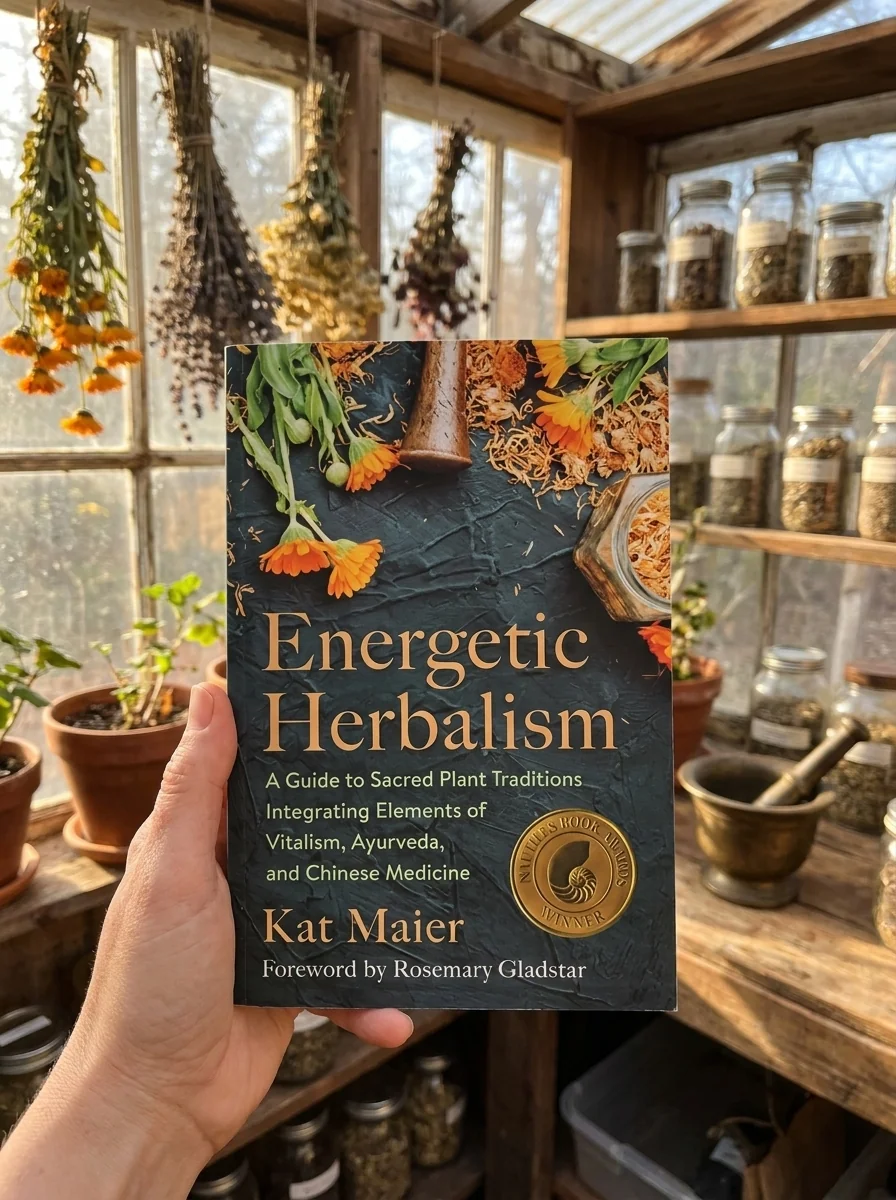
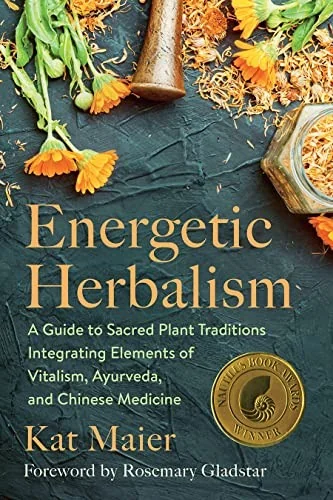
Energetic Herbalism: A Guide to Sacred Plant Traditions Integrating Elements of Vitalism, Ayurveda, and Chinese Medicine
A practical guide integrating Vitalism, Ayurveda, and Chinese Five Element Theory into sustainable plant medicine.
This volume presents an energetic approach to wellness by uniting Western Vitalist concepts, Ayurvedic doshas, and Chinese Five Element Theory. Maier emphasizes ecological responsibility, centering the text on twenty-five temperate medicinal plants like dandelion rather than hundreds of gathered species. The material highlights six tissue states, seasonal emotional patterns, and sensory observation to evaluate internal balance. Grounded in community healthcare experience, the work targets readers interested in long-term holistic care and sacred plant traditions.
Rooted in Indigenous wisdom and ancient energetic traditions, this work reflects modern Western herbalism through the lens of Sacred Plant Traditions in Charlottesville, Virginia, and community-focused healthcare.


📝 Description: Energetic Herbalism: A Guide to Sacred Plant Traditions Integrating Elements of Vitalism, Ayurveda, and Chinese Medicine
💎 Expert review
📖 Why choose it
Why this book is worth reading
Home herbalists and professional practitioners seeking a deeper, more integrated approach to botanical remedies will find immense value in this guide. It is ideal for those who wish to move beyond simple symptom management and instead cultivate profound relationships with plant spirits. Readers interested in the convergence of vitalism, Ayurveda, and Chinese medicine will appreciate the practical yet profound path toward holistic well-being it offers. This book empowers families and communities to engage in mindful environmental care while honoring ancient healing energies, making it a essential resource for anyone committed to a truly integrated and spiritual approach to health and herbalism.
⭐ Reader reviews
Reader rating
Maier skillfully weaves together vitalism, Ayurveda, and Chinese medicine to offer a practical path for holistic well-being. It is an excellent resource for those seeking to deepen their plant relationships through diverse healing paradigms. However, readers looking for strictly clinical, evidence-based herbalism or purely Western botanical guides may find the esoteric integration of sacred traditions and energetic concepts lacking in scientific rigor. This text is not suited for skeptics who prefer detached, materialist approaches to medicine. It requires an openness to spiritual frameworks and ancient wisdom, making it less appropriate for those seeking dry, academic, or purely secular herbal instructions without a metaphysical component.
❓ Frequently asked questions
📖 Who should read this
If you seek to deepen your connection to plant medicine, move beyond superficial symptom treatment, and embrace a truly holistic vision of health, this guide is for you. Whether you're a seasoned herbalist or just beginning your journey, prepare to transform your understanding of well-being.
🎯 Key themes and symbolism
Elemental Relationships in Healing
Explores the foundational connections between human health, the natural world, and energetic principles. It details how traditional systems like Ayurveda and Chinese medicine interpret these elements, guiding readers to understand the subtle interplay that underlies true holistic wellness and plant-based remedies.
Reverence for Ancient Wisdom
Delves into the profound respect for indigenous knowledge and sacred plant traditions that form the bedrock of energetic herbalism. The book demonstrates how these time-honored practices, often overlooked in modern contexts, offer invaluable insights into health, ecological harmony, and our intimate connection with the plant kingdom.
Integrated Healing Paradigms
Presents a unique synthesis of diverse healing traditions, including Vitalism, Ayurvedic doshas, and the Chinese Five Element Theory. It shows how these frameworks, when brought together, provide a comprehensive lens for assessing personal health, understanding emotional states, and crafting individualized plant-based approaches to well-being.
📜 Historical context
📚 Glossary
- Vitalism
- Ayurvedic Doshas
- Five Element Theory
📔 Questions to reflect on
- How do you perceive your own energetic relationship with the plants in your immediate environment, and how might that relationship be deepened?
- Reflect on a time you experienced 'symptom relief' versus a feeling of genuine 'holistic health.' What was the difference, and what energetic factors might have been at play?
- Considering the Ayurvedic doshas or Chinese Five Elements, which elements feel most dominant in your own constitution or current emotional state, and how could plants support that balance?
📖 Read on the blog
🏛 Books from this publisher Chelsea Green Publishing Company
All books from this publisher →



You might also like
See more →



Have a question about this item?
Ask about the edition, condition, delivery or anything else — we reply by email or phone, usually within a day.
