The 21st Century Self: Belief, Illusion, and the Machinery of Meaning
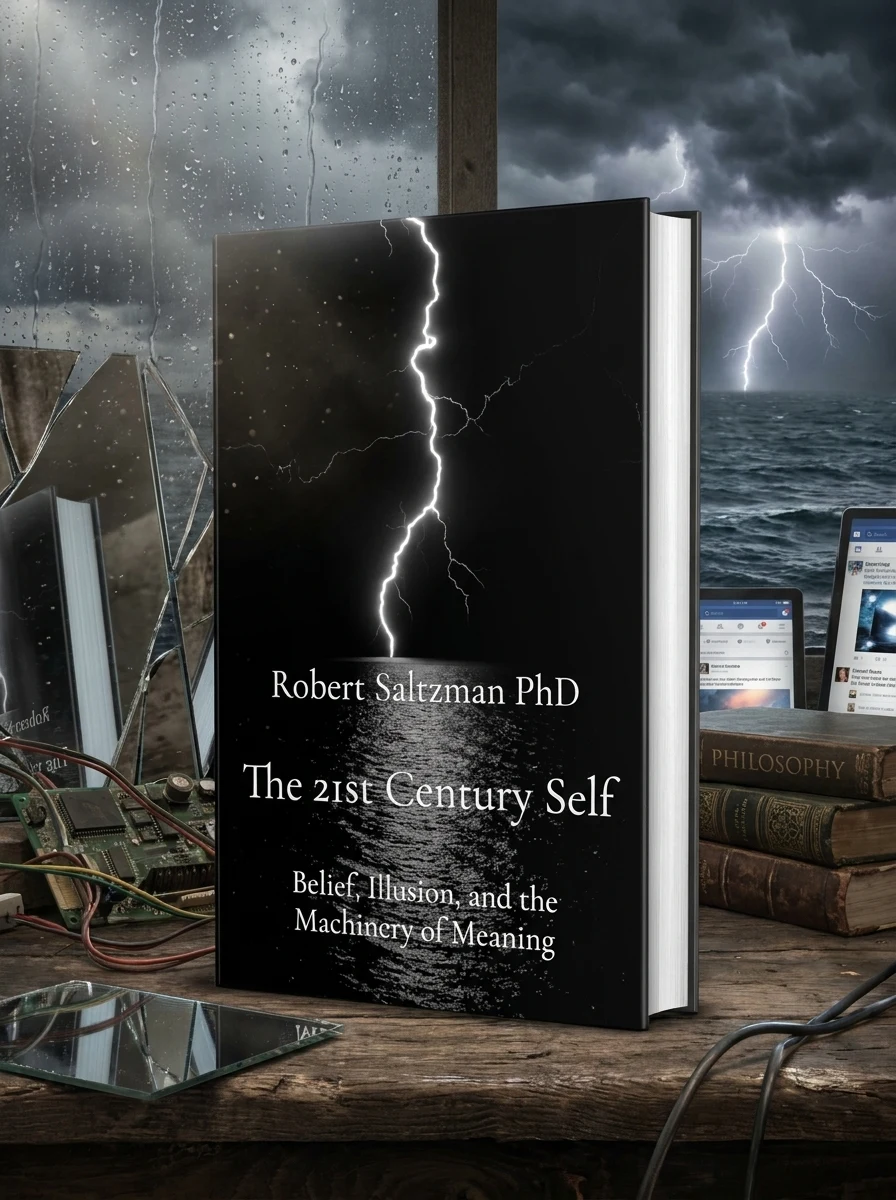
Robert Saltzman's piercing essays dismantle our cherished notions of selfhood, probing the intricate mechanisms by which we construct meaning in a digital age. With uncompromising clarity and a distinctive dry wit, he dissects our innate craving for narrative, the compulsion for coherence, and the pervasive illusions that masquerade as identity in the modern world. This unflinching exploration offers not despair, but a profound liberation from the expectation that life’s story must neatly resolve.
📝 Description: The 21st Century Self: Belief, Illusion, and the Machinery of Meaning
💎 Expert review
📖 Why choose it
Why this book is worth reading
Readers seeking profound liberation from the exhausting expectation that their lives must follow a neat, coherent narrative will find deep solace here. If you are weary of the digital age’s compulsion for constant self-narration and crave unmasking the machinery behind your identity, this book offers a stark yet freeing perspective. It is ideal for those who appreciate dry wit and uncompromising clarity in philosophical exploration. You will gain insight into the illusions masquerading as selfhood and discover that meaning is constructed, not inherent. This text provides a pathway to release the burden of artificial coherence, offering instead a grounded acceptance of reality’s ambiguity without descending into despair.
⭐ Reader reviews
Reader rating
Saltzman delivers a piercing dissection of modern identity with distinctive dry wit, appealing to those who enjoy intellectual rigor and philosophical deconstruction. However, this book does not suit readers seeking comforting affirmations or traditional spiritual guidance. It may frustrate those desiring neat resolutions or simple answers to complex existential questions. The uncompromising clarity can feel stark rather than warm, potentially alienating individuals who prefer mystical vagueness over precise analysis. Those looking for a gentle companion on their journey will likely find it too abrasive. It is strictly for the brave soul ready to face the machinery of meaning without the cushion of illusion.
❓ Frequently asked questions
📖 Who should read this
If you’re ready to question deeply held assumptions about who you are and how reality is constructed, this book is for you. It’s for the seeker unafraid of intellectual rigor and uncomfortable truths, offering a stark yet liberating perspective on consciousness and identity.
🎯 Key themes and symbolism
The Illusory Self
Saltzman meticulously unpicks the constructed nature of personal identity, challenging the deeply ingrained belief in a stable, singular self. He argues that what we perceive as 'me' is often a complex tapestry woven from cultural narratives, emotional needs, and societal expectations, rather than an inherent, immutable core.
Meaning-Making Machinery
This work delves into the cognitive and psychological processes through which humans generate significance from their experiences. It explores how our brains inherently seek patterns and narratives, often creating meaning where none objectively exists, particularly in an era saturated with information and virtual interactions.
Modern Identity & Performance
The author scrutinizes how contemporary society, with its digital interfaces and constant self-presentation, shapes our sense of identity. He highlights the pressure to perform a curated self, and how this performative aspect contributes to the fragility and artificiality of our perceived personal narratives.
💬 Quotes from the book
“The self you cling to is a story, beautifully told, perhaps, but a story nonetheless. And like all stories, it can be unwritten.”
“We crave plots that redeem us, but existence, it seems, has no obligation to good narrative structure.”
📜 Historical context
📚 Glossary
- Performative Presence
- Machinery of Meaning
- Synthetic Minds
📔 Questions to reflect on
- What aspects of your identity feel most 'constructed' versus inherently 'you'?
- How do you seek coherence or narrative in your life, and what happens when that narrative breaks down?
- In what ways do you engage in 'performative presence' in your daily life, and what purpose does it serve?