 82
82

The Ocean of Theosophy
William Quan Judge published The Ocean of Theosophy in 1893, aiming to clarify Theosophical teachings.
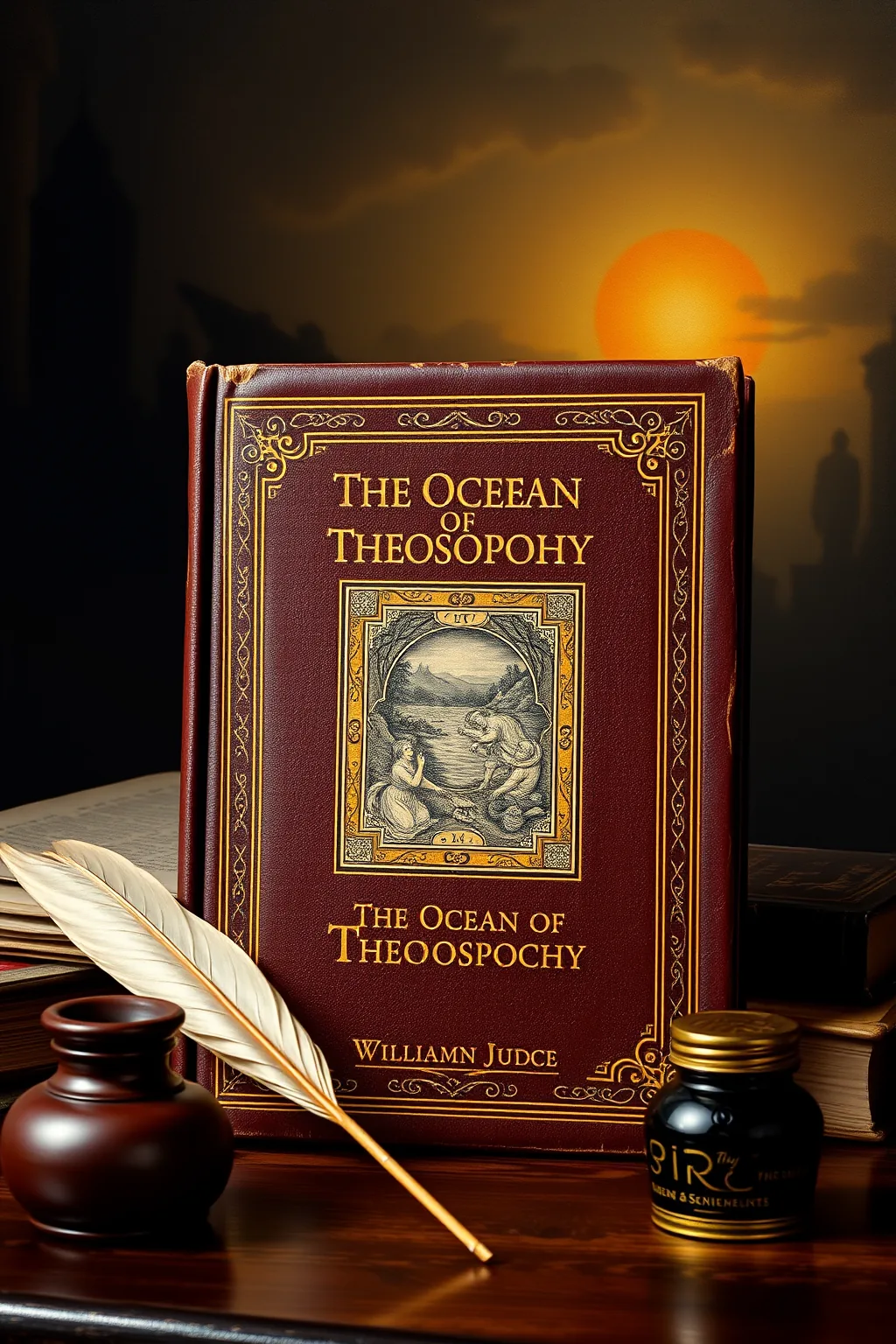
Published in 1893, The Ocean of Theosophy by William Quan Judge attempts to explain core tenets of Theosophy. Judge addresses concepts such as the nature of the universe, the cycles of existence, and the human spiritual constitution. He discusses the "Seven Facts of Nature" and the "Seven Principles of Man," elaborating on the structure of the cosmos and the different planes of being. The book also touches upon reincarnation and the evolution of consciousness across lifetimes. Judge's writing style aims for clarity, seeking to make complex ideas accessible to a general audience interested in spiritual philosophy. It covers topics like the development of the inner self and the interconnectedness of all things. The work presents a structured view of reality, intended to guide the sincere student of Theosophy. Judge wrote this book during a period of significant activity within the Theosophical Society, following Helena Blavatsky's death. He sought to present a coherent overview of the teachings he understood to be central to the movement. The book addresses the "Great Teachers" and the process by which spiritual knowledge is transmitted. It also details the different states of existence, from physical to purely spiritual, and the journey the soul undertakes. The Ocean of Theosophy is a direct exposition of the system as interpreted by Judge, intended to serve as a guide for those serious about understanding its principles.
📝 About the book: The Ocean of Theosophy
The Ocean of Theosophy by William Quan Judge is a profound journey into the mystical and esoteric areas of Theosophy. This key work studies hidden knowledge, symbolism, and the intricate web of spiritual truths that underpin our existence. The book creates an atmosphere of deep introspection and spiritual awakening, inviting readers to explore the philosophical significance of ancient wisdom in a modern context. Judge's writings are particularly suited for seekers of spiritual enlightenment, scholars of occult sciences, and practitioners of mystical arts who are eager to uncover the layers of reality that lie beyond the physical world. Through rich, vivid language, The Ocean of Theosophy unveils the mysteries of the universe and the human spirit, making it an indispensable guide for those who dare to venture into the depths of theosophical thought.
💎 Expert review
📖 Why choose
Why this book is worth reading
The Ocean of Theosophy is a must-read for anyone interested in the depths of mystical and esoteric knowledge. It provides a comprehensive overview of theosophical principles, making it ideal for seekers, scholars, and practitioners. Judge's insights offer a unique perspective on spiritual truths, making this book an essential guide for those looking to deepen their understanding of the occult and metaphysical realms.
⭐ Customer reviews
Customer rating
The Ocean of Theosophy by William Quan Judge is a masterful exploration of theosophical principles that resonate deeply with seekers of esoteric knowledge. Judge's insights into the hidden dimensions of reality are both profound and accessible, making this book a core part of mystical literature. The strengths of this work lie in its ability to bridge ancient wisdom with contemporary understanding, offering readers a comprehensive view of theosophical teachings. The intended audience for this book includes serious students of the occult, spiritual seekers, and those with a keen interest in the philosophical underpinnings of mystical traditions. Judge's clear and eloquent writing style makes complex concepts approachable, ensuring that readers from various backgrounds can benefit from his teachings.
I collect works on this subject and this is a worthy addition. The symbolism is layered and generous to patient readers. I appreciated how the argument builds steadily from first principles. The font runs small in the appendices. Solid, if not essential.
Needed this for my research. Solid binding, decent paper — holds up to heavy use. The typesetting is comfortable for study, with good margins for notes. I'd have loved an index, but that's on the original text. Happy enough with the purchase.
Perfect companion for my morning study sessions. It pairs well with more modern commentaries on the same tradition. If you're drawn to this subject, don't hesitate.
Finally got around to ordering this. Some chapters demand a slow, careful read, and that's exactly the point. Some sections stopped me cold in the best way. Happy enough with the purchase.
Been hunting for a decent copy of this text for ages. The text itself is dense but rewarding — you get out what you put in. I appreciated how the argument builds steadily from first principles. Shipping was quick too.