
- Catalog
- Books
- Witchcraft Wicca
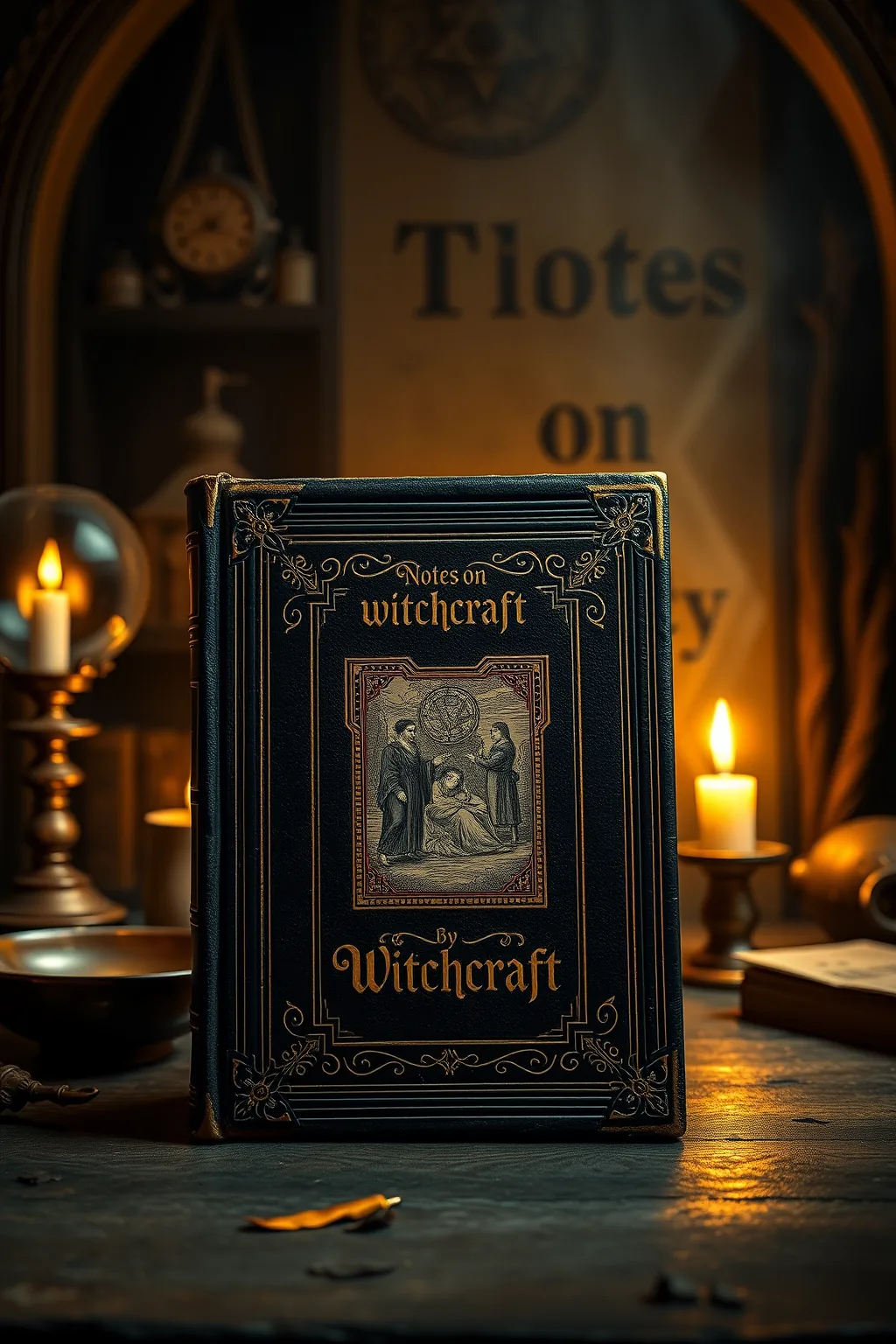
- Notes on witchcraft
 75
75

Notes on witchcraft
George Lyman Kittredge's 1929 'Notes on Witchcraft' examines European folklore concerning sorcery.
Published in 1929, George Lyman Kittredge's 'Notes on Witchcraft' analyzes the historical understanding of witchcraft across European folklore. Kittredge, a Harvard professor, approached the subject from a scholarly perspective, dissecting popular beliefs and accusations of sorcery. The book scrutinizes the historical context in which witchcraft accusations arose, including legal proceedings and societal fears. It details the development of ideas about witches, their supposed practices, and the imagery associated with them. Kittredge's work is a detailed study of how witchcraft was perceived and prosecuted in earlier centuries. This text addresses the evolution of beliefs surrounding magic and the supernatural in Europe. It covers the transition from earlier folk magic to the more organized and demonized concept of witchcraft that emerged during the witch trials. Kittredge’s research draws on a wide array of historical sources, including legal documents, theological treatises, and popular literature. The book is a serious academic examination of a complex historical phenomenon, aiming to clarify the historical reality behind the myths and accusations.
📝 About the book: Notes on witchcraft
Explore the enigmatic world of witchcraft with George Lyman Kittredge's 'Notes on Witchcraft,' a key work that unravels the mystical and occult threads woven into the fabric of European folklore. This richly evocative text is not merely a historical account but a journey into the hidden knowledge and symbolism that permeate the esoteric traditions of the past. The atmosphere is dense with the scent of ancient rituals and the whispers of long-forgotten spells, making it an indispensable read for those who seek to understand the deeper philosophical significance of witchcraft. Intended for both scholars and practitioners, 'Notes on Witchcraft' offers a profound exploration of the occult, inviting readers to uncover the secrets that lie beneath the surface of everyday reality.
💎 Expert review
📖 Why choose
Why this book is worth reading
Read 'Notes on Witchcraft' to gain a comprehensive understanding of the mystical and occult aspects of witchcraft. This book is ideal for seekers of hidden knowledge, scholars of esoteric traditions, and practitioners looking to deepen their spiritual practice. Kittredge's work offers a mix of historical context and philosophical insight, making it an essential read for anyone interested in the mystical arts.
⭐ Customer reviews
Customer rating
George Lyman Kittredge's 'Notes on Witchcraft' is a masterful exploration of the mystical underpinnings of witchcraft, offering readers a wealth of esoteric insights. Kittredge's meticulous research and scholarly approach make this book a core part of occult literature. The strength of 'Notes on Witchcraft' lies in its ability to bridge the gap between historical documentation and spiritual practice, making it an invaluable resource for both academic scholars and spiritual seekers. The book's detailed analysis of witchcraft symbolism and its philosophical significance sets it apart, providing a deep understanding of the esoteric traditions that have shaped our world.
As someone who reads a lot in this field, I can be picky. The text itself is dense but rewarding — you get out what you put in. A text you study rather than simply read. Solid, if not essential.
This edition finally does the material justice. There's real depth here that reveals itself on a second reading. Will be gifting a copy to a friend.
Added this to my reference shelf. You can tell why this work has endured. It assumes more background than a beginner might have. Recommended with reservations.
I keep coming back to this one. I appreciated how the argument builds steadily from first principles.
This edition finally does the material justice. Not a light read, but far more accessible than I feared. The language takes some getting used to, but it becomes part of the charm. I'd have loved an index, but that's on the original text. Good, with the caveats above.
