
- Catalog
- Books
- Freemasonry Secret Societies
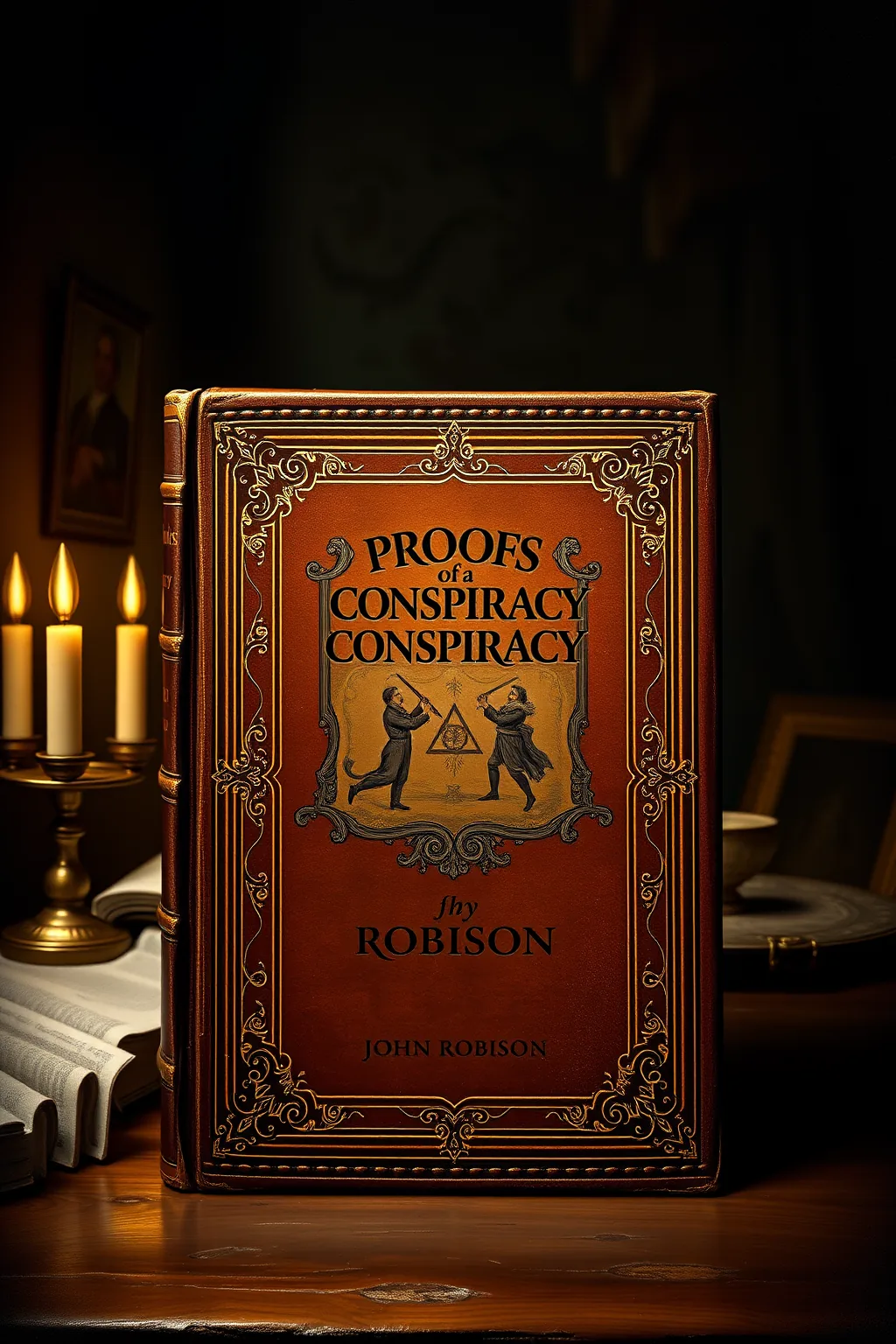
- Proofs of a Conspiracy against all the Religions and Governments of Europe: carried on in the secret meetings of Free Masons, Illuminati, and reading societies.
 82
82

Proofs of a Conspiracy against all the Religions and Governments of Europe: carried on in the secret meetings of Free Masons, Illuminati, and reading societies.
John Robison claimed in 1797 that Freemasons and Illuminati plotted against European governments and religions.
Published in 1797, John Robison's "Proofs of a Conspiracy" investigates the secret societies he believed were undermining established religion and government across Europe. Robison, a Scottish scientist and Freemason himself, details his findings on the Bavarian Illuminati and their alleged infiltration of Masonic lodges and reading societies. He argues that these groups, through their clandestine meetings and literature, disseminated radical ideas intended to overthrow the existing social and political order. The book presents a detailed, though controversial, account of these perceived machinations. The work emerged during a period of significant upheaval, influenced by the French Revolution. Robison sought to expose what he saw as a dangerous, organized effort to promote atheism and republicanism. His writing style, while passionate, is grounded in his attempts to link specific individuals and societies to a coordinated conspiracy. Readers interested in historical accounts of secret societies and the anxieties surrounding them will find this a significant primary source.
📝 About the book: Proofs of a Conspiracy against all the Religions and Governments of Europe: carried on in the secret meetings of Free Masons, Illuminati, and reading societies.
In the shadowy corridors of European society, John Robison's 'Proofs of a Conspiracy' beckons the curious and the seeker to explore the veiled networks of Freemasons, Illuminati, and clandestine reading societies. This important work examines the esoteric undercurrents of the late 18th century, uncovering the hidden knowledge and symbolism that shaped the era. Robison's meticulous research and compelling arguments create an atmosphere of intrigue and mystery, inviting readers to question the visible structures of power and governance. For those drawn to the mystical and the occult, this book serves as a philosophical compass, guiding through the labyrinth of secret societies and their influence on both religion and politics. It is an essential read for anyone fascinated by the occult, seeking to understand the hermetic traditions that have shaped modern thought.
💎 Expert review
📖 Why choose
Why this book is worth reading
This book is a must-read for anyone intrigued by the mysteries of secret societies and their influence on European history. It is ideal for seekers of hidden knowledge, scholars of esoteric traditions, and practitioners of the occult. Robison's work provides a deep dive into the symbolism and philosophical significance of Freemasonry and the Illuminati, offering a unique perspective on the occult undercurrents of the late 18th century.
⭐ Customer reviews
Customer rating
Aurelia Blackwood (Occult Philosophy Critic) — John Robison's 'Proofs of a Conspiracy' is an important work that unravels the intricate web of secret societies and their esoteric influence. The book is a valuable collection of hidden knowledge, rich in symbolism and philosophical depth. Robison's insights into the Freemasons and Illuminati offer a unique perspective on the occult undercurrents of European history. The strength of this work lies in its ability to blend meticulous research with a compelling narrative, making it an indispensable resource for both scholars and spiritual seekers. It is particularly valuable for those interested in the hermetic traditions and their enduring impact on modern thought.
Perfect companion for my morning study sessions. It pairs well with more modern commentaries on the same tradition. The font runs small in the appendices. Recommended with reservations.
Came across this title in a footnote and had to track it down. Solid binding, decent paper — holds up to heavy use. It pairs well with more modern commentaries on the same tradition. The font runs small in the appendices. Still worth having on the shelf.
Honestly wasn't sure what to expect, but I'm impressed. I appreciated how the argument builds steadily from first principles. The ideas are old but land with surprising force today. Definitely recommend.
