
- Catalog
- Books
- Witchcraft Wicca
- Celtic art in Pagan and Christian times
 75
75

Celtic art in Pagan and Christian times
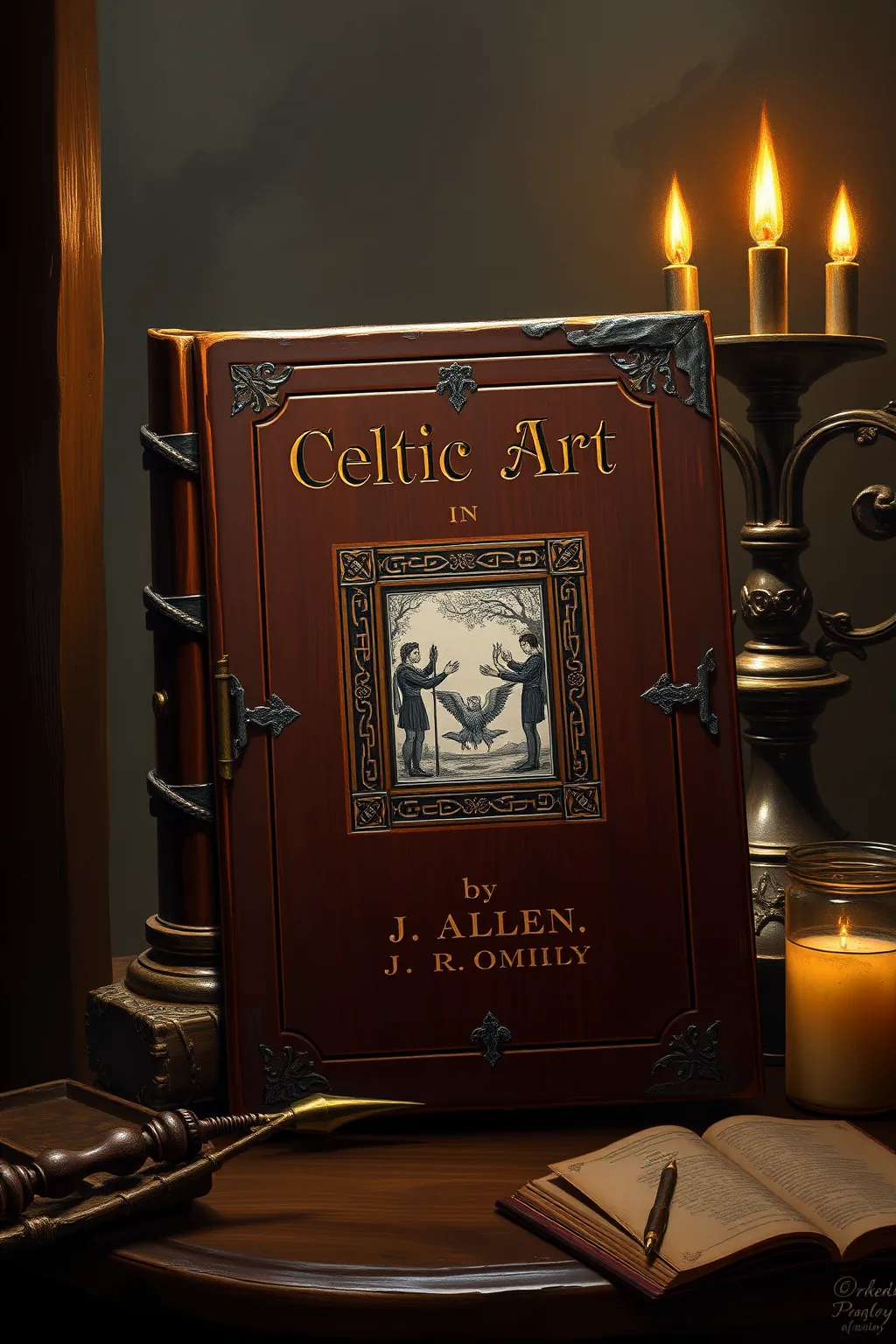
First published in 1904, J. Romilly Allen's Celtic Art in Pagan and Christian Times examines the symbolism of Celtic artistic traditions.
This book offers a detailed look at the art of the Celts, tracing its development from pre-Christian eras through the early Christian period. Allen analyzes the visual language of Celtic artifacts, identifying recurring motifs and patterns that carried meaning across different belief systems. He connects the artistic styles to the philosophical and spiritual ideas prevalent during those times, showing how symbols persisted or transformed. The work covers metalwork, stone carvings, and manuscript illuminations, demonstrating a consistent aesthetic and symbolic thread. Allen's approach is analytical, seeking to decode the hidden layers of meaning within the decorative elements. He presents this art not merely as decoration, but as a form of communication that reflects the worldview of its creators.
📝 About the book: Celtic art in Pagan and Christian times
Celtic Art in Pagan and Christian Times by J. Romilly Allen is a profound exploration of the mystical and esoteric symbolism embedded in ancient Celtic art. This important work studies the hidden knowledge and philosophical significance of Celtic artistic expressions, offering an atmosphere rich with mystical allure. It is an essential read for those who seek to understand the deeper meanings behind ancient symbols and their spiritual resonance. The book is particularly valuable for scholars, spiritual seekers, and practitioners of the occult who are interested in the esoteric dimensions of Celtic culture. Through its detailed analyses and evocative descriptions, Allen unveils the mystical underpinnings of Celtic art, inviting readers to start a path of reading of spiritual discovery and enlightenment.
💎 Expert review
📖 Why choose
Why this book is worth reading
Read this book to uncover the mystical and esoteric dimensions of Celtic art. Ideal for scholars, spiritual seekers, and practitioners interested in the hidden knowledge and symbolism within ancient Celtic artistic expressions. Celtic Art in Pagan and Christian Times offers a rich, evocative journey into the spiritual heart of Celtic culture, making it an essential resource for those on a quest for deeper understanding.
⭐ Customer reviews
Customer rating
Celtic Art in Pagan and Christian Times is a masterful exposition of the esoteric themes within Celtic artistic traditions. J. Romilly Allen's meticulous research and insightful interpretations provide a comprehensive understanding of the mystical symbols that permeate Celtic art. The book is particularly strong in its exploration of the transition from pagan to Christian motifs, highlighting the continuity and evolution of spiritual symbolism. Allen's work is indispensable for those seeking to study the esoteric dimensions of Celtic culture, making it a must-read for scholars, occult practitioners, and spiritual seekers alike.
I've read excerpts online before, but having the full text is different. The historical context alone makes it worth the price. There's real depth here that reveals itself on a second reading. Will be gifting a copy to a friend.
As someone who reads a lot in this field, I can be picky. The material is presented clearly and the structure makes it easy to revisit key passages. Shipping was quick too.
Took a chance on this and glad I did. Plenty of passages worth underlining; my copy is already full of margin notes. Some sections stopped me cold in the best way. The font runs small in the appendices. Recommended with reservations.
My book club chose this last month. Challenging in places, but never needlessly obscure. Great value for what you get.
This has been on my wishlist for months. It connects ideas I'd only seen treated separately elsewhere.
Not my usual area but wanted to branch out. It's become a regular reference in my practice. Shipping was quick too.
Finally got around to ordering this. It connects ideas I'd only seen treated separately elsewhere. It's become a regular reference in my practice.
